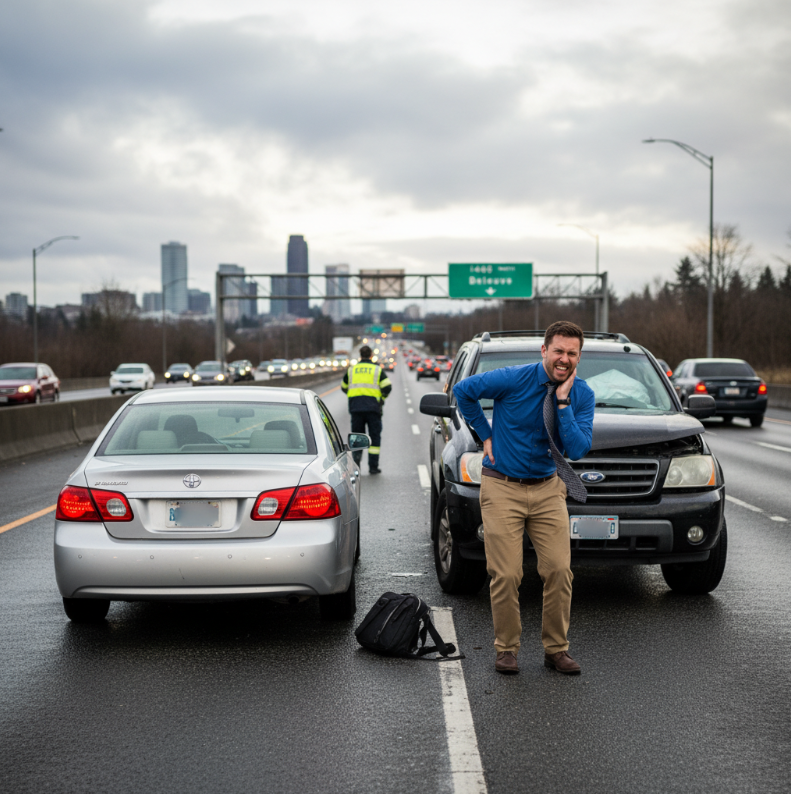
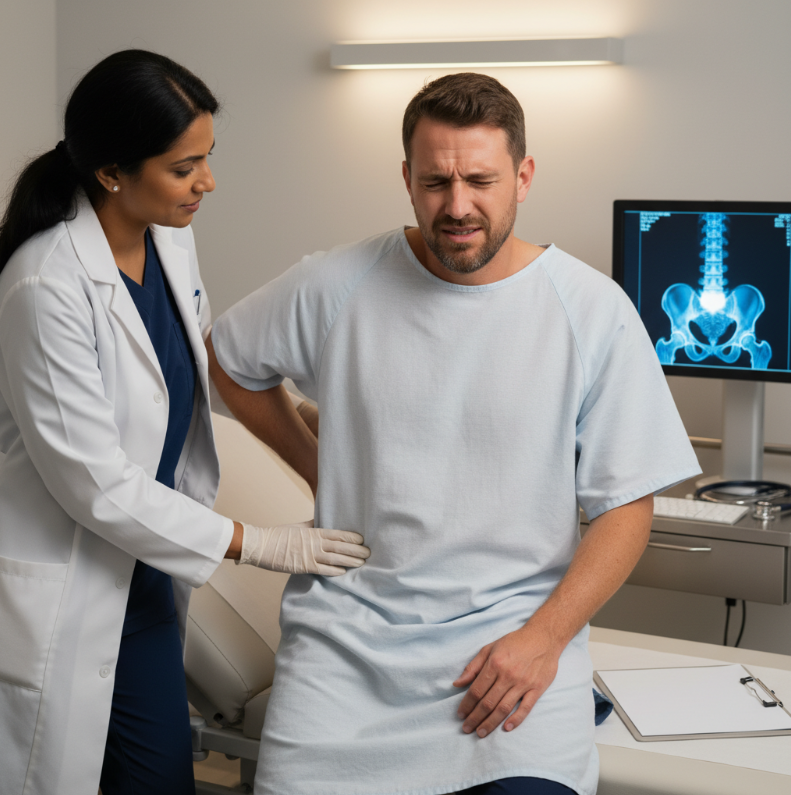
A car accident can change your life in seconds. Even what seems like a “minor” crash on I-405 or a rear-end collision in downtown Bellevue can leave you dealing with persistent back pain for weeks, months—or even years.
If your back hurts after car accident, you are not alone. Back injuries are among the most common consequences of motor vehicle crashes. According to national injury data from the CDC, hundreds of thousands of Americans suffer crash-related injuries each year. Studies cited in recent legal and medical analyses show that up to 50% of low-speed crash victims report lower back pain, and approximately 31% continue experiencing pain a year later.
But here’s the problem: back injuries are often “invisible.” There may be no cast, no visible wound—just ongoing pain, stiffness, numbness, or weakness. Insurance companies frequently use that invisibility to downplay or deny claims.
If you’re in Bellevue or anywhere in King County and struggling with back pain after a crash, this guide explains:
Why back pain is so common after collisions
The most frequent types of injuries
Why symptoms are sometimes delayed
How Washington law protects you
What your claim may be worth
And how to protect yourself from insurance tactics
Why back hurts after car accident — the mechanics behind the pain
The human spine is a complex structure of:
33 vertebrae
Intervertebral discs
Nerves and nerve roots
Muscles and ligaments
The spinal cord
During a collision—even at relatively low speeds—the body absorbs sudden force. Your torso may twist, jolt forward, snap backward, or compress against the seatbelt. That force can:
Stretch ligaments
Tear muscles
Shift or rupture discs
Compress spinal nerves
Aggravate pre-existing degeneration
Even crashes at 10–15 mph can cause soft tissue damage.
In Bellevue, rear-end accidents are particularly common along congested corridors like I-405, SR-520, and Factoria Boulevard—routes maintained and monitored by the WSDOT. Rear-end collisions frequently result in neck and lower back injuries due to the sudden whipping motion of the spine.
If your back is hurting after a crash, know that the mechanics of a collision make this a common and understandable injury — and there are concrete steps you can take to address it.
Not all back pain is the same. The type and severity of injury significantly impact recovery time—and potential compensation. Identifying the injury helps guide treatment and strengthens a claim.
1. Soft Tissue Injuries (Strains and Sprains)
These are the most common crash-related back injuries. They involve:
Overstretched ligaments
Torn muscle fibers
Inflammation
Symptoms may include aching or burning pain, stiffness, muscle spasms, and reduced range of motion. Although insurers often label these injuries as “minor,” they can cause significant discomfort and weeks of missed work. Treat these injuries seriously and follow your medical plan—documentation matters.
2. Herniated or Bulging Discs
Between each vertebra is a disc that cushions movement. During a collision, discs can bulge outward, herniate (rupture), or press on nearby nerves. This may cause sharp or radiating pain, numbness or tingling, sciatica (pain down the leg), and weakness in limbs.
Moderate disc injury cases in Washington often result in significantly higher settlements than simple strains—especially if injections or surgery are required. Objective testing like MRIs can make a big difference in these claims.
3. Lumbar Spine Injuries (Lower Back)
The lower back absorbs much of the force in a rear-end collision. Research referenced in legal-medical analyses indicates 31% of accident victims with lower back pain report symptoms lasting at least one year.
Chronic lumbar pain can interfere with sleep, limit lifting and bending, reduce work capacity, and prevent participation in normal family activities. Early care and good documentation improve both recovery odds and the strength of any claim.
4. Spinal Fractures
More severe crashes—especially high-speed highway collisions—can cause vertebral fractures. These injuries may require bracing, extended hospitalization, or surgical stabilization. Fractures carry higher medical costs and usually require more detailed legal and medical attention.
5. Spinal Cord Injuries
Though less common, spinal cord injuries are catastrophic and may lead to partial paralysis, loss of sensation, loss of bowel or bladder control, or permanent disability. These cases typically involve substantial compensation due to lifelong care needs. If you or a loved one is facing this, you need experienced legal help and compassionate support.
“Why does my lower back hurt days after a rear-end collision?”
Delayed pain is extremely common. After a crash, your body releases adrenaline and endorphins. These natural chemicals mask pain, reduce inflammation temporarily, and keep you alert. It may take 24–72 hours—or longer—for inflammation to build and symptoms to fully appear. Additionally:
Soft tissue swelling takes time
Disc injuries worsen with normal movement
Microtears become more painful as muscles tighten
This delay can create insurance challenges. If you didn’t go to the ER immediately, insurers may argue the injury wasn’t serious—or wasn’t caused by the crash. That’s why seeking medical attention as soon as symptoms appear is critical. Prompt care both protects your health and strengthens your claim.
If you’re wondering what to do when your back hurts after a car accident in Bellevue, start with immediate medical evaluation and clear documentation of symptoms.
Key Legal Issues in Washington State
Washington operates under a pure comparative fault rule (RCW 4.22.005). This means you can recover damages even if partially at fault, but your compensation is reduced by your percentage of fault.
Example: If you are awarded $100,000 but found 20% at fault, you receive $80,000.
Washington also requires minimum liability insurance of $25,000 per person and $50,000 per accident. If your injury exceeds the at-fault driver’s policy limits, you may need to rely on underinsured motorist (UIM) coverage, Personal Injury Protection (PIP), or a personal lawsuit.
Back injuries often exceed $25,000 quickly if physical therapy, MRIs, injections, or surgery are required. If legal proceedings are needed, cases in King County may proceed through the King County Superior Court. These rules can feel technical, but they directly affect how much compensation you can recover. Getting clear guidance early helps protect your rights.
How severity impacts settlement value
“How does the severity of a back injury impact settlement amounts in Washington?”
There is no true “average” settlement—but recent legal analyses in Washington show general ranges:
Injury Type
Typical Settlement Range
Factors Affecting Value
Mild soft tissue
$2,500 – $25,000
Treatment length, missed work
Herniated disc (no surgery)
$20,000 – $100,000
MRI findings, injections, long-term pain
Surgical back injury
$75,000 – $500,000+
Surgery type, permanent limitations
Spinal cord injury
$500,000 – Millions
Lifetime care needs
Important: Severe outlier cases can skew “averages.” Most settlements depend heavily on documentation and long-term impact. Focus on clear records of treatment, work loss, and how the injury changed daily life.
If you want specifics about average settlement amounts for a herniated disc after a car accident in Washington state, an attorney can review your records and local case history to give a realistic range.
Real-World Example: Bellevue Rear-End Collision
Imagine this scenario:
A Bellevue software engineer is rear-ended on I-405 during rush hour. Initially, he feels sore but declines ambulance transport. Two days later, severe lower back pain radiates down his leg. An MRI reveals a herniated disc.
He undergoes:
6 months of physical therapy
Epidural steroid injections
Misses 8 weeks of work
The insurance company argues the injury was pre-existing, he delayed treatment, and surgery was unnecessary. With proper legal representation, medical documentation, and expert testimony, the case settles for significantly more than the initial offer.
This pattern is extremely common. If this sounds like your situation, you don’t have to handle it alone. Residents in Bellevue and nearby Seattle often face similar issues after low-speed rear-end collisions.
Insurance adjusters are trained to minimize payouts. Back injuries are frequently challenged because pain is subjective, soft tissue damage doesn’t show on X-rays, and MRIs can reveal “degenerative” changes.
Common tactics include claiming your injury was pre-existing, arguing low vehicle damage equals low injury, monitoring social media, and pressuring quick settlement. If you settle early, you cannot reopen your claim—even if your condition worsens. Be cautious about quick offers and document everything. A careful approach preserves your rights and maximizes the chance of fair compensation.
If you need guidance on how to prove lower back injury from a rear-end collision for an insurance claim, start with early imaging, consistent treatment, and clear work-loss records.
Washington’s statute of limitations for personal injury is generally three years from the date of the accident (RCW 4.16.080).
However, waiting can make proving causation harder, lead to lost evidence, and allow insurers to build a defense. Prompt legal guidance protects your claim and keeps your options open.
Step-by-Step Checklist: What to Do If Your Back Hurts After a Car Accident
Step
Action
Why It Matters
1
Seek medical evaluation
Creates documentation linking injury to crash
2
Report symptoms clearly
Prevents insurers from claiming gaps
3
Follow treatment plan
Shows injury seriousness
4
Document missed work
Supports lost wage claim
5
Avoid early settlement
Prevents undervaluation
6
Consult a Bellevue injury lawyer
Protects full compensation rights
For practical help documenting medical treatment and missed work after a Bellevue car accident back injury, keep appointment notes, employer records, and copies of all bills and test results.
Prevention Tips for the Future 🚗
While not all accidents are avoidable, you can reduce injury risk by:
Adjusting your headrest properly
Sitting upright with lumbar support
Wearing seatbelts correctly
Maintaining safe following distance
Avoiding distracted driving
Drivers in Redmond and other Eastside communities benefit from these steps as much as Bellevue residents. But remember: prevention tips don’t eliminate your legal rights if someone else caused your crash. Take sensible precautions, and know your rights if an accident occurs.
Frequently Asked Questions
1. How long will my back hurt after a car accident?
Mild strains may resolve in weeks. Disc injuries can last months or become chronic. Studies suggest nearly one-third of lower back injury victims report pain lasting a year or more.
2. Can I file a claim if pain started days later?
Yes. Delayed symptoms are common. What matters most is medical documentation linking your injury to the crash. If you’re asking what to do when your back hurts after a car accident in Bellevue, the answer is prompt medical care and documentation.
3. What if I had prior back problems?
You can still recover compensation. Washington law allows claims if the accident aggravated a pre-existing condition.
4. Should I accept the insurance company’s first offer?
Generally, no. Early offers are often far below full value—especially before long-term prognosis is clear.
5. Do I need an MRI to prove my case?
Not always. However, objective findings like MRIs can significantly strengthen disc injury claims.
6. What damages can I recover?
You may recover medical expenses (past and future), lost wages, reduced earning capacity, pain and suffering, and loss of enjoyment of life.
Don’t ignore back pain after a crash
Back pain after a car accident is not “just soreness.” It can signal disc damage, nerve compression, chronic musculoskeletal injury, or even spinal trauma. In Bellevue and throughout King County, accident victims often face uphill battles with insurance companies that minimize invisible injuries. The NHTSA and local data inform safety priorities, but individual recovery and claims are handled case-by-case.
The good news? Washington law protects your right to seek compensation—even if symptoms are delayed or you had prior back issues. The key is acting early, documenting thoroughly, and understanding the full value of your claim before settling. If you’re trying to understand how to prove lower back injury from a rear-end collision for an insurance claim or want to know average settlement amounts for a herniated disc after a car accident in Washington state, speak with an experienced lawyer who knows local practices.