

Every time you get behind the wheel, you probably don’t think, “What are my chances of crashing today?” Yet for millions of Americans each year, a routine drive turns into a life-changing event. Understanding your chance of getting in a car accident is not about fear—it’s about preparation, awareness, and knowing your legal rights if the unexpected happens.
If you live or commute in Bellevue or across King County, knowing the numbers and the local patterns helps you make safer choices and protect your family. Many residents also wonder, “how likely am i to be in a car accident driving in Bellevue Washington” — this guide addresses that question using national and state context.
In this in-depth guide, we’ll break down:
- Your annual and lifetime chances of being in a crash
- The latest national statistics from NHTSA and IIHS
- What Washington State data reveals (see WSDOT)
- Why risk varies by driver, location, and behavior
- What happens legally if you’re injured
If you’ve ever wondered, “How likely is it that I’ll be in a car accident?”—this article gives you real answers.
👉 Looking for a Personal Injury Lawyer Near Kent, WA? Contact R Martin Law Group today for a free consultation.
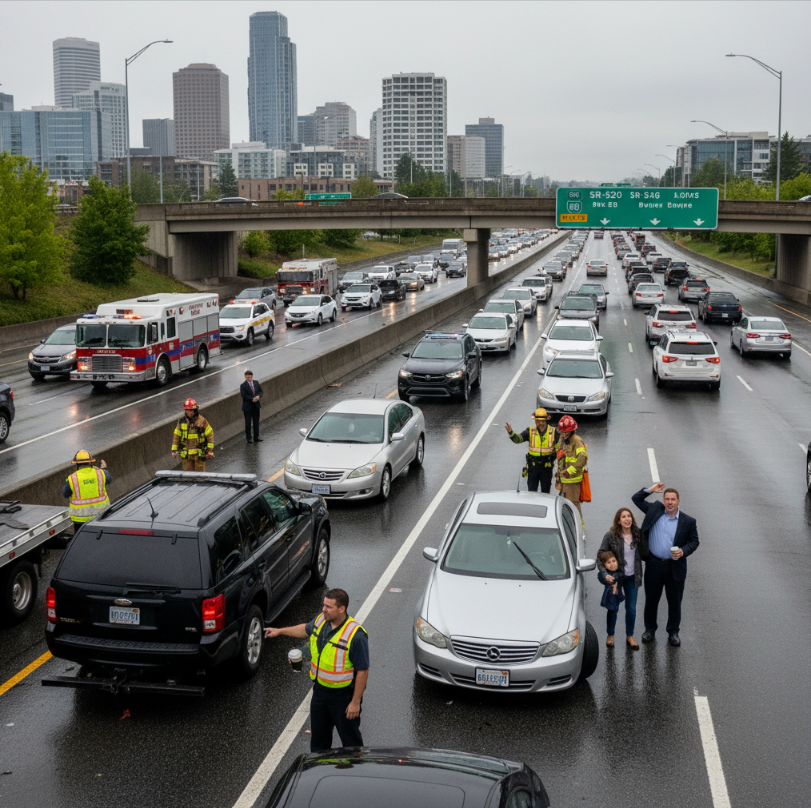
The National Picture – How Common Are Car Accidents?
According to the most recent data from the National Highway Traffic Safety Administration (NHTSA) and the Insurance Institute for Highway Safety (IIHS):
- Approximately 6.1 million police-reported crashes occur each year in the United States
- Around 2.4 million people are injured annually
- In 2023, 40,901 people were killed in motor vehicle crashes
- That averages to about:
- 16,800 crashes per day
- 700 crashes per hour
- More than 4 deaths per hour
While traffic fatalities declined slightly in 2023 and early 2025 compared to peak pandemic years, the overall numbers remain historically high. What this tells us is straightforward: crashes are common, and the consequences range from minor inconvenience to life-altering harm. Knowing the national scale helps set realistic expectations and underlines why safe habits matter.
What Does That Mean for You?
There are approximately 238 million licensed drivers in the U.S.
- The annual chance of being in a police-reported crash is roughly 2–3% per driver per year
- Over a 50–60 year driving lifetime, most drivers will experience 3–4 crashes
- That translates to a lifetime likelihood of 90% or higher of being involved in at least one accident
In other words, statistically speaking, almost everyone who drives long enough will be in a crash at some point. The takeaway: stay informed and take simple precautions—your odds improve with safer habits.
👉 Injured in Bellevue? Contact R Martin Law Group today for a free consultation.
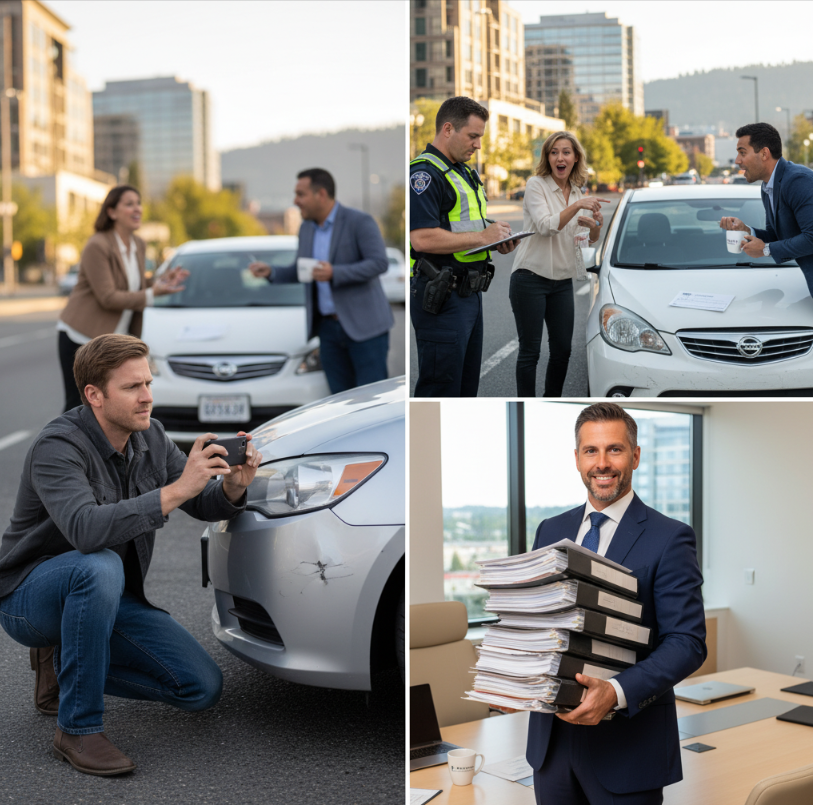
Washington State Crash Statistics: How Does Our State Compare?
Washington State generally performs better than the national average in terms of fatality rates per capita—but that doesn’t mean crashes are rare.
According to data from the Washington State Department of Transportation (WSDOT):
- Tens of thousands of crashes are reported annually statewide
- Hundreds of people are killed each year
- Thousands more suffer serious injuries
- Urban areas account for a large percentage of total collisions
Washington’s fatality rate per 100,000 residents is often lower than the national average—but recent years have seen increases consistent with national trends.
King County and Bellevue Trends
- King County, which includes Seattle and Bellevue, experiences thousands of reported crashes each year
- Sees dozens of traffic fatalities annually
- Has high crash density along major corridors like I‑405, I‑90, and SR‑520
Bellevue, due to its growing population and traffic congestion, regularly reports:
- Hundreds to thousands of crashes annually
- A smaller number of serious injury and fatal crashes compared to larger metro areas—but still significant for a city its size
Busy intersections, freeway ramps, and high-speed arterials pose elevated risk. Residents in nearby Redmond and Renton often face similar commuting challenges. Takeaway: local patterns matter—know the high-risk roads you use most.
👉 Need help understanding your legal rights? Visit our Bellevue injury attorney page.
What Factors Increase Your chance of getting in a car accident?
While averages give us general probabilities, your personal risk depends heavily on behavior and exposure.
1. Miles Driven
The more you drive, the higher your statistical risk. Long commuters face significantly higher annual crash probability. Delivery drivers and rideshare operators have even greater exposure. Many readers ask specifically about the risk of car accident for rideshare and delivery drivers in Bellevue—those jobs dramatically increase miles on the road and therefore exposure.
2. Speeding
Speeding contributes to roughly one-third of U.S. traffic fatalities in many years, according to NHTSA data. Higher speeds increase stopping distance, reduce reaction time, and magnify crash force and injury severity.
3. Distracted Driving
Phone use while driving significantly increases crash risk. Even a few seconds of distraction at highway speeds can mean traveling the length of a football field without looking at the road.
4. Impaired Driving
Alcohol impairment remains a major contributing factor in fatal crashes nationwide.
5. Age and Experience
Young drivers (ages 16–20) have much higher crash involvement rates per licensed driver compared to middle-aged adults.
6. Urban vs. Rural Driving
Urban areas: More frequent crashes due to congestion. In Bellevue and nearby Seattle, congestion creates more low-speed collisions and fender-benders. Rural roads: Higher fatality rates due to higher speeds and delayed emergency response.
Your risk profile depends on which of these factors apply to you. The good news: many of them are controllable through safer choices.
Lifetime Odds: Will You Eventually Be in a Crash?
Based on aggregated national statistics:
- The average driver will experience 3–4 collisions over a lifetime.
- That makes the lifetime probability of at least one crash extremely high—well above 90%.
However, most crashes are property damage only, minor injury, or non-fatal. The chance of being involved in a fatal crash is much lower than the chance of being in any crash.
For serious injury accidents, consequences can include traumatic brain injury (TBI), spinal cord damage, broken bones, permanent disability, and lost earning capacity. That’s when legal protection becomes critical.
What Happens Legally After a Car Accident in Washington?
Washington follows a fault-based insurance system. That means the driver who caused the accident is financially responsible. Victims can pursue compensation through:
- The at-fault driver’s insurance
- Their own uninsured/underinsured motorist coverage
- A personal injury lawsuit, if necessary
Washington’s Statute of Limitations
Under RCW 4.16.080, you generally have three years from the date of the accident to file a personal injury lawsuit. Miss that deadline, and you may permanently lose your right to compensation. If your case proceeds toward local trial courts, filings occur in venues like the King County Superior Court when the collision is in King County.
Knowing how the system works and the deadline you face gives you a real advantage when protecting your rights.
👉 Ready to speak with an attorney? Schedule a consultation with R Martin Law Group today.
The Insurance Company’s Role (And Why It Matters)
After an accident, insurance companies often request recorded statements, offer early settlement checks, dispute injury severity, and argue shared fault. Their goal? Limit payouts.
Common tactics include blaming pre-existing conditions, downplaying soft-tissue injuries, questioning medical treatment necessity, and delaying claim resolution. Having experienced legal counsel can significantly affect the outcome of your claim. Confidence and timely action make a real difference in dealing with insurers.
Risks, Delays, and Legal Complications
Even “minor” crashes can turn complicated due to delayed-onset injuries (e.g., whiplash, concussion symptoms), disputed liability, multiple-vehicle collisions, commercial vehicle involvement, or uninsured drivers.
In King County’s dense traffic conditions, multi-vehicle pileups are not uncommon on major highways. Delays can result in lost evidence, witness memory fading, or surveillance footage being erased. Early legal intervention protects your claim. Acting promptly preserves your options and peace of mind.
Car Accident Claim Process in Washington (Step-by-Step)
| Step | What Happens | Why It Matters |
|---|---|---|
| 1. Seek Medical Care | Immediate evaluation after crash | Creates documentation linking injuries to accident |
| 2. Report the Accident | Police report filed | Official record supports liability determination |
| 3. Notify Insurance | Claim opened | Triggers coverage investigation |
| 4. Evidence Gathering | Photos, witness statements, medical records | Strengthens settlement leverage |
| 5. Settlement Negotiation | Demand package submitted | Seeks fair compensation |
| 6. Lawsuit (if needed) | Filed within 3-year limit | Preserves legal rights |
Follow these steps early and deliberately—each one helps protect your recovery and your claim.
Prevention Tips to Lower Your Risk
- Avoid phone use while driving
- Maintain safe following distances
- Obey posted speed limits
- Never drive impaired
- Adjust speed in rain or fog
- Keep your vehicle properly maintained
- Use defensive driving techniques
If you want to know more specifically “how to estimate your personal annual crash risk based on miles driven,” start by tracking your annual miles and comparing that exposure to the general 2–3% annual rate—higher mileage generally raises your individual probability. Even small behavioral changes significantly reduce accident likelihood. Simple choices add up to safer trips and more peace of mind.
Frequently Asked Questions
1. What are the odds of being in a car accident each year?
On average, about 2–3% per licensed driver per year are involved in a police-reported crash. Risk varies based on miles driven and driving behavior. If you’re asking specifically “what are my chances of getting in a car accident per year in Washington State,” expect similar statewide averages though local exposure can vary by commute and road type.
2. What are the lifetime odds of being in a crash?
Most estimates suggest the average driver will be involved in 3–4 accidents over a lifetime, meaning the probability of experiencing at least one crash is very high—likely above 90%. For those searching the “lifetime probability of being involved in a car accident in Washington State,” the same long-term exposure patterns apply.
3. Is Washington State safer than the national average?
Historically, Washington has had a lower fatality rate per capita compared to many states. However, recent years have shown increases consistent with national trends.
4. Are most crashes fatal?
No. The vast majority of crashes result in property damage or non-fatal injuries. Fatal crashes represent a small percentage of total accidents.
5. What should I do immediately after a car accident in Bellevue?
1. Call 911
2. Seek medical attention
3. Document the scene
4. Avoid admitting fault
5. Consult a personal injury attorney before accepting any settlement
If you work as a driver and wonder “how likely am i to be in a car accident driving in Bellevue Washington,” these steps are especially important because higher exposure increases the chance of needing legal help.
6. How long do I have to file a car accident claim in Washington?
You generally have three years from the date of the accident to file a lawsuit under Washington law. See RCW 4.16.080 for the statute.
Final Thoughts – Understanding Risk—and Protecting Yourself
Statistically speaking, the chance of getting in a car accident at some point in your life is very high. While most crashes are minor, some lead to devastating injuries and financial hardship.
In growing communities like Bellevue and across King County, heavy traffic, urban congestion, and major freeway corridors increase exposure risk. Drivers in Tacoma and Kent, for example, confront similar roadway challenges and should take the same precautions.
Knowing the real statistics, your legal rights, and the steps to take after a crash can make all the difference. If you or someone you love has been injured in a car accident, you don’t have to navigate the aftermath alone.
👉 Injured in Bellevue? Contact R Martin Law Group today for a free consultation.
R Martin Law Group proudly represents injured victims throughout Bellevue and King County—combining local experience, compassionate advocacy, and a proven record of results.
Keep reading

Bellevue Head-On Car Accidents Guide
A head on car accident is one of the most devastating types of crashes on Washington roads. When two vehicles collide front-to-front, the combined…

Does Medical Insurance Cover Car Accidents
On this pageDoes Medical Insurance Cover Car Accidents in Washington State?Background: Who Pays Medical Bills After a Car Accident?What Is PIP Coverage in Washington?Does…

Do Men or Women Crash More?
On this pageDo Men or Women Get in More Car Accidents? What the Latest Data Means for Washington DriversDo men or women get in…