Fatal Truck Accidents in Washington State: What Families in Bellevue Need to Know
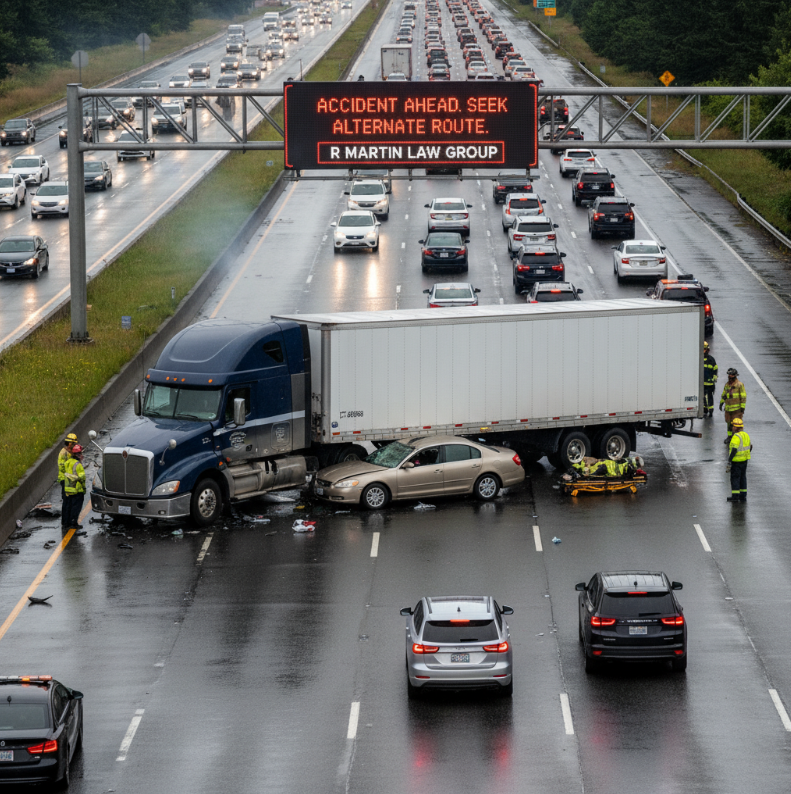
A fatal truck accident is every family’s worst nightmare. One moment, life is moving along—perhaps a routine commute on I-405, a delivery through downtown Bellevue, or a drive on I-90—and the next, everything changes forever. Understanding the complexities of a fatal truck accident is crucial, especially for those living in Bellevue and nearby areas such as Kirkland and Redmond.
Large commercial trucks are vital to Washington’s economy. They transport goods across the Puget Sound region, support construction sites, and keep stores stocked. But when an accident happens, the consequences can be catastrophic. Trucks weigh 20 to 30 times more than passenger vehicles, and this size difference can result in devastating or fatal injuries instantly.
Recent data from federal and Washington State transportation sources show significant fluctuations in large-truck crashes. In 2023, Washington experienced over 2,100 semi-truck crashes statewide, including dozens of fatal accidents that resulted in more than 70 deaths. While initial reports predict a possible decline in fatal large-truck crashes for 2024–2025 compared to prior peak years, the overall trend since 2020 shows a troubling rise above pre-pandemic levels. Nationally, the National Highway Traffic Safety Administration (NHTSA) reports over 4,000 large-truck crash fatalities annually.
For Bellevue families and residents across King County, these numbers represent real people—parents, children, coworkers, and neighbors—whose lives ended far too soon.
This guide will help you understand:
Why fatal truck accidents happen, particularly on I-405 Bellevue highways
What Washington law requires in a fatal truck accident wrongful death claim process in Washington state
How to prove liability in a fatal truck accident lawsuit
What compensation can Bellevue families receive after a fatal commercial truck crash
The important steps to take immediately following a fatal truck crash in King County Washington
If your family has been affected, remember—you don’t have to face this alone.
Washington’s highways—such as I-5, I-405, SR-520, and I-90—are vital corridors carrying heavy commercial traffic every day. The Washington State Department of Transportation (WSDOT) and the Federal Motor Carrier Safety Administration (FMCSA) closely monitor large-truck crashes through detailed reporting.
Here’s what the data reveals:
Thousands of truck crashes occur annually in Washington.
Dozens result in fatalities each year.
King County consistently has among the highest counts of fatal crashes due to dense population and heavy traffic.
Speeding, impairment, and distracted driving top the list of deadly crash causes statewide.
National findings from the Insurance Institute for Highway Safety (IIHS) highlight that most fatalities in large-truck crashes are occupants of passenger vehicles, primarily due to the large size disparity between the vehicles.
👉 Injured in Bellevue or nearby Seattle? Reach out to R Martin Law Group today for a free consultation.
Common Causes of Fatal Truck Accidents
1. Driver Fatigue
Federal Hours-of-Service (HOS) regulations limit how long truck drivers can be on the road without resting, but unfortunately, violations occur. Fatigue slows reaction times and impairs judgment—especially dangerous on fast-moving highways like I-405 or I-90.
2. Distracted Driving
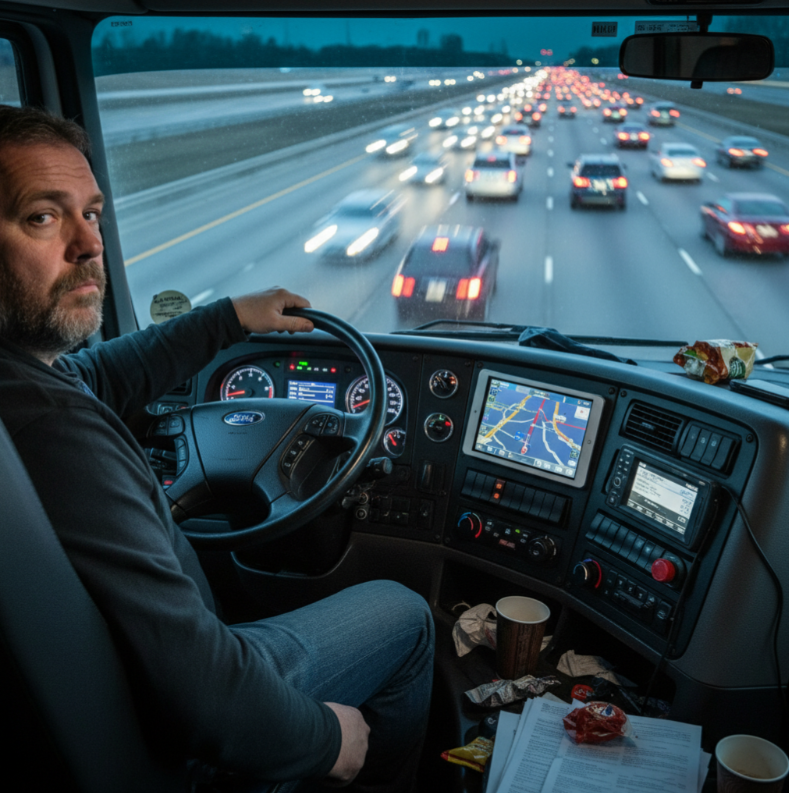
Truck drivers might use dispatch systems, GPS, or cell phones while driving. Even a brief distraction in a 40-ton vehicle can have deadly consequences.
3. Speeding and Aggressive Driving
Large trucks require much longer distances to stop than passenger cars. Speeding heightens stopping distance and can severely increase crash severity.
4. Impaired Driving
Though less common due to strict regulations, impairment from alcohol, drugs, or prescription medications can contribute to fatal crashes.
5. Improper Maintenance
Carriers must inspect and maintain brakes, tires, lights, and coupling systems. Brake failure or tire blowouts at highway speeds can lead to deadly multi-vehicle collisions.
6. Improper Cargo Loading
Unbalanced or overloaded cargo can cause rollovers or jackknife crashes—especially on the curved freeway ramps found around the busy Bellevue interchanges.
Key Legal Issues in Fatal Truck Accident Cases
Legal cases arising from fatal truck accidents usually involve more complexity than typical car crashes.
Multiple Potentially Liable Parties
Truck crashes may implicate:
The truck driver
The trucking company (motor carrier)
Third-party maintenance providers
Cargo-loading companies
Truck and parts manufacturers
Washington law generally holds employers responsible for their employees’ negligent acts during work (respondeat superior). Still, trucking companies sometimes claim drivers are independent contractors, which complicates liability.
Federal Regulations Apply
Federal rules issued by the FMCSA govern commercial trucking. Violations of:
Hours-of-Service limits
Maintenance standards
Drug and alcohol testing
Driver qualification rules
may provide crucial evidence in a wrongful death claim.
Washington’s Wrongful Death Law
Washington’s wrongful death statute (RCW 4.20.010 and related laws) allows certain family members to seek damages when a loved one dies due to negligence.
Eligible beneficiaries typically include:
Spouses or registered domestic partners
Children
Sometimes parents or siblings, if financially dependent
Claims must generally be filed within three years of the death (RCW 4.16.080), though exceptions may apply.
Damages Available in a Washington Fatal Truck Accident Case
Washington law permits recovery of economic and non-economic damages.
Economic Damages
Medical expenses incurred before death
Funeral and burial costs
Loss of future income
Loss of benefits like health insurance and retirement
Non-Economic Damages
Loss of companionship
Loss of consortium
Emotional suffering of survivors
In survival actions, the estate can recover damages the deceased would have pursued if they survived.
Compensation Overview Table
Category
Examples
Who Receives It?
Medical Expenses
Emergency care, hospitalization, surgeries
Estate
Funeral Costs
Burial, cremation, memorial services
Estate or family
Lost Income
Projected lifetime earnings
Spouse/Children
Loss of Companionship
Emotional and relational loss
Spouse/Dependents
Loss of Household Services
Childcare, home maintenance contributions
Family
Every case is unique. Compensation depends on factors such as age, earning power, dependents, and insurance coverage.
Risks, Delays, and Legal Challenges
These cases often face hurdles including:
Disputes over whether the driver is an employee or an independent contractor
Arguments about shared fault
Challenges preserving evidence
Complex federal defense tactics
Vigorous corporate legal teams defending trucking companies
Washington’s comparative fault system can reduce compensation if the deceased bears some blame.
Act quickly to preserve:
Electronic logging data
Dashcam footage
Maintenance records
Driver personnel files
Prevention and Safety Awareness
While families cannot control negligent trucking practices, awareness helps keep everyone safer.
Truck drivers and companies can reduce fatal crashes by:
Adhering strictly to Hours-of-Service rules
Regular brake and tire inspections
Defensive driving training
Maintaining drug and alcohol testing programs
Employing collision avoidance technologies
Passenger vehicle drivers can assist by:
Avoiding truck blind spots
Allowing longer stopping distances
Not cutting off large trucks
Being especially cautious in Bellevue’s frequent rain and in nearby cities like Issaquah and Renton
Frequently Asked Questions (FAQ)
1. Who can file a wrongful death claim after a fatal truck accident in Washington?
Typically, the personal representative of the deceased’s estate files on behalf of surviving family—spouses, domestic partners, children, and in some cases, financially dependent parents or siblings.
2. How long do we have to file a claim?
The statute of limitations is generally three years from the date of death. Some circumstances may alter this, so act promptly and seek legal advice.
3. What if the truck driver was from another state?
Interstate trucking is common. Even if the driver or company is out-of-state, you can file a claim in Washington if the crash occurred here.
4. How is fault determined in a truck accident?
Fault is established using evidence such as black box data, driver logs, toxicology reports, witness statements, and accident reconstruction analyses.
5. Can multiple parties be sued?
Yes. Often, both the driver and trucking company, as well as maintenance providers or manufacturers, are named when appropriate.
6. What if the deceased was partially at fault?
Washington’s comparative fault system allows recovery but reduces damages by the deceased’s percentage of fault.
Why Local Experience in Bellevue Matters
Handling fatal truck accident cases requires:
In-depth knowledge of Washington wrongful death law
R Martin Law Group has extensive experience representing injured victims and grieving families in Bellevue and throughout King County, including in communities like Federal Way and Tacoma. We recognize both the emotional impact and legal challenges these cases present.
Seeking Justice After a Fatal Truck Accident
Nothing can undo the heartbreak of losing a loved one. Yet holding negligent trucking companies accountable can:
Provide financial support for surviving families
Promote safer industry practices
Deliver a measure of justice and closure
If your family is coping with the aftermath of a fatal truck accident in Bellevue or King County, you deserve compassionate support and strong legal representation.
👉 Injured in Bellevue? Contact R Martin Law Group today for a free consultation.
You don’t have to navigate this difficult journey alone.