Is Jaywalking Legal in WA? What Bellevue Pedestrians Need to Know
If you’ve ever crossed mid‑block in downtown Bellevue, hurried across NE 8th Street against the light, or stepped into the road when no cars were coming, you might have asked: Is Jaywalking Legal in WA?
Short answer: Yes—jaywalking is still illegal in most situations under Washington law. That said, recent legislative efforts and a new “shared streets” law have changed where and how pedestrian rules apply. And even if you were jaywalking at the time of an accident, that does not automatically mean you cannot recover compensation for your injuries.
For injured pedestrians in Bellevue and across King County — and in nearby Seattle — these nuances matter. Pedestrian accidents often cause catastrophic injuries — traumatic brain injury, spinal damage, fractures, and lifelong disabilities. The WSDOT reports increases in pedestrian fatalities statewide in recent years, echoing national trends from the NHTSA.
In this guide, we’ll break down:
What Washington law says about jaywalking
Recent legislative updates and proposed reforms
When pedestrians have the right of way
How jaywalking affects personal injury claims
What to do if you’re hit by a car in Bellevue
If you or someone you love has been injured as a pedestrian, knowing your rights can make all the difference. You don’t have to navigate this alone.
The core jaywalking rules in Washington are found mainly in RCW 46.61.240 (see relevant provisions on the state RCW site).
RCW 46.61.240 – Crossing at Other Than Crosswalks
Under this statute:
Pedestrians crossing outside a marked or unmarked crosswalk must yield the right of way to vehicles.
Between adjacent signal‑controlled intersections, pedestrians must use the crosswalk.
It is illegal to suddenly leave a curb or place of safety and walk into the path of a vehicle that is so close the driver cannot stop.
In plain terms: if you cross mid‑block and interfere with traffic, you can be cited. That said, being cited is not the same as being barred from seeking compensation if you’re injured.
Is Jaywalking a Crime?
No. Jaywalking in Washington is a traffic infraction, not a criminal offense.
Typical penalty: Fine of approximately $50–$70, depending on local court costs.
There is no jail time for a standard jaywalking ticket. But remember: a citation can complicate a personal injury claim, so it’s important to document the scene and seek legal advice promptly.
Is Jaywalking Legal in WA? — Recent Legislative Changes
Public debate over jaywalking enforcement has led to proposed reforms and a targeted shift in some local rules.
The “Free to Walk” Bill (SB 5383)
Lawmakers introduced SB 5383, nicknamed the “Free to Walk” bill. It aimed to:
Allow pedestrians to cross roads with speed limits of 45 mph or less if it was safe.
Limit police enforcement to situations involving “immediate risk.”
Reduce disproportionate impacts on marginalized communities.
The bill did not pass into statewide law, so the traditional jaywalking statutes remain in effect.
The 2025 “Shared Streets” Law (SB 5595)
In 2025, Washington passed a “shared streets” law. Under this statute:
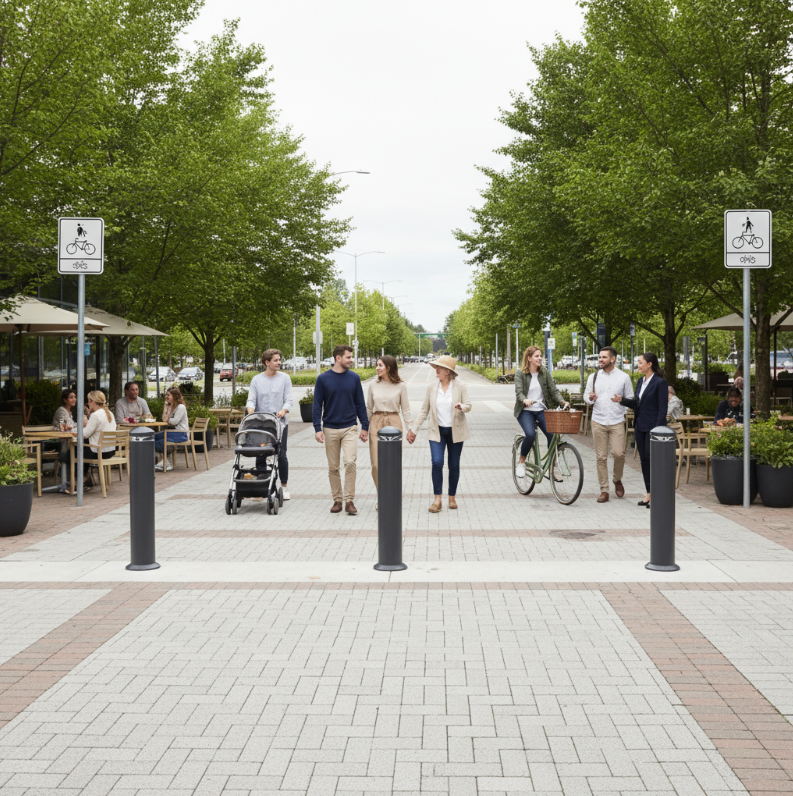
Cities may designate certain low‑speed roadways (10 mph or less) as shared streets.
On shared streets, pedestrians and cyclists have priority.
Traditional jaywalking restrictions are removed within those designated zones.
Important to note:
This change does not eliminate jaywalking laws statewide.
It applies only to specifically designated streets — so it’s crucial to check whether a particular block is a designated shared street.
Right now, most Bellevue roads — including arterials like Bellevue Way, NE 8th Street, and 148th Avenue NE — remain subject to standard pedestrian laws. If you live or work near a shared street, find out whether the designation applies there.
When Do Pedestrians Have the Right of Way in Washington?
It’s a common misconception that drivers always have priority. Under RCW provisions for pedestrian right of way, drivers must stop for pedestrians in marked crosswalks, in unmarked crosswalks at intersections, and when signals indicate pedestrians may cross. Drivers also must exercise due care to avoid striking pedestrians — even those outside crosswalks.
If you’re in a crosswalk → Driver must yield. If you’re crossing mid‑block → You must yield to vehicles.
Crucially, even if a pedestrian breaks the law, drivers still have a duty to avoid collisions. That duty matters a great deal when determining fault after an accident.
How Jaywalking Affects Personal Injury Claims in Washington
A frequent question is: “Can I sue if I was jaywalking?” If you search “Can I sue if I was jaywalking and hit by a car in Bellevue?”, the answer under Washington law is often yes.
Washington Is a Pure Comparative Fault State
Under Washington’s comparative negligence rule:
You can recover compensation even if you were partly at fault.
Your recovery is reduced by your percentage of fault.
Example:
Jury finds you 30% at fault for crossing mid‑block.
Total damages = $100,000.
You can still recover $70,000.
So jaywalking does not automatically bar recovery.
How Does RCW 46.61.240 Apply to Mid‑Block Crossings?
When people ask “How does RCW 46.61.240 apply to mid‑block crossings?”, the statute establishes the basic duty to yield and the prohibition on stepping into traffic where a driver cannot stop. But fault in an injury case depends on the whole context: driver speed, visibility, lighting, and driver distraction all factor into fault allocation.
Real‑World (Hypothetical Bellevue) Scenario
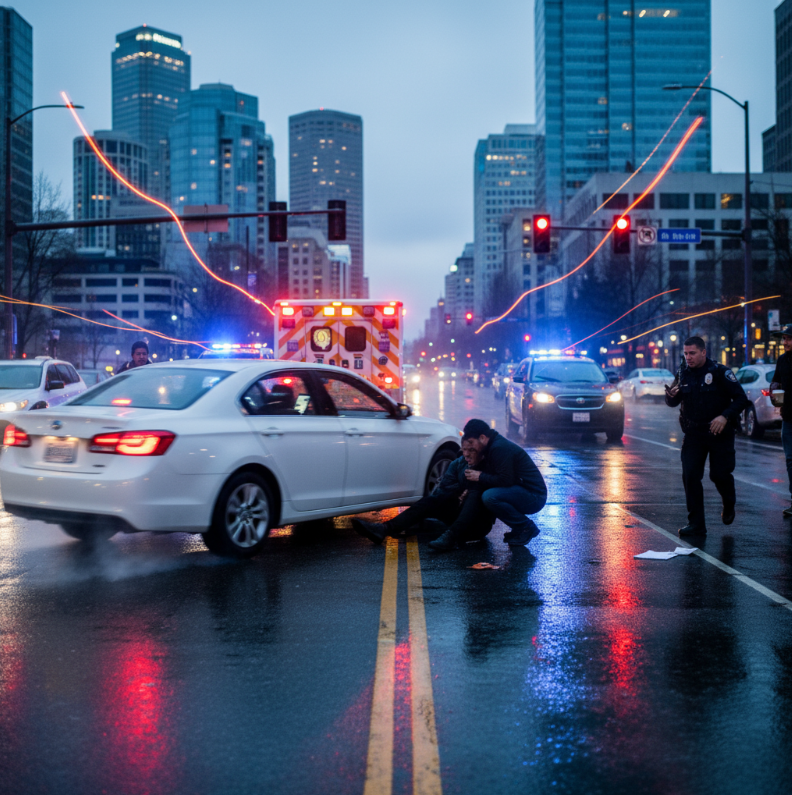
A pedestrian crosses Bellevue Way outside a crosswalk at dusk. A speeding driver looking at their phone fails to brake in time.
Even if the pedestrian violated RCW 46.61.240:
The driver may bear significant fault for speeding and distracted driving.
The pedestrian could still recover substantial compensation.
Insurance companies often overstate pedestrian fault to reduce payouts. An experienced attorney can contest those narratives and protect your rights.
When a pedestrian is struck, insurers often argue:
“You weren’t in a crosswalk.”
“You stepped into traffic.”
“You caused the accident.”
Their objective is to reduce or deny your claim.
What Insurers Often Ignore
Driver speed
Distracted driving
Failure to yield
Poor visibility
Road design flaws
Inadequate lighting
Adjusters are trained to shift blame — especially when jaywalking is involved. A focused investigation can expose the driver’s role and the broader context of the crash.
At R Martin Law Group, we examine:
Traffic camera footage
Witness statements
Vehicle black box data
Police reports
Roadway design and lighting conditions
A thorough liability case often changes negotiations in meaningful ways. If you’re wondering “why would an insurance company blame a jaywalking pedestrian in Bellevue?”, remember their incentives: reduce payments. Evidence often tells a different story.
Pedestrian Accident Risks in Bellevue & King County
Bellevue is a growing urban center with increasing population density, major arterials, busy intersections, and high‑tech commuter traffic. Statewide traffic data show pedestrian fatalities and serious injuries have risen in recent years. High‑speed corridors with limited crossing options increase the risk.
Common contributing factors include:
Distracted driving
Failure to yield
Speeding
Poor nighttime visibility
Complex intersections
Jaywalking citations are relatively rare compared to overall pedestrian injuries. But when accidents occur, the consequences are often severe. Residents across King County — including some who commute between Bellevue and Redmond — face similar pedestrian safety challenges.
Risks, Delays & Legal Challenges After a Pedestrian Accident
Pedestrian claims can be complicated because:
Neutral witnesses are often scarce.
Drivers may claim the pedestrian “appeared suddenly.”
Police reports sometimes reflect initial driver narratives.
Injuries can be severe, and high‑value claims face resistance.
Common Delays
Disputes over fault percentages
Insurance medical examinations
Delayed police report releases
Surveillance attempts by insurers
Early legal involvement helps preserve evidence and avoid mistakes that weaken a claim. Reaching out promptly can make a real difference in the outcome.
Even if you think you were at fault, take these steps — and keep in mind people often search “steps to take after being hit while jaywalking in King County Washington.”
Call 911 immediately.
Seek medical attention—even for seemingly minor injuries.
Do not admit fault at the scene.
Get driver and witness information.
Document the scene if you can — photos, videos, notes.
Contact an experienced personal injury attorney.
Simple statements like “I shouldn’t have crossed” can be used against you later — even if the driver was speeding or distracted. Protect your health and your legal options right away.
If you’re asking “how can I sue after jaywalking and getting hit in Bellevue?”, the best first steps are medical care, evidence preservation, and contacting counsel who understands local courts like the King County Superior Court.
Compensation Available After a Pedestrian Accident
Below is a breakdown of potential damages in a Washington pedestrian injury case:
Category
Examples
Medical Expenses
ER care, surgery, hospitalization, rehabilitation, future treatment
Funeral costs, loss of companionship, financial support
Even if you share fault, Washington law allows recovery that’s reduced by your percentage of blame. With the right advocacy, you can pursue fair compensation for damages that often have long‑term impacts.
1. Is jaywalking completely illegal in Washington?
Jaywalking is still prohibited under RCW 46.61.240 when pedestrians cross outside crosswalks and interfere with traffic. Shared street designations may remove restrictions in limited areas.
2. Can I go to jail for jaywalking?
No. Jaywalking is a traffic infraction, typically punishable by a fine.
3. Can I still file a personal injury claim if I was jaywalking?
Yes. Washington follows pure comparative fault rules. You can recover damages even if you were partially responsible. If you’re researching “What evidence helps an injury claim when a pedestrian was jaywalking?”, helpful items include traffic camera footage, witness statements, vehicle data, and police reports.
4. Does being outside a crosswalk automatically make me at fault?
No. Drivers still have a duty to avoid collisions. Fault is determined based on the totality of the circumstances.
5. How long do I have to file a pedestrian injury lawsuit in Washington?
Generally, the statute of limitations for personal injury in Washington is three years from the date of the accident (see RCW).
6. What if the driver says I “came out of nowhere”?
This is a common defense. Accident reconstruction, surveillance footage, and witness testimony can often disprove such claims.
If you have more questions, legal guidance early on can protect your rights and evidence.
Jaywalking Is Illegal—But That’s Not the End of the Story
So, is jaywalking legal in Washington? In most situations, no — it remains a traffic infraction under state law. While legislative efforts have pushed for reform and shared streets provide limited exceptions, standard pedestrian rules still apply throughout Bellevue and King County.
But here’s the important part: If you are injured — even while jaywalking — you may still have the right to compensation. Insurance companies often try to close claims quickly by blaming pedestrians. Washington’s comparative fault system, however, allows injured victims to recover damages even when partially responsible.
If you’ve been asking “Do shared street designations allow mid‑block crossing without penalty?” remember that such allowances apply only where local governments have formally designated shared streets. When in doubt, check municipal signage or contact local authorities.
Pedestrian injuries can be life‑changing. Medical bills, lost wages, and long‑term disability can overwhelm families. You deserve clarity, advocacy, and experienced legal representation. Reach out early so you can focus on recovery while your legal team protects your rights.
R Martin Law Group proudly represents injured pedestrians throughout Bellevue and King County—fighting for full and fair compensation when it matters most.