Understanding Wrongful Death Under Washington Law
Losing a loved one is devastating. When that loss happens because of someone else’s negligence—whether in a car crash on I‑405, a fatal medical mistake, or a dangerous property condition—families often ask who can file a wrongful death lawsuit and how to protect their rights. If you are asking who can file a wrongful death lawsuit, this guide explains Washington’s rules, the probate steps you’ll likely face in Bellevue, and what beneficiaries may recover.
If you need immediate help, contact R Martin Law Group for a free consultation: R Martin Law Group.
👉 Looking for a Personal Injury Lawyer Near Tacoma, WA? Contact R Martin Law Group today for a free consultation.
Understanding Wrongful Death Under Washington Law

In Washington, wrongful death claims are governed primarily by the statutes found in the Revised Code of Washington (RCW), including RCW 4.20.010 and RCW 4.20.020. The law defines:
- Who has the authority to file the lawsuit
- Who may receive wrongful death damages under RCW 4.20.020 in King County
- What happens if there is no spouse or children
- How parents and siblings fit into the statutory priority
Washington law makes a key distinction: only the court-appointed personal representative of the decedent’s estate may file the wrongful death lawsuit. That statutory requirement helps ensure a single, unified claim that protects all statutory beneficiaries.
If you want help understanding the details for Bellevue, nearby Seattle residents often face the same probate and claims process, and our team can assist families across King County.
Who Can File a Wrongful Death Lawsuit (Focus)
Who can file a wrongful death lawsuit
Under Washington law, the only party with standing to commence and maintain a wrongful death action is the personal representative of the decedent’s estate. That means even a surviving spouse or child cannot file the wrongful death suit individually unless they first are appointed as the personal representative through probate.
If you are wondering how can a surviving spouse file a wrongful death lawsuit in Washington state, the usual route is to open probate so the spouse can be appointed as the personal representative (if appropriate) and then the personal representative files the wrongful death action on behalf of the beneficiaries.
If you have questions about the probate requirements and timing, our Bellevue attorneys can explain the specific steps and timelines.
Who Has the Legal Authority to File the Lawsuit?
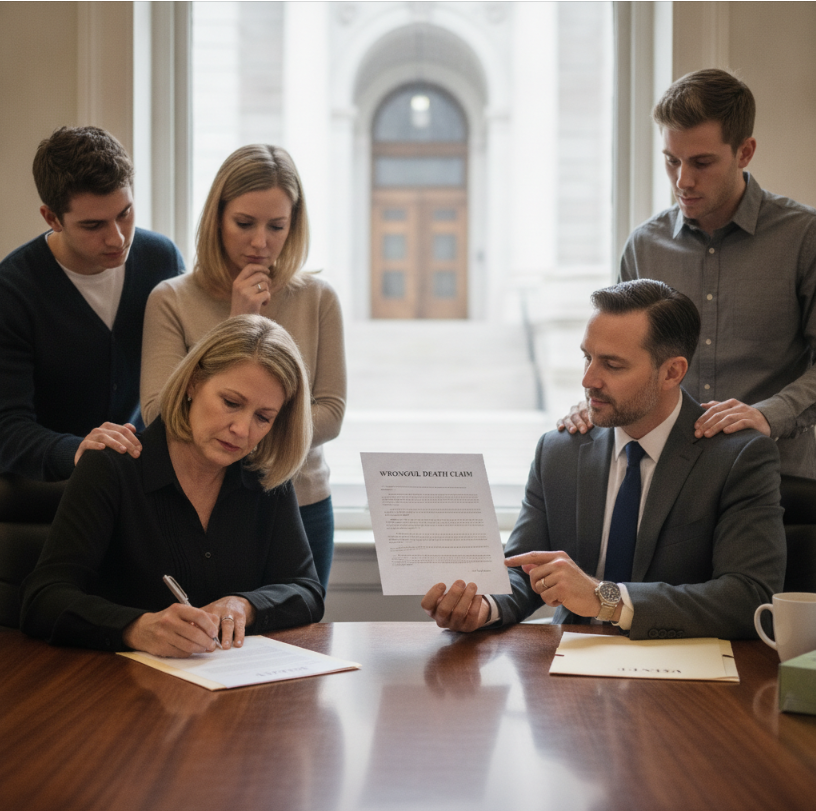
✅ The Personal Representative
The personal representative is the only person authorized to file and maintain the wrongful death claim. Typical pathways to appointment include:
- Election of the executor named in the decedent’s will; or
- Court appointment of an administrator when there is no will.
In King County, appointment is handled through the King County Superior Court probate process. The court issues either Letters Testamentary (if there is a will) or Letters of Administration (if there is no will), which formally empower the personal representative to bring wrongful death and survival claims.
If you need a plain checklist, see the section below on what are the steps to appoint a personal representative for a wrongful death claim.
Why doesn’t the spouse file directly?
Although a surviving spouse is often the primary beneficiary, Washington law centralizes litigation in the estate to protect all potential beneficiaries, ensure court oversight, and allow proper allocation of damages.
If you are in Renton or Bellevue and asking what are the steps to appoint a personal representative for a wrongful death claim, the basic steps include opening probate, notifying heirs, and obtaining the court-issued letters that provide authority to sue.
Who Receives the Compensation? (The Two-Tier Beneficiary System)
Washington uses a two-tier system under RCW 4.20.020 to determine who may recover. The statute divides beneficiaries into Tier One and Tier Two:
🥇 Tier One Beneficiaries (Primary)
If any Tier One beneficiaries exist, the wrongful death action is for their exclusive benefit. Tier One includes:
- Surviving spouse
- State-registered domestic partner
- Children
- Stepchildren
If Tier One relatives are present, Tier Two cannot recover.
🥈 Tier Two Beneficiaries (Secondary)
If there is no surviving spouse, domestic partner, child, or stepchild, then the action may benefit parents and siblings.
Washington’s 2019 change to the statute removed former financial-dependency and U.S. residency barriers for parents and siblings—expanding who can seek recovery when no Tier One beneficiaries exist.
If your question is who may receive wrongful death damages under RCW 4.20.020 in King County, the short answer is: Tier One beneficiaries have priority; absent them, Tier Two (parents and siblings) may recover.
Who Cannot File or Recover?
Certain close-but-nonstatutory relationships—like unmarried long-term partners who are not state-registered, fiancés, grandparents, aunts/uncles, cousins, and close friends—generally cannot recover under the wrongful death statute. That can feel unfair, and an attorney can review whether the estate has any alternate claims.
What Is the Difference Between a Wrongful Death Claim and a Survival Action?
A wrongful death claim compensates the surviving beneficiaries for their losses (loss of financial support, companionship, funeral expenses). A survival action allows the estate to recover claims the deceased could have brought before death (pre-death medical expenses, lost wages, certain pain and suffering). Both are typically filed by the personal representative together to preserve all recovery.
Real-World Examples in Bellevue & King County
Example 1: Married Individual With Children
A Bellevue father is killed in a truck collision on I‑405. Survived by a wife and two minor children. The personal representative—often the wife once appointed—files the wrongful death and survival claims on behalf of the Tier One beneficiaries. Parents of the deceased cannot recover when Tier One relatives exist.
Example 2: Unmarried Adult With No Children
A 28-year-old woman is killed in a pedestrian accident in downtown Bellevue. No spouse or children; survived by parents and a sibling. The personal representative files the action for Tier Two beneficiaries.
Example 3: Long-Term Unmarried Partner
A man in a 15-year committed but unregistered relationship dies in a construction accident. If a biological child exists (Tier One), that child is the primary beneficiary. The unregistered partner would not recover under the wrongful death statute unless they were a state-registered domestic partner.
The Role of Insurance Companies in Wrongful Death Cases
Insurers are often involved in auto, trucking, premises, and medical wrongful death claims. They may dispute beneficiary status, push for low early settlements, or delay probate. Having experienced counsel early helps protect the estate from unfair tactics and ensures damages are properly calculated when the decedent was a high-income earner or left minor children.
If you are considering how long do family members have to file a wrongful death claim in Washington, note the statute of limitations guidance below and start the process early to preserve your rights.
👉 Injured in Bellevue? Contact R Martin Law Group today for a free consultation.
Risks, Delays, and Legal Deadlines
⏳ Statute of Limitations
How long do family members have to file a wrongful death claim in Washington? In most wrongful death cases the statute of limitations is three years from the date of death. Missing this deadline will usually bar recovery.
Probate Delays
Families sometimes delay opening probate because they are grieving or believe there are few assets. But without appointing a personal representative, the wrongful death lawsuit cannot proceed. If you need to know the requirements and timeline to open probate for wrongful death cases in Bellevue, the process typically begins with filing a probate petition, notifying heirs, and obtaining court-issued letters—steps handled through the King County Superior Court.
Family Disputes
Disagreements often arise over who should serve as the personal representative or who qualifies as a beneficiary. An experienced wrongful death attorney can help resolve these sensitive matters while preserving the claim.
Wrongful Death Filing Checklist (Washington State)
| Step | Description |
|---|---|
| 1 | Determine statutory beneficiaries (Tier 1 or Tier 2) |
| 2 | Open probate in King County Superior Court |
| 3 | Appoint personal representative |
| 4 | Investigate liability and gather evidence |
| 5 | File wrongful death and survival claims |
| 6 | Engage in negotiations or litigation |
| 7 | Allocate damages to statutory beneficiaries |
Start with Step 1 and get legal guidance early—this preserves options and protects timelines.
Types of Compensation Available
| Type of Damage | Examples |
|---|---|
| Economic Damages | Lost income, lost benefits, funeral costs, medical bills |
| Non-Economic Damages | Loss of companionship, emotional suffering, loss of guidance |
| Pre-Death Damages | Pain and suffering before death (via survival action) |
Frequently Asked Questions (FAQ)
1. Can multiple family members file separate wrongful death lawsuits?
No. Washington law requires a single action filed by the personal representative on behalf of all statutory beneficiaries.
2. What if no estate has been opened?
An estate must be opened to appoint a personal representative. Without this step, the wrongful death claim generally cannot legally proceed.
3. Can parents sue for the death of an adult child?
Yes—if there is no surviving spouse, domestic partner, or children. Parents fall into Tier Two under RCW 4.20.020.
4. What if the deceased had no close family at all?
If no statutory beneficiaries exist, recovery may be limited to estate-based claims rather than traditional wrongful death damages.
5. How long does a wrongful death case take in King County?
It varies. Some cases settle within 6–12 months; complex litigation can take several years, especially when liability is disputed.
6. Can a domestic partner file a claim?
Only if the partner is a state-registered domestic partner under Washington law.
Protecting Your Family’s Rights After a Tragedy
When a loved one dies because of someone else’s negligence, the law cannot undo the loss. But it can provide financial security for survivors, accountability for wrongdoing, and a measure of justice. Knowing who can file a wrongful death lawsuit and following the correct probate and filing steps is essential to preserving those rights.
If you need step-by-step legal guidance—such as how can a surviving spouse file a wrongful death lawsuit in Washington state, or what are the requirements and timeline to open probate for wrongful death cases in Bellevue—contact R Martin Law Group. Our Bellevue-based team helps grieving families across King County, including those in Seattle and Renton, navigate probate, litigation, and insurance challenges with compassion and strength.
Ready to speak with an attorney? Schedule a consultation with R Martin Law Group today.