Car accidents can be physically and emotionally draining. One of the most important steps after a collision is car accident determining fault by location of damage, as fault impacts insurance claims, compensation, and sometimes legal responsibility. Insurance companies, police officers, and lawyers commonly analyze the location of damage on the vehicles involved because damage patterns provide valuable insight into how the crash happened. However, these patterns don’t tell the whole story on their own. This article explores how to determine fault in a car accident based on damage location, the role of other critical evidence, and what accident victims in Bellevue and surrounding areas like Kirkland and Redmond should consider.
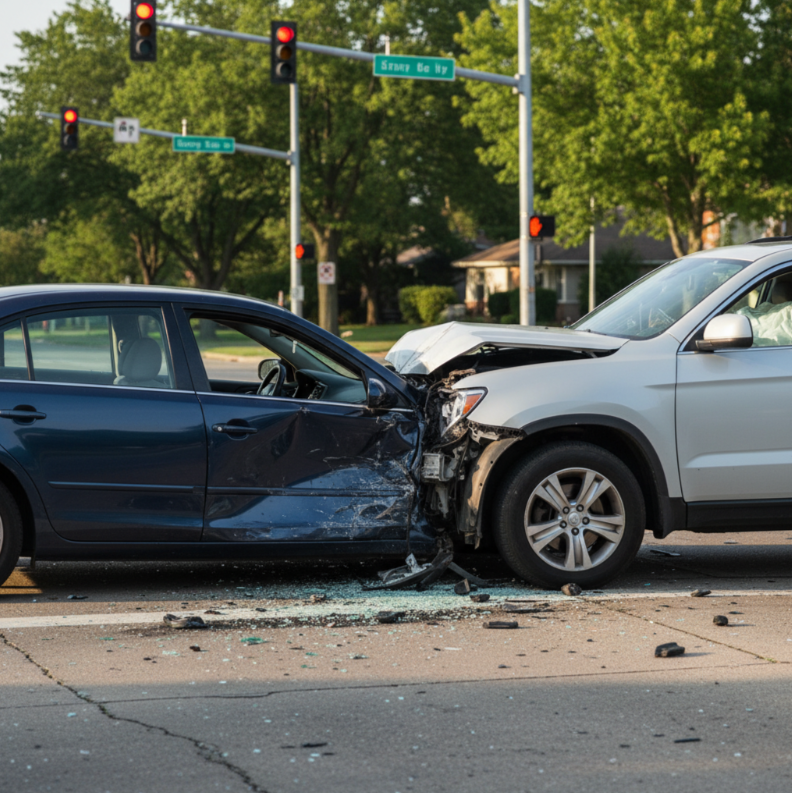
When vehicles collide, the damaged areas often reveal where the initial impact occurred and what type of crash took place. For example:
Rear-end damage typically points to the car behind hitting the vehicle in front.
Front-end damage suggests a vehicle impacted another from the front or collided with an object.
Side damage implies a side-impact or “T-bone” collision, often caused by improper lane changes or running a red light.
According to Washington law, analyzing damage location helps experts piece together the likely sequence of events, which assists in identifying the negligent driver. Still, while damage location is an important factor, why is damage location important in proving fault in vehicle collisions? Because evasive actions, weather conditions, or multi-impact crashes can complicate the picture.
While damage location provides important clues, comprehensive fault determination depends on several factors:
1. Police Reports
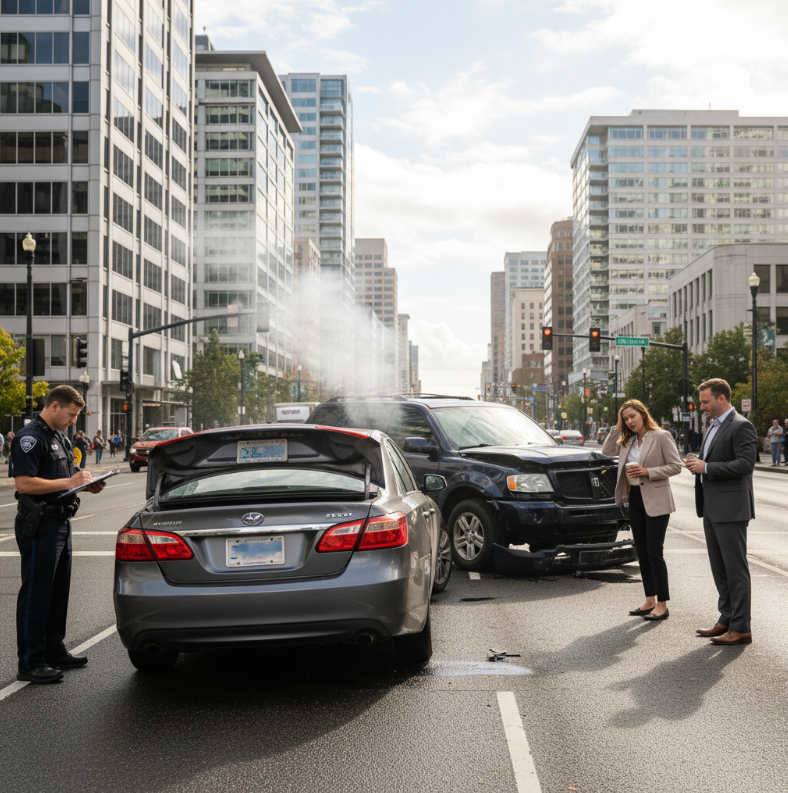
Police officers document the crash scene, take photographs, note vehicle positions, and collect statements. Their reports often include diagrams showing damage locations and impact points.
2. Witness Statements and Surveillance Footage
Eyewitness accounts and video—such as from traffic cameras, security systems, or dashcams—can confirm or contradict assumptions made from damage analysis.
3. Accident Reconstruction Experts
Using physics, skid mark analysis, paint transfers, vehicle black box data, and advanced software, experts reconstruct collision sequences for accurate fault assessment.
4. Insurance Company Investigations
Adjusters review damage closely, compare it to driver accounts, and often collaborate with experts to assign fault correctly.
5. Road Conditions and Traffic Laws
Weather, lighting, road layouts, relevant traffic laws (RCW), and adherence to regulations all influence fault decisions.
Imagine a typical Bellevue situation where two cars collide on a busy road—one sustains rear bumper damage, the other front-end damage.
Under Washington State law—and traffic norms familiar to residents in Seattle and Kent—the trailing vehicle was likely following too closely or distracted, making that driver liable.
However, if the leading vehicle stopped suddenly without cause or reversed unexpectedly, fault may be shared or reversed.
Additional evidence, like skid marks, surveillance footage from nearby businesses, or witness statements, can clarify fault.
Complex incidents, such as multi-car pileups on highways maintained by WSDOT, frequently involve damage across various vehicle sections and require detailed accident reconstruction and police report analysis to establish responsibility.
What Role Do Insurance Companies Play?
Insurance adjusters heavily use vehicle damage patterns to quickly assess liability, but they also weigh driver statements and other evidence.
Common challenges insurers face include:
Drivers withholding or altering facts.
Both drivers disputing responsibility.
Multiple vehicles or impacts causing complex damage.
Distinguishing earlier damage from that caused by the accident.
They may apply comparative negligence principles, dividing fault based on each party’s contribution and affecting claim settlements.
Risks & Delays in Fault Determination
Victims often experience:
Delays in vehicle repairs and insurance payouts while fault is contested.
Denied or disputed claims.
Confusion about legal terminology and liability.
For those in King County—including Renton and Federal Way—documenting thoroughly, seeking timely medical care, and consulting a qualified attorney remain crucial for protecting legal rights.
Prevention Tips and Next Steps for Accident Victims
Take clear photos immediately of all damage and the accident scene.
Collect contact details from witnesses.
Request a copy of the police report promptly.
Avoid admitting fault at the scene.
Consult a Bellevue personal injury lawyer to understand your rights and options.
Keep organized records of medical bills, repair estimates, and insurer communications.
✅ Car Accident Fault Determination at a Glance: Checklist
Step
Description
1. Examine Damage Location
Identify front, rear, side, or multiple damage points
2. Collect Scene Evidence
Take photos, notes, witness info
3. Obtain Police Report
Review official accident documentation
4. Analyze Driver Accounts
Compare statements for consistency
5. Review Traffic Laws
Consider right-of-way, signals, and road conditions
6. Consult Experts (if needed)
Use accident reconstruction or engineering expertise
7. Insurance Evaluation
Submit all evidence with claims to insurance companies
8. Legal Consultation
Contact experienced Bellevue personal injury attorneys
🧾 Frequently Asked Questions (FAQs)
1. Can the location of vehicle damage alone determine fault in a car accident?
No. Damage location offers valuable hints about the crash, but determining fault requires combining it with other evidence like eyewitness accounts, police reports, traffic laws, and sometimes accident reconstruction.
2. What if both vehicles show damage in the front?
This could indicate a head-on or complex crash. Fault depends on who crossed into oncoming traffic, right-of-way rules under RCW, traffic signals, and driver behavior.
3. How do insurance companies use damage location in their investigations?
Adjusters examine impact points and collision types using vehicle damage patterns to verify driver statements and assign liability consistent with traffic laws. Independent appraisals and expert consultations may also be involved.
4. Can witness statements or footage override damage location evidence?
Yes. Witnesses and video can confirm or contradict damage-based assumptions, often providing clearer insight into what happened right before the crash.
5. What are some common exceptions where damage patterns don’t indicate fault?
Sudden stops due to hazards, mechanical failures, or evasive driving can cause damage inconsistent with usual fault assumptions. Thorough investigation is critical.
Conclusion
Understanding car accident determining fault by location of damage is a helpful but complex process. Damage patterns supply critical clues about collision causes, assisting insurance companies, police, and attorneys. However, fault determination must consider all evidence: vehicle damage, driver statements, witness testimony, police reports, and accident reconstruction.
If you’ve been injured in a Bellevue or King County car accident, having an experienced personal injury lawyer is essential to protect your rights and pursue fair compensation. The R Martin Law Group understands this complexity and is ready to provide compassionate, expert guidance.
👉 Injured in Bellevue? Contact R Martin Law Group today for a free consultation.