

Is it worth suing after a car accident? That question is often top of mind for Bellevue drivers the moment the shock of a crash fades. If you were injured on I‑405, NE 8th Street, or another local corridor, deciding whether to pursue litigation depends on your injuries, fault, insurance coverage, and how adjusters treat your claim.
This guide explains when suing makes sense, when it may not, and how Bellevue accident victims can protect their rights while considering local realities — including nearby Seattle traffic patterns and resources across King County.
👉 Looking for a Personal Injury Lawyer Near Bellevue, WA? Contact R Martin Law Group today for a free consultation.
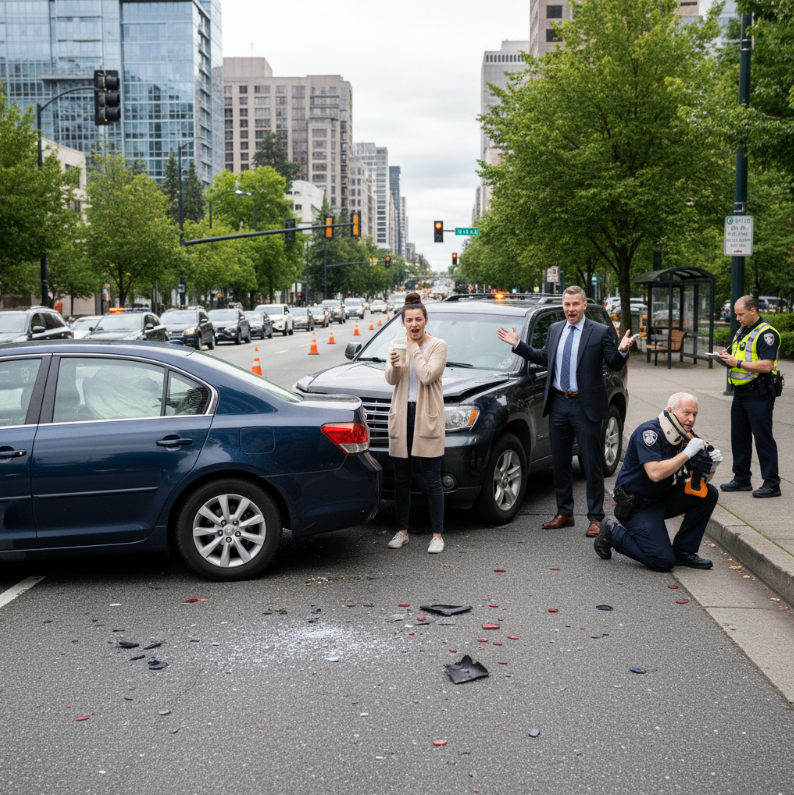
The Reality of Car Accidents in Washington State
Car accidents are unfortunately common across King County and Washington as a whole. According to data from the Washington State Department of Transportation (WSDOT):
- 103,160 total crashes occurred in Washington in 2022
- 700 were fatal crashes
- 2,644 involved serious injuries
While many crashes involve minor injuries or property damage, thousands of Washington residents suffer life-altering harm every year. In busy areas like Bellevue — with congestion around I‑405, SR‑520, and downtown corridors — rear-end collisions, distracted driving crashes, and intersection accidents are frequent.
👉 Injured in Bellevue? Contact R Martin Law Group today for a free consultation.
Takeaway: Accidents are common; knowing your rights early helps protect your recovery.

Understanding Your Legal Rights After a Crash
Before deciding whether to sue, it’s critical to understand your rights under Washington law.
1. Washington Is a Fault-Based State
This means the at-fault driver (and their insurance company) is responsible for paying damages.
Minimum insurance requirements in Washington include:
- $25,000 for bodily injury per person
- $50,000 per accident
- $10,000 for property damage
If your damages exceed these limits, a lawsuit may be necessary to pursue additional compensation.
Takeaway: If losses go beyond policy limits, litigation may be the only path to full recovery.
2. Pure Comparative Negligence Rule
Washington follows a pure comparative negligence system.
This means:
- You can recover damages even if you are partially at fault.
- Your compensation is reduced by your percentage of fault.
Example:
- Total damages: $100,000
- You are 20% at fault
- You recover $80,000
This rule makes legal representation extremely important, because insurance companies often try to inflate your percentage of fault to reduce payouts.
Takeaway: Even partial fault doesn’t bar recovery — but the percentage matters.
3. Statute of Limitations
Under RCW 4.16.080, you generally have:
- Three years from the date of the accident to file a personal injury lawsuit in Washington.
If you miss this deadline, you typically lose your right to sue.
Takeaway: Don’t wait — the clock can run out on your claim. If you’re asking “how long do I have to sue after a car accident in Washington state,” the short answer is generally three years, but an early consultation can confirm any exceptions.
Is it worth suing after a car accident? (When to Consider Litigation)
Not every accident requires a lawsuit. But certain situations strongly suggest legal action may be necessary.
✅ 1. You Suffered Moderate to Severe Injuries
Settlement data across Washington suggests:
- Minor injuries (whiplash, soft tissue): often $3,000–$25,000
- Moderate injuries (fractures, herniated discs): $15,000–$150,000
- Severe injuries (TBI, spinal damage, permanent disability): $100,000–$1 million+
If your injuries require surgery, long-term therapy, or result in permanent impairment, accepting a quick insurance settlement could leave you financially exposed. If you’re wondering “what should I consider before suing after a Bellevue car accident with injuries,” injury severity and future care needs should be front and center.
Takeaway: Serious injuries usually justify taking the claim further.
✅ 2. The Insurance Company Is Offering a Low Settlement
Insurance adjusters are trained to:
- Minimize claim values
- Question medical necessity
- Argue pre-existing conditions
- Shift blame
If an offer does not fully cover medical bills, future medical care, lost wages, and pain and suffering, it may be worth escalating your claim. If you’ve asked “how much can I sue for after a car accident in Washington state,” an attorney will evaluate your total past and future damages to estimate claim value.
Takeaway: A low early offer is often a starting point, not the final answer.
✅ 3. Fault Is Being Disputed
If the other driver claims you were speeding, distracted, or otherwise at fault, your compensation could be reduced. Filing a lawsuit allows formal investigation tools like subpoenas and depositions to uncover the truth.
If you need to know “where do I file a car accident lawsuit in King County Washington,” cases involving Bellevue residents are typically filed in the King County Superior Court.
👉 Need help understanding your legal rights? Visit our Bellevue injury attorney page.
Takeaway: When fault is contested, the legal process can level the playing field.
When It May Not Be Worth Suing
There are situations where litigation may not be necessary:
🚗 Minor Injuries + Fair Insurance Offer
If you had limited treatment and the insurer covers all expenses plus reasonable pain and suffering, a lawsuit may not add value.
🚗 Limited Insurance Coverage
If the at-fault driver only carries minimum limits and has no collectible assets, recovery may be capped. You might ask, “is it worth suing after a car accident when the at fault driver has minimum liability insurance?” In many cases, pursuing your own Uninsured/Underinsured Motorist (UM/UIM) coverage or evaluating the at-fault driver’s assets affects the answer.
An experienced attorney can evaluate UIM options or asset recovery possibilities.
Takeaway: Sometimes the practical route is to accept a fair settlement — but verify the offer first.
The Insurance Company’s Role in Your Decision
Most car accident cases settle before trial. Filing a lawsuit does not automatically mean you’ll go to court. Often, it simply:
- Signals seriousness
- Triggers stronger negotiation
- Opens discovery tools
Insurance companies typically:
- Investigate the claim
- Request medical records
- Evaluate liability
- Make an initial low offer
- Negotiate
Without legal representation, many accident victims accept significantly less than their claim is worth.
Takeaway: A lawsuit can be a negotiation tool, not just a path to court.
Real-World Bellevue Example
Imagine a Bellevue driver rear-ended at a stoplight on NE 24th Street.
Injuries:
- Herniated disc
- Six months of physical therapy
- $32,000 in medical bills
- $18,000 in lost wages
The insurer offers $40,000 total.
But total damages may exceed $100,000 when future care and pain and suffering are included. In this scenario, filing suit may significantly increase leverage and potential recovery — the same decision many drivers in nearby Redmond and Seattle weigh after serious collisions.
Takeaway: When long-term needs aren’t reflected in an offer, legal action can protect your future.
Risks and Considerations Before Suing
While lawsuits can increase compensation, they also involve:
⏳ Time
Cases can take several months to over a year, and longer if trial is required.
💼 Legal Costs
Most personal injury attorneys (including R Martin Law Group) work on a contingency fee basis, meaning no upfront fees and the attorney is paid only if you win.
🧠 Emotional Stress
Litigation can involve depositions, independent medical exams, and court appearances — but strong legal guidance minimizes these burdens.
👉 Ready to speak with an attorney? Schedule a consultation with R Martin Law Group today.
Takeaway: There are costs and stresses to consider — but you won’t be handling them alone.
Car Accident Lawsuit Evaluation Checklist
| Factor | Question to Ask | Why It Matters |
|---|---|---|
| Injury Severity | Did I suffer long-term or permanent injuries? | Severe injuries justify higher compensation |
| Medical Costs | Are my bills exceeding insurance limits? | May require litigation to recover full value |
| Lost Income | Have I missed significant work? | Future earning capacity may be affected |
| Fault Dispute | Is the insurer blaming me? | Comparative negligence reduces payouts |
| Settlement Offer | Does the offer cover future expenses? | Early offers are often undervalued |
| Insurance Limits | Is there sufficient coverage? | May require UIM claim or lawsuit |
If you answered “yes” to several of these, legal action may be worth serious consideration.
Takeaway: Use the checklist to make a clear, informed decision.
Practical Steps Before Deciding to Sue
If you’re unsure, take these steps first:
- Seek complete medical evaluation
- Follow all treatment recommendations
- Document pain levels and recovery
- Preserve crash evidence (photos, police report)
- Avoid recorded statements without legal advice
- Consult a Bellevue personal injury attorney
An early consultation can clarify whether negotiation or litigation is the better strategy. If you’re asking “what should I consider before suing after a Bellevue car accident with injuries,” these practical steps help preserve your claim — and they’re the same actions recommended to drivers in nearby Kent or Issaquah who are protecting their rights.
Takeaway: Gather evidence and consult counsel — it makes the choice clearer.
Frequently Asked Questions
1. How long does a car accident lawsuit take in Washington?
Most cases resolve within 6–18 months. Complex cases involving severe injuries may take longer if they proceed to trial.
2. Will I have to go to court?
Not necessarily. The majority of personal injury cases settle before trial. Filing suit often strengthens negotiating power without requiring courtroom testimony.
3. What damages can I recover if I sue?
You may recover:
- Medical expenses (past and future)
- Lost wages
- Loss of earning capacity
- Property damage
- Pain and suffering
- Emotional distress
In rare cases involving extreme misconduct, punitive damages may be considered, though Washington generally limits them.
4. How does comparative negligence affect my case?
Your award is reduced by your percentage of fault. Even if you are 50% responsible, you can still recover 50% of your damages.
5. What if the other driver has no insurance?
You may pursue your Uninsured Motorist (UM) coverage or a personal lawsuit against the driver. An attorney can evaluate asset recovery options.
6. Is hiring a lawyer really necessary?
For minor property-damage-only cases, possibly not. But for injury cases involving medical treatment, legal representation often results in significantly higher net recoveries — even after fees.
Takeaway: Ask for a consultation — an early evaluation often pays off.
Final Thoughts – Is It Worth It?
Suing after a car accident in Washington can absolutely be worth it — when your injuries are serious, fault is disputed, or insurance offers fall short. The key is understanding the full value of your damages, Washington’s comparative negligence rules, insurance policy limits, and the long-term medical impact.
If you’ve been asking “how much can I sue for after a car accident in Washington state,” or “is it worth suing after a car accident when the at fault driver has minimum liability insurance,” start with a careful evaluation of damages and coverage. If you need to know where to file, contact the King County Superior Court or speak with counsel who handles local filings and negotiations.
If you or a loved one has been injured in Bellevue or anywhere in King County, you don’t have to make this decision alone.
👉 Injured in Bellevue? Contact R Martin Law Group today for a free consultation.
Your health. Your recovery. Your future. Make sure they’re protected.
Keep reading

Bellevue Head-On Car Accidents Guide
A head on car accident is one of the most devastating types of crashes on Washington roads. When two vehicles collide front-to-front, the combined…

Does Medical Insurance Cover Car Accidents
On this pageDoes Medical Insurance Cover Car Accidents in Washington State?Background: Who Pays Medical Bills After a Car Accident?What Is PIP Coverage in Washington?Does…

Do Men or Women Crash More?
On this pageDo Men or Women Get in More Car Accidents? What the Latest Data Means for Washington DriversDo men or women get in…