

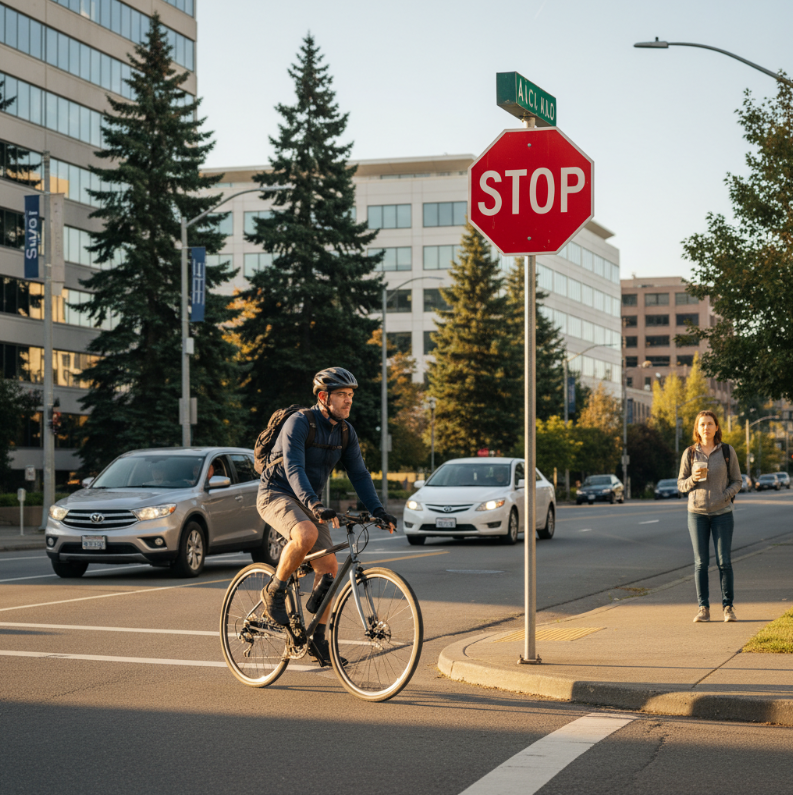
Can cyclists treat stop signs as yields in WA? If you’ve driven or biked through Bellevue lately — or cruised nearby in Seattle — you may have noticed a cyclist slow at a stop sign, look for traffic, and continue without putting a foot down. Is that legal?
In Washington State, the answer is yes — under specific conditions.
Since October 1, 2020, Washington has allowed cyclists to treat stop signs as yield signs under the law commonly called the “Idaho Stop.” Despite being in force for several years, confusion persists among drivers, cyclists, and even insurance companies. This post explains Washington’s “Idaho Stop” rule allowing cyclists to treat stop signs as yields, the legal limits/exceptions, how it affects fault and insurance in bicycle crashes (Bellevue/King County), evidence and claim steps.
If you were injured in a bicycle accident in Bellevue or elsewhere in King County, knowing how this law works can materially affect fault, insurance claims, and your legal options.
In this guide we’ll explain:
- What Washington law actually says
- When cyclists still must stop
- How the rule affects fault in crashes
- Common insurance tactics
- What injured victims should do next
👉 Looking for a Personal Injury Lawyer Near Renton, WA? Contact R Martin Law Group today for a free consultation.
Background – What Is the “Idaho Stop” and Why Did Washington Adopt It?
The idea started in Idaho in 1982, which is why many call it the “Idaho Stop.” In short:
- Cyclists may treat stop signs as yield signs.
- Cyclists must treat red lights as stop signs.
Washington adopted its version through Substitute Senate Bill 6208, amending [RCW 46.61.190]
When Cyclists Still Must Stop
There are specific situations and limits to the Idaho Stop—cyclists must always yield to pedestrians and to other traffic with the right-of-way, and the maneuver must be safe and prudent. Local conditions, signage, or other laws can also affect whether a full stop is required.
How the Rule Affects Fault in Crashes
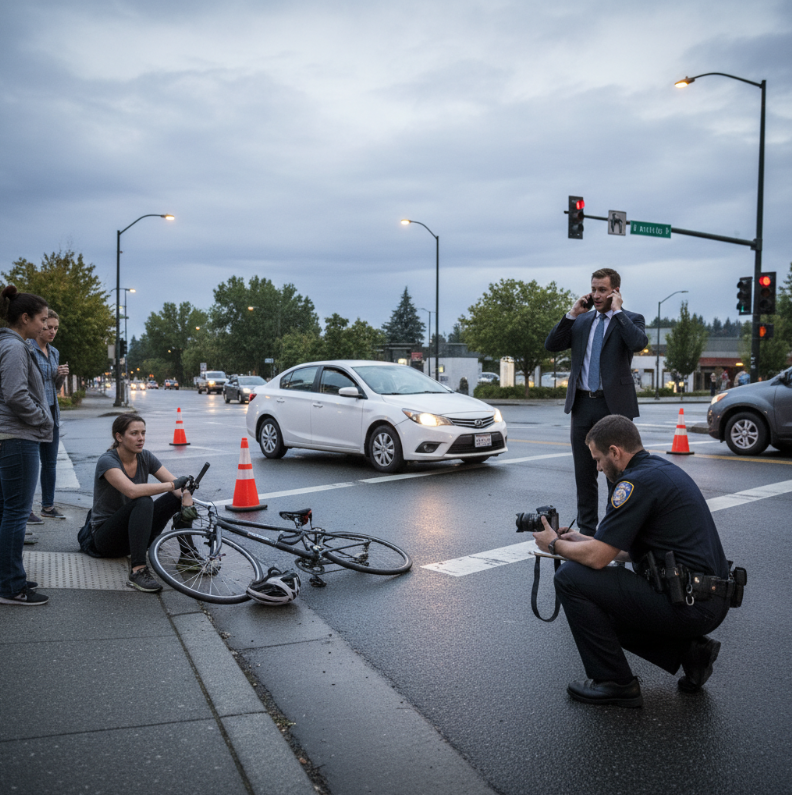
How courts, police reports, and insurance companies treat the Idaho Stop varies. Even when the maneuver is legal, fact-specific evidence determines fault in a crash: whether the cyclist yielded properly, visibility, the driver’s conduct, speed, and other contributing factors. Proper documentation—photos, witness statements, and official reports—matters a lot.
Common Insurance Tactics
Insurance adjusters may try to simplify fault into a tidy narrative. Expect questions about whether the cyclist “stopped” and how the reporting officer described the scene. Clear evidence that the cyclist slowed, scanned, and yielded can blunt attempts to assign undue blame solely because a foot wasn’t put down.
What Injured Victims Should Do Next
If you were injured, prioritize safety and evidence: get medical care, take photos of the scene and injuries, collect witness contacts, and get the police report. Notify your insurer but be cautious with recorded statements. Consulting an attorney familiar with Bellevue and King County bicycle crash practice can help preserve rights and insurance recovery.
Quick checklist:
- Seek medical attention and keep records.
- Photograph vehicles, bicycle, intersection lines/signs, and injuries.
- Collect witness names and phone numbers.
- Get the police report number and officer contact.
- Consider consulting an attorney before giving recorded statements to insurers.
This guide provides a practical overview. For case-specific advice about how Washington’s Idaho Stop affects a particular crash, consult local counsel experienced in bicycle crash claims.
Keep reading

Bellevue Bicycle Crash Statistics
On this pageBicycle vs. Car Accident Statistics: What Bellevue Cyclists Need to Know in 2026bicycle vs car accident statistics: The Current National PictureWhat’s Happening…

Commercial Vehicle Accident Claims Involving Pedestrians and Bicyclists in WA
When a commercial vehicle accident occurs involving a pedestrian or bicyclist, the results can be devastating. In the bustling urban environment of Bellevue and…

Dealing With the Aftermath of a Bicycle Accident
A bicycle accident can turn an ordinary day into a whirlwind of shock, pain, and unanswered questions. At R Martin Law Group, serving Bellevue…