What to Do After a Motorcycle Accident in Bellevue, Washington
what to do after a motorcycle accident — those five words can change the outcome of your recovery and your claim. A motorcycle accident can alter your life in seconds. One moment you’re riding along I-405 or navigating downtown Bellevue traffic — the next, you’re on the pavement, injured, disoriented, and unsure what to do next.
Motorcyclists face significantly greater risks than drivers of passenger vehicles. According to the Washington Traffic Safety Commission (WTSC), motorcyclists account for a disproportionately high percentage of traffic fatalities in the state each year. Nationally, the NHTSA reports that more than 6,000 motorcyclists were killed in a recent year, representing roughly 15% of all traffic deaths, even though motorcycles make up a much smaller percentage of registered vehicles.
In Washington State alone, there are over 90 motorcycle-related deaths annually, with many more riders suffering severe or catastrophic injuries.
If you or a loved one has been injured in a motorcycle crash in Bellevue or King County, knowing what to do after a motorcycle accident can protect both your health and your legal rights. This guide explains what to do after a motorcycle accident in Bellevue, and it also covers related questions Bellevue riders commonly ask in nearby communities like Seattle and Redmond.
This comprehensive guide walks you through:
Immediate steps to take after a motorcycle accident
Washington laws that affect your claim
How insurance companies handle motorcycle injury cases
Your rights under Washington’s comparative fault system
Practical steps to protect your recovery and compensation
Common Causes of Motorcycle Accidents in Bellevue & King County
Understanding how motorcycle crashes happen can clarify liability and strengthen your claim.
According to regional traffic data and legal analysis (including state sources such as WSDOT), the most common causes include:
1. Left-Turn Collisions
One of the most frequent crash types occurs when a driver turns left in front of an oncoming motorcycle. Drivers often misjudge speed or claim they “didn’t see” the rider.
2. Speeding
Both rider and driver speeding significantly increases crash severity. Higher speeds mean longer stopping distances and more severe injuries.
3. Distracted Driving
Texting, navigation apps, and in-car screens contribute to drivers failing to see motorcycles in blind spots.
4. Impaired Driving
Alcohol or drug impairment remains a factor in many fatal motorcycle crashes in Washington.
5. Unsafe Lane Changes
Drivers who fail to check mirrors or blind spots frequently sideswipe motorcycles.
6. Inexperienced Riders
Lack of formal training can increase crash risk, particularly during emergency maneuvers.
Bellevue’s urban traffic patterns — congested intersections, highway on-ramps, and multi-lane arterials — create additional risk factors for riders. Riders in nearby Issaquah and Kirkland can face similar hazards. Knowing these common causes helps you stay safer and better protect your claim.
👉 Injured in Bellevue? Contact R Martin Law Group today for a free consultation.
Step-by-Step: what to do after a motorcycle accident — immediate priorities
When people ask what to do immediately after a motorcycle accident in Bellevue Washington, they need clear, practical steps. The moments after a crash are overwhelming. Focus on these priorities:
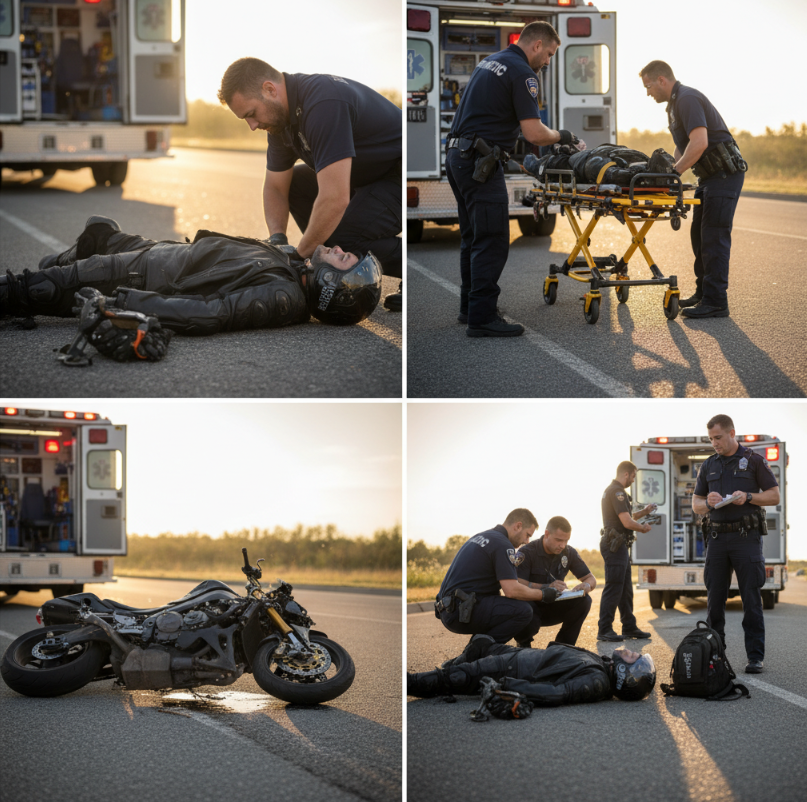
1. Get to Safety and Call 911
If physically able:
Move out of active traffic.
Call 911 immediately.
Request police and medical assistance.
A police report becomes critical evidence later.
2. Accept Medical Evaluation
Even if injuries seem minor, adrenaline can mask symptoms. Motorcycle crashes frequently cause:
Traumatic brain injuries (TBIs)
Internal bleeding
Spinal cord damage
Fractures
Road rash with infection risk
For authoritative health guidance on traumatic injuries and infection prevention, see the CDC.
Prompt medical documentation strengthens both your health outcome and your injury claim.
3. Exchange Information
Collect:
Driver’s name and contact info
Insurance details
License plate number
Driver’s license number
4. Identify Witnesses
Neutral third-party statements can make or break disputed liability claims. Write down names and phone numbers while memories are fresh.
5. Document the Scene — how to preserve evidence after a motorcycle accident in Bellevue for an injury claim
Use your phone to photograph:
Vehicle positions
Damage to motorcycle and vehicles
Skid marks
Traffic signals
Road conditions
Your injuries
Preserve your helmet and protective gear — they may serve as physical evidence. If you’re wondering how to preserve evidence after a motorcycle accident in Bellevue for an injury claim, take photos, save clothing, and get early medical records. These steps matter if the other side disputes fault.
Following these steps protects your health and preserves the evidence your claim may depend on.
Key Legal Issues & Your Rights Under Washington Law
Washington Is a Comparative Fault State
Under Washington’s pure comparative negligence rule (see RCW), you can recover damages even if you were partially at fault — your compensation is simply reduced by your percentage of fault.
Example: If you are awarded $200,000 but found 20% at fault, you could still recover $160,000.
This is particularly important in motorcycle cases, where insurers often try to shift blame onto the rider.
Statute of Limitations — how long do I have to file a motorcycle accident lawsuit in Washington state?
In most Washington motorcycle accident cases:
3 years from the date of the accident to file a personal injury lawsuit
3 years for property damage claims
Wrongful death claims generally must also be filed within 3 years
Claims against government entities may have shorter notice requirements; consult the King County Superior Court or speak with an attorney about specific deadlines. If you’re asking how long do I have to file a motorcycle accident lawsuit in Washington state, the general answer is three years, but exceptions apply — act promptly.
Washington Helmet Laws and How They Affect Your Case
Washington has a universal helmet law requiring all riders and passengers to wear a DOT-compliant helmet.
Data shows helmet use significantly reduces:
Fatal head injuries
Severity of traumatic brain injuries
Failure to wear a helmet can:
Result in a traffic citation
Potentially reduce compensation if head injuries are involved
However, not wearing a helmet does not automatically eliminate your right to compensation. Wearing required safety gear helps both your recovery and your legal position.
Insurance Company Tactics After a Motorcycle Accident
Motorcycle claims often face more scrutiny than car accident claims. Insurers frequently rely on stereotypes that motorcyclists are reckless. Adjusters may attempt to:
Request recorded statements early
Minimize injuries
Argue speeding or lane positioning caused the crash
Offer fast, low settlements
Important rule: Do not provide a recorded statement to the at-fault driver’s insurer without legal guidance.
Types of Insurance That May Apply
Coverage Type
What It Covers
Liability Insurance
Pays damages if another driver is at fault
UM/UIM Coverage
Covers you if the at-fault driver has little or no insurance
Personal Injury Protection (PIP)
Covers medical bills regardless of fault
Collision Coverage
Covers motorcycle repairs
Because motorcycle injuries are often catastrophic, minimum liability limits ($25,000/$50,000 in Washington) are frequently insufficient.
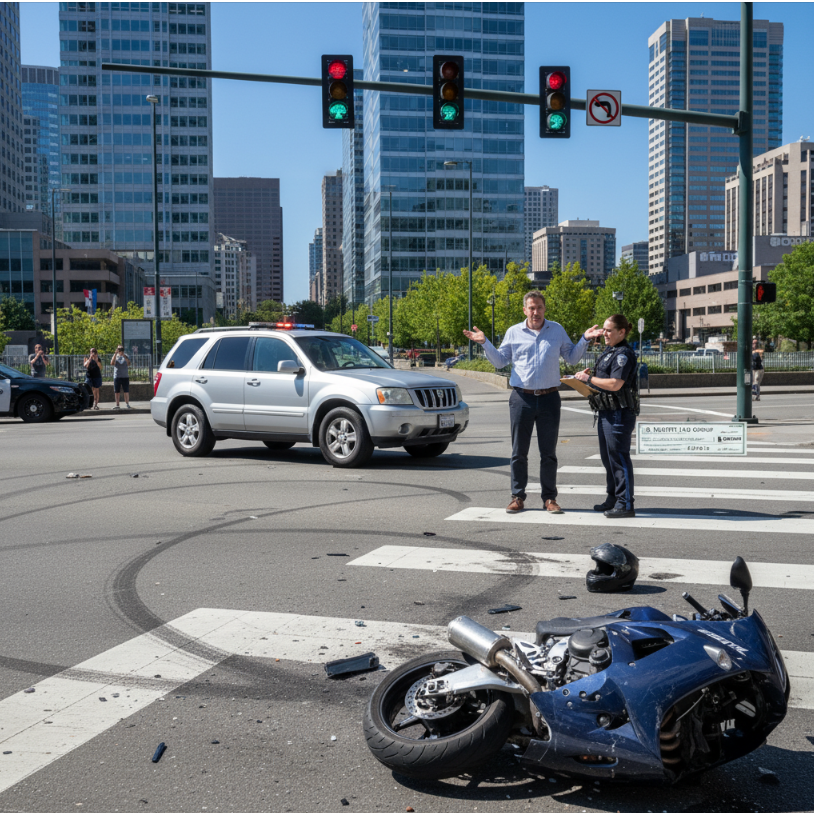
A rider travels eastbound through a Bellevue intersection. A westbound SUV turns left directly into the rider’s path. The SUV driver claims the motorcyclist was speeding.
Evidence that could determine fault:
Traffic camera footage
Event data recorder (black box) from SUV
Witness testimony
Skid mark measurements
Medical records documenting injury consistency
Without early legal intervention, crucial evidence can disappear — the same risk riders in Renton and Federal Way face after similar collisions.
Risks, Delays, and Legal Options — steps to protect your legal rights after a motorcycle crash in King County Bellevue
Motorcycle accident cases often involve:
Disputed liability
Severe medical injuries
Long-term disability
Lost future earning capacity
If you’re asking about steps to protect your legal rights after a motorcycle crash in King County Bellevue, act quickly to preserve evidence, document treatment, and consult counsel.
Risks of Delaying Action
Surveillance footage overwritten
Witness memories fade
Insurance narratives solidify
Medical gaps used against you
Legal Options May Include:
Insurance settlement negotiation
Filing a personal injury lawsuit
Pursuing wrongful death claims
Seeking structured settlements in catastrophic injury cases
Acting quickly preserves evidence and keeps your legal options open.
Motorcycle Accident Action Checklist
Step
Action
Why It Matters
1
Call 911
Creates official crash report
2
Seek immediate medical care
Protects health & documents injuries
3
Photograph scene
Preserves critical evidence
4
Collect witness info
Supports liability case
5
Notify your insurer
Meets policy requirements
6
Avoid recorded statements
Prevents claim manipulation
7
Consult an attorney
Maximizes compensation potential
Frequently Asked Questions (FAQ)
1. How long do I have to file a motorcycle accident lawsuit in Washington?
Generally, you have three years from the accident date. If you’re asking specifically how long do I have to file a motorcycle accident lawsuit in Washington state, remember that claims against government agencies or special circumstances can shorten the deadline. Contact an attorney or the King County Superior Court for guidance.
2. What if I wasn’t wearing a helmet?
You may still recover damages, but compensation could be reduced if the lack of a helmet contributed to head injuries.
3. What if the other driver says I was speeding?
Washington’s comparative fault system allows recovery even if partially at fault. Accident reconstruction and evidence often clarify true speed and liability.
4. Should I accept the insurance company’s first offer?
Initial offers are typically lower than what a claim may actually be worth — especially before full medical treatment is completed.
5. What compensation can I recover?
Potential damages include:
Medical expenses (past and future)
Lost wages
Reduced earning capacity
Pain and suffering
Emotional distress
Property damage
Loss of consortium (in some cases)
If you are asking what compensation can I recover after a catastrophic motorcycle crash in Bellevue Washington, severe injuries often justify substantial compensation due to long-term impact and future care needs.
Final Thoughts – Protecting Your Future After a Motorcycle Crash
Motorcycle accidents are among the most devastating traffic collisions on Washington roads. Riders face unique vulnerabilities, and insurance companies often fight these claims aggressively.
Knowing what to do after a motorcycle accident can:
Protect your health
Preserve vital evidence
Prevent costly mistakes
Maximize financial recovery
If you or someone you love has been injured in a motorcycle accident in Bellevue or King County, you do not have to navigate the legal system alone. R Martin Law Group has extensive experience representing injured riders throughout Washington State, including Bellevue and nearby Seattle. The firm understands the unique dynamics of motorcycle cases and the tactics insurers use to limit payouts.
👉 Injured in Bellevue? Contact R Martin Law Group today for a free consultation.
Your recovery — physically, financially, and emotionally — matters. Taking the right steps now can make all the difference in your future.