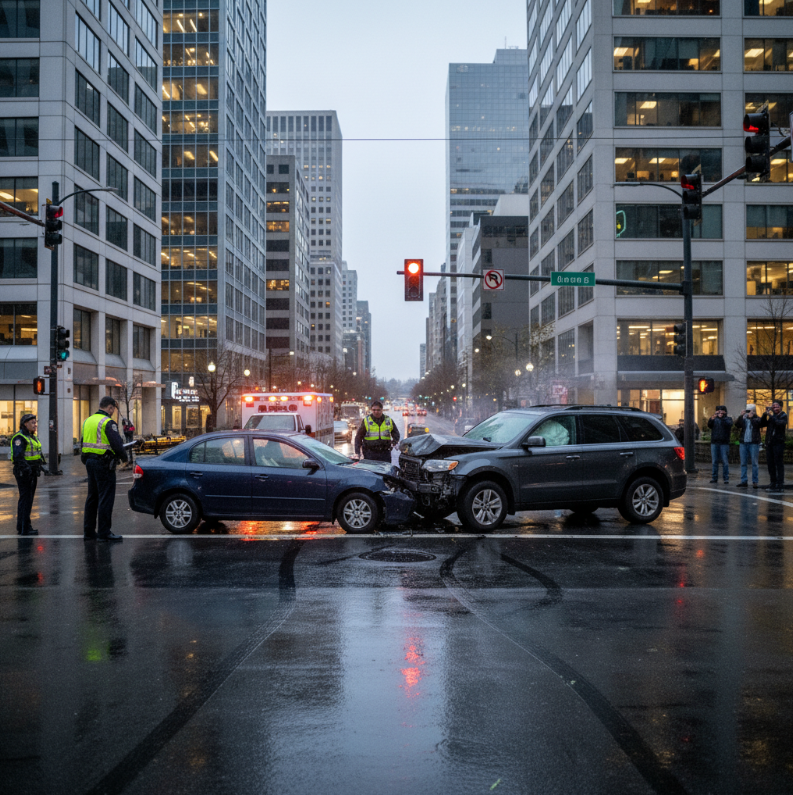
If you were injured in a car accident, slip and fall, or another serious incident in Bellevue or anywhere in Washington State — or nearby in Seattle — you may be wondering:
“What if the accident was partly my fault?” “Can I still recover compensation?”
Unlike many states, Washington follows a legal rule called Pure Comparative Negligence in Washington, codified in RCW 4.22.005. This rule lets injured people recover damages even if they were largely at fault; the award is reduced by the injured person’s percentage of responsibility.
This article explains how Pure Comparative Negligence in Washington works, how insurance companies use it, how judges and juries determine fault, and what it means for accident victims in Bellevue and King County.
Understanding Pure Comparative Negligence in Washington
Washington adopted pure comparative negligence under RCW 4.22.005, which states that a claimant’s contributory fault:
Diminishes proportionally the amount awarded as damages, but does not bar recovery.
In plain terms:
You can still recover damages even if you were partly at fault.
Your compensation is reduced by your percentage of fault.
There is no 50% or 51% bar rule in Washington.
Example of How It Works
Let’s say:
Total damages = $100,000
You are found 30% at fault
The other driver is 70% at fault
Under Washington’s rule:
You recover $70,000 (your damages reduced by 30%).
Even if you were 80% at fault, you could still recover 20% of your damages. If you’re asking specifically “how does pure comparative negligence under RCW 4.22.005 affect my Bellevue car accident claim?” the short answer is: it reduces your award by your percentage of fault but does not eliminate your claim.
This differs from “modified comparative negligence” states, where being 51% at fault can eliminate your right to compensation.
👉 Injured in Bellevue? Contact R Martin Law Group today for a free consultation.
The Legal Foundation: RCW 4.22.005 and RCW 4.22.015
RCW 4.22.005 – Effect of Contributory Fault
This statute formally establishes Washington’s pure comparative negligence rule. It applies in actions based on fault and ensures that damages are reduced proportionally — not eliminated.
RCW 4.22.015 – Definition of “Fault”
Washington defines “fault” broadly. It includes:
Negligence
Recklessness
Strict liability
Breach of warranty
Unreasonable assumption of risk
Misuse of a product
Because the definition of fault is broad, comparative fault can come into play in many types of cases:
Car accidents
Motorcycle collisions
Truck crashes
Slip and fall cases
Dog bite claims
Defective product injuries
In short, comparative negligence affects nearly every personal injury case in Washington.
Why Pure Comparative Negligence Matters in Bellevue Accident Cases
Rear-end collisions with disputed stopping distances
Multi-vehicle freeway crashes
Pedestrian incidents involving visibility issues
Distracted driving on both sides
In these situations, it is common for both parties to share some responsibility. Without pure comparative negligence, many injured victims would recover nothing. Washington law ensures that even partially responsible victims still have a path to compensation — and that can make a real difference during recovery for people in Bellevue and nearby Redmond.
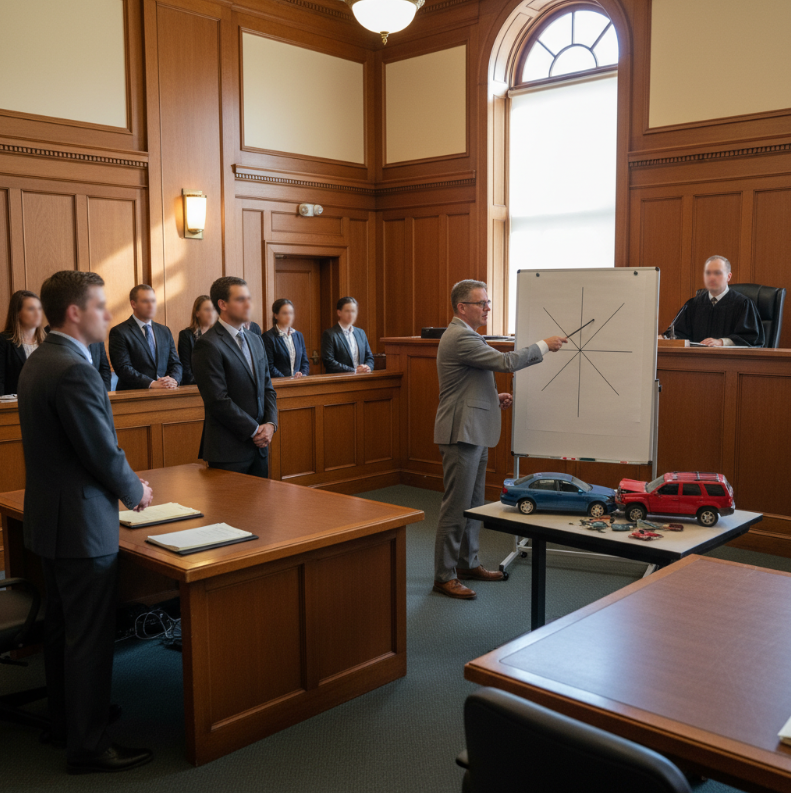
How Judges and Juries Determine Percentage of Fault
“how do judges and juries determine percentage of fault in Washington personal injury cases”
Fault allocation is based on evidence. In King County courts (see King County Superior Court), juries are typically asked to:
Determine total damages.
Assign a percentage of fault to each party.
Ensure total fault equals 100%.
Evidence Used to Assign Fault
Police reports
Traffic camera footage
Vehicle damage patterns
Black box data
Witness testimony
Expert accident reconstruction
Medical records
Cell phone usage records
For example:
In a Bellevue rear-end collision case, the jury may find:
Lead driver stopped suddenly without signaling (20% fault)
Rear driver was speeding and distracted (80% fault)
The injured lead driver’s compensation would be reduced by 20%.
Comparative fault is not arbitrary. It’s evidence-driven and usually hotly contested. With careful investigation and strong proof, you can protect your recovery.
How Comparative Negligence Impacts Insurance Claims
“why do insurance companies use comparative negligence to reduce payouts in Bellevue injury claims”
Insurance companies aggressively use comparative negligence to reduce payouts. Even when liability seems clear, insurers often argue:
You were speeding
You were distracted
You failed to mitigate damages
You weren’t wearing a seatbelt
You delayed medical treatment
Because every percentage point matters, insurers may try to inflate your fault percentage.
Example
Claim value: $200,000
If the insurer convinces a jury you were 10% at fault → payout = $180,000
If the insurer convinces a jury you were 40% at fault → payout = $120,000
If the insurer convinces a jury you were 60% at fault → payout = $80,000
The difference can be life-changing.
That’s why experienced legal representation matters in Bellevue personal injury cases — it helps prevent insurers from overstating your responsibility.
Washington law also allows fault to be allocated among multiple parties. For those asking about “pure comparative negligence and joint and several liability RCW 4.22.070 impact on King County multi‑party lawsuits,” the short answer is that joint and several liability rules under RCW 4.22.070 can affect how responsibility and recovery are handled when defendants act together — and those rules interact with pure comparative negligence in complex ways.
Defendants pay according to their share, subject to joint and several liability rules in certain circumstances.
Multi-party cases can become legally complex quickly — especially in freeway pileups or commercial trucking collisions. Careful coordination and solid legal strategy are essential.
Real-World Scenario: Bellevue Intersection Crash
Imagine this common scenario:
You are driving through downtown Bellevue. You enter an intersection on a yellow light. Another driver makes a left turn in front of you. A collision occurs.
Both drivers claim the other was at fault.
Evidence shows:
You accelerated to beat the light.
The turning driver misjudged your speed.
A jury could reasonably assign:
You: 35% fault
Other driver: 65% fault
If your total damages were $150,000, you would recover $97,500.
If you wonder “what happens if I am 80 percent at fault in a Washington car accident claim,” this example shows that even at high percentages of fault you may still recover the remaining share of your damages under Washington’s pure comparative negligence rule.
Risks and Delays in Comparative Fault Cases
While pure comparative negligence protects injured victims, it also creates challenges.
Comparative fault often becomes the central battlefield in personal injury litigation. In Bellevue, juries carefully scrutinize traffic behavior, distracted driving, and roadway conditions — so preparation matters.
👉 Injured in Bellevue? Contact R Martin Law Group today for a free consultation.
Prevention Tips: Protect Yourself After an Accident
Since fault percentages can dramatically affect your recovery, you should:
Immediately After an Accident:
Call police and obtain a report
Document the scene with photos
Get witness information
Seek medical care promptly
Avoid admitting fault
Avoid recorded statements to insurers without legal advice
Small statements like “I’m sorry” can later be used as admissions. Protect your position while you focus on healing.
Comparative Negligence Checklist
Step
What Happens
Why It Matters
1. Investigation
Evidence collected (police, witnesses, experts)
Determines fault allocation
2. Damages Calculated
Medical bills, lost wages, pain & suffering
Sets total case value
3. Fault Assigned
Each party given percentage
Must total 100%
4. Damages Reduced
Your percentage deducted
Final compensation calculated
5. Settlement or Trial
Negotiation or jury decision
Final award determined
Frequently Asked Questions About Pure Comparative Negligence in Washington
1. Can I recover damages if I was 90% at fault?
Yes. Under RCW 4.22.005, you may recover 10% of your damages. Washington does not impose a 50% or 51% bar rule.
2. How is fault determined in a Washington personal injury case?
Fault is determined by a judge or jury based on evidence such as accident reports, testimony, expert reconstruction, and physical evidence.
3. Does comparative negligence apply to slip and fall cases?
Yes. If a property owner argues you were not paying attention or ignored warning signs, a jury may assign you partial fault, reducing your recovery.
4. What if the other party claims I assumed the risk?
Washington law includes unreasonable assumption of risk within its definition of fault under RCW 4.22.015. If proven, it may reduce — but not necessarily eliminate — your recovery.
5. Is Washington different from other states?
Yes. Many states use “modified comparative negligence,” which bars recovery if you are 50% or 51% at fault. Washington follows pure comparative negligence, allowing recovery even if you are mostly at fault.
6. Can insurance companies decide my fault percentage?
They can propose one — but it is not binding. If you dispute it, the matter can proceed to litigation, where a jury makes the final determination.
Why Legal Representation Matters in Comparative Negligence Cases
When fault percentages determine thousands — or hundreds of thousands — of dollars, every detail matters.
At R Martin Law Group, we understand how comparative negligence arguments unfold in King County courts. We:
Conduct independent investigations
Work with accident reconstruction experts
Challenge inflated fault allegations
Negotiate strategically with insurers
Prepare cases for trial when necessary
Our goal is simple: minimize your assigned fault and maximize your recovery. We stand ready to help you present your best case to the court or a jury in King County.
Your Partial Fault Does Not End Your Case
Being partially responsible for an accident in Washington does not mean you lose your right to compensation.
Thanks to Pure Comparative Negligence in Washington under RCW 4.22.005, you can still recover damages — even if you were mostly at fault.
But the percentage assigned to you can dramatically affect your financial future. Insurance companies know this. That’s why fault disputes are often the heart of personal injury litigation.
If you were injured in Bellevue or anywhere in King County, don’t assume you don’t have a case simply because you may share some blame.