

Last updated: October 27, 2026
One second you’re walking past the produce aisle, and the next you’re on the floor. A worker helps you up and asks if you’re okay. Your hip hurts, you feel embarrassed, and part of you just wants to leave. Don’t leave yet.
What to do after a slip and fall accident comes down to three things: get care, report it, and save the proof. The minutes after a fall are when evidence is easiest to get and quickest to disappear. Here’s what to do at the scene, over the next few days, and what Washington law says about your claim.
The short answer: Get medical care, even if you feel fine. Report the fall to the manager or owner and ask for a copy of the report. Photograph the spot and get witness names. Keep your shoes. Don’t sign anything or give a recorded statement to the owner’s insurer before you understand your rights.

What should you do right after a slip and fall?
Take care of your body first, then the proof. If you hit your head or can’t stand, call 911. If you can move, tell the manager or owner what happened and ask for an incident report. Take photos of the floor, the lighting, and any warning signs, or the lack of them. Get the names of anyone who saw it.
- Check yourself. Call 911 for a head injury or severe pain.
- Report it. Tell a manager and ask for a written report.
- Photograph the spot. Floor, lighting, signs, and your shoes.
- Get names. Witnesses and the employee you spoke to.
- Leave with facts. Don’t guess about fault or say “I’m fine.”
Why should you see a doctor even if you feel okay?
Because some injuries show up later. Adrenaline can hide pain for hours. Head injuries can have danger signs that appear hours or days after a fall, like a headache that gets worse, repeated vomiting, or confusion. A doctor’s visit also creates a record. It ties your injury to the fall in writing, with a date.
Go to the ER for any of the CDC’s danger signs after a blow to the head. See CDC, concussion signs and our guide to common slip and fall injuries.
How do you report a slip and fall?
Tell the person in charge before you leave, and ask for a written incident report. At a store, that’s the manager on duty. At an apartment, it’s the landlord or property manager. Ask for a copy, or at least the report number and the name of who wrote it. If they won’t write one, send your own written notice.
Keep it short and factual: the date, time, place, what you slipped on, and that you were hurt. Don’t apologize or guess. A simple “I slipped on water near aisle 6 and hurt my hip” is enough.
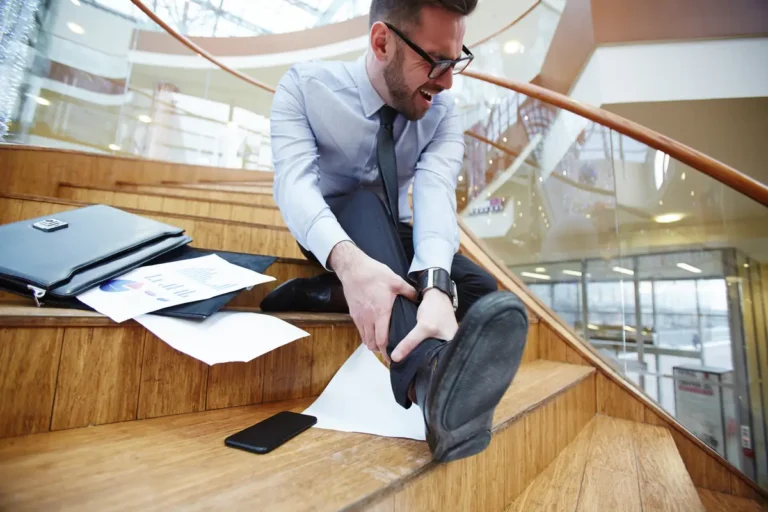
What evidence should you save?
Save anything that shows what made you fall and how badly you were hurt. Photos and video of the spot come first, because floors get mopped and ice melts. Keep the shoes and clothes you wore, unwashed. Ask the business in writing to keep its camera footage. Then keep every medical bill and note about missed work.
| Evidence | Why it matters | When to get it |
|---|---|---|
| Photos of the spot | Shows the hazard before it’s cleaned up | At the scene |
| Witness names | Neutral people back up your account | At the scene |
| Incident report | The owner’s own record of the fall | Before you leave |
| Camera footage | Shows the fall and how long the hazard was there | Ask in writing within days |
| Shoes and clothes | Answers “it was your shoes” | Keep them as they are |
| Medical records | Ties the injury to the fall | First visit and every visit after |
What should you avoid saying to the insurance company?
Don’t guess, don’t downplay, and don’t sign. The owner’s insurer may call within days, friendly and quick. Its job is to pay as little as it can. Don’t give a recorded statement or say you’re fine before a doctor has checked you. Don’t sign a release or medical authorization until you know what it covers.
- Give only basic facts: who you are, when, and where.
- Say you’re still getting treatment, if you are.
- Decline a recorded statement until you’ve had advice.
- Don’t post about the fall on social media.
What if you fell at work or at your apartment?
Different rules apply. If you fell on the job, Washington’s workers’ compensation system usually replaces a lawsuit against your employer. But you may still have a claim against another business that caused the fall. At an apartment, your landlord must keep shared areas reasonably safe from hazards that could cause an accident.
| Where you fell | Who may be responsible | Washington rule |
|---|---|---|
| A store or business | The owner or operator | Reasonable care toward customers |
| Apartment common area | The landlord | Keep shared areas reasonably safe (RCW 59.18.060) |
| At work | Workers’ comp; another business may also be liable | RCW 51.04.010, RCW 51.24.030 |
| A city sidewalk or public building | The government owner | Claim form first, then a 60-day wait (RCW 4.96.020) |
How long do you have to make a slip and fall claim?
Generally three years from the fall to file a lawsuit in Washington. Claims against a city, county, or the state need a claim form and a waiting period first, so start sooner. Don’t wait on evidence, either. Video and witness memories fade long before the deadline. If you were partly at fault, you can still recover a reduced amount.
Washington time limits after a fall
See RCW 4.16.080, RCW 4.22.005, and how long you have to file a slip and fall claim.
When should you call a lawyer after a slip and fall?
When you were hurt badly enough to need treatment, or the owner says it wasn’t their fault. A lawyer can ask for the camera footage before it’s erased and deal with the insurer for you. With No Win, No Fee, a call costs you nothing. For a scrape with no bills, you may not need one.
Knowing what to do after a slip and fall accident protects your claim. Rich Martin handles each case himself and prepares every case for trial. See what a slip and fall case is worth.
FAQ
Should I go back and take photos later?
Yes, if you couldn’t at the time. Photos taken later still help, especially of things that don’t change, like a broken step or poor lighting.
What if there was no wet floor sign?
Photograph the spot showing no sign. A missing warning can help show the owner didn’t use reasonable care.
Do I have to report the fall the same day?
Ideally, yes. If you didn’t, report it in writing as soon as you can and keep a copy.
Who pays my medical bills after a slip and fall?
At first, usually your own health insurance. If the owner is responsible, its liability insurance pays as part of your claim.
What does No Win, No Fee mean?
You pay nothing up front. Our fee comes out of the money we win for you. No hourly bills. No retainer. If we don’t win, you owe us nothing. Not even the case costs.
Talk to Rich about your fall
What to do after a slip and fall accident? Get care, report it, and keep the proof. If you were hurt on someone else’s property, call Rich Martin. He has handled more than 2,000 injury cases in 28 years and taken more than 30 to a jury. He was named to the National Association of Distinguished Counsel’s Nation’s Top One Percent in 2023 and 2024.
We help people in Bellevue, Seattle, Tacoma, and across Washington. Your case review is free. No Win, No Fee. We speak English and Korean.
Call (425) 635-2000 or see how we handle slip and fall cases.
Keep reading

Slip and Fall Lawsuit: How the Process Works in Washington
Last updated: November 3, 2026 You fell on a broken step outside a restaurant three months ago. Your ankle needed surgery, and you missed…

Are Slip and Fall Cases Hard to Win?
Last updated: October 30, 2026 You slipped on a puddle by the store’s freezer case and broke your wrist. The manager wrote a short…

How Long to File a Slip and Fall Claim in WA
On this pageHow Long Do You Have to File a Slip and Fall Claim in Washington State?Common Causes of Slip and Fall Accidents in…