
A fall can do more damage than people expect. Broken wrists, hips, and ankles. Head injuries. Months of recovery. If a store, landlord, or property owner let a hazard sit there, they may owe you for it. Rich Martin is a Seattle slip and fall lawyer who won a $1 million jury verdict for a client hurt on a dangerous property.
Seattle: local facts
- County
- King County
- Court
- King County Superior Court, King County Courthouse, 516 Third Avenue, Seattle (crashes in the Seattle case area)
- Major roads
- I-5, I-90, SR 520, SR 99 (Aurora Avenue North), Mercer Street
- Hospitals
- Harborview Medical Center (Level I trauma center for adults and children)
- Population
- 823,400 (Washington OFM estimate, April 1, 2026)
- Our office
- Our Bellevue office is about 11 miles away (about 17 minutes without traffic).
Hurt in a fall in Seattle?

Maybe it was a wet floor with no sign. Icy steps outside your apartment. A broken stair or a dark parking garage. The owner’s insurer may already be saying it was your fault for not watching where you were going.
Property owners have a duty to keep their places reasonably safe. When they don’t, and you get hurt, Washington law lets you recover. We’ll find out what they knew, and when.
What makes a property owner responsible
In Washington, what an owner owes you depends on why you were there. The Washington Supreme Court laid out these categories in Tincani v. Inland Empire Zoological Society (1994).
| Why you were there | Example | What the owner owes you |
|---|---|---|
| Invited for business (invitee) | Shopping, eating out, at an apartment’s common area as a tenant | The highest duty: find hazards and fix them or warn you |
| Social guest (licensee) | Visiting a friend’s home | Warn you about hazards they know about |
| Trespasser | On the property without permission | Very limited duty |
Many slip and fall cases involve stores, restaurants, apartments, and office buildings. Those are usually the strongest cases, because owners must look for hazards, not just react to them.
Proving the owner knew, or should have known
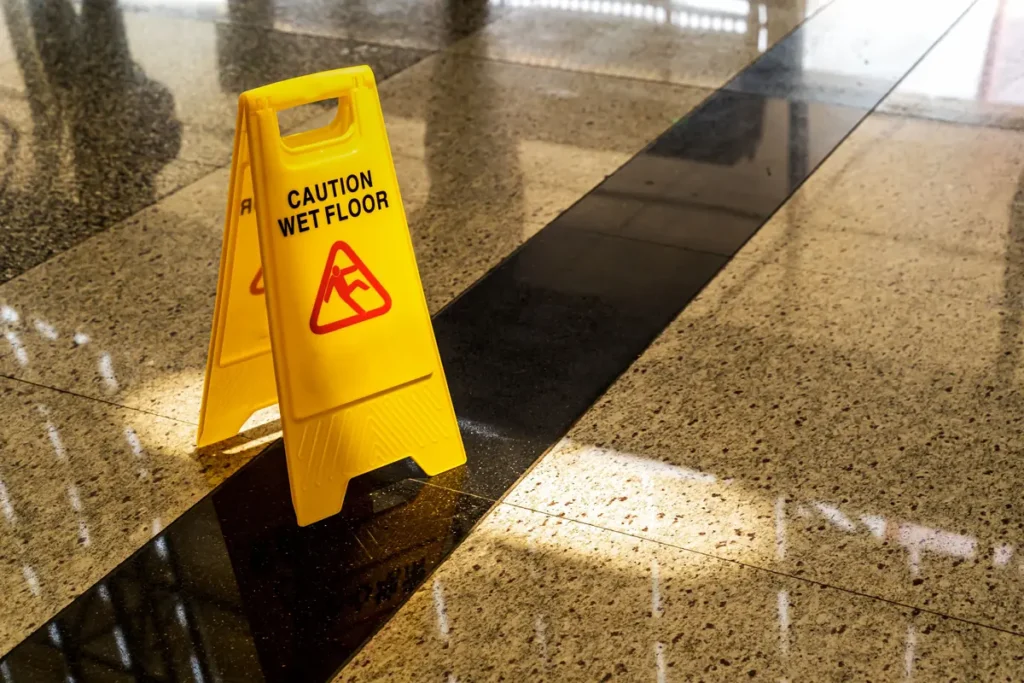
This is the heart of most fall cases. It’s not enough that a hazard existed. We need to show the owner knew about it, or should have found it.
- How long was it there? Video and cleaning logs can show a spill sat for an hour.
- Did they cause it? A leaking cooler, a freshly mopped floor, a bad repair.
- Was it a known problem? Past complaints, earlier falls, or repair requests.
- Did they warn you? No sign, no cone, no lighting.
Store video is often recorded over within days or weeks. Call us early so we can ask them to save it.
Ice, snow, and sidewalks in Seattle

Seattle doesn’t get snow often, but when it does, sidewalks get dangerous fast. Under city code, the owner or occupant of private property must clear snow and ice from the sidewalk next to it in a timely way (SMC 15.48.010).
Broken sidewalks are different. The city can order the owner of the property next to an unsafe sidewalk to repair it, and charge them if they don’t (SMC chapter 15.72). Who is responsible for your fall depends on the facts. We’ll look at the property owner, the city, and anyone else involved.
Falls on city property
Tripped on a city sidewalk, at a park, or in a public building? A claim against the City of Seattle has its own steps. You file a claim with the city first. Then you wait 60 days before you can sue (RCW 4.96.020). The city takes claims through its damage claim page.
| Where you fell | First step |
|---|---|
| A store, restaurant, office, or apartment | A claim with the owner’s insurance company |
| A city sidewalk, park, or building | A claim form filed with the City of Seattle, then a 60-day wait |
| A King County building or Metro property | A claim form filed with King County, then a 60-day wait |
| A state building or highway | A claim with the state’s Office of Risk Management, then a 60-day wait |
Common fall injuries
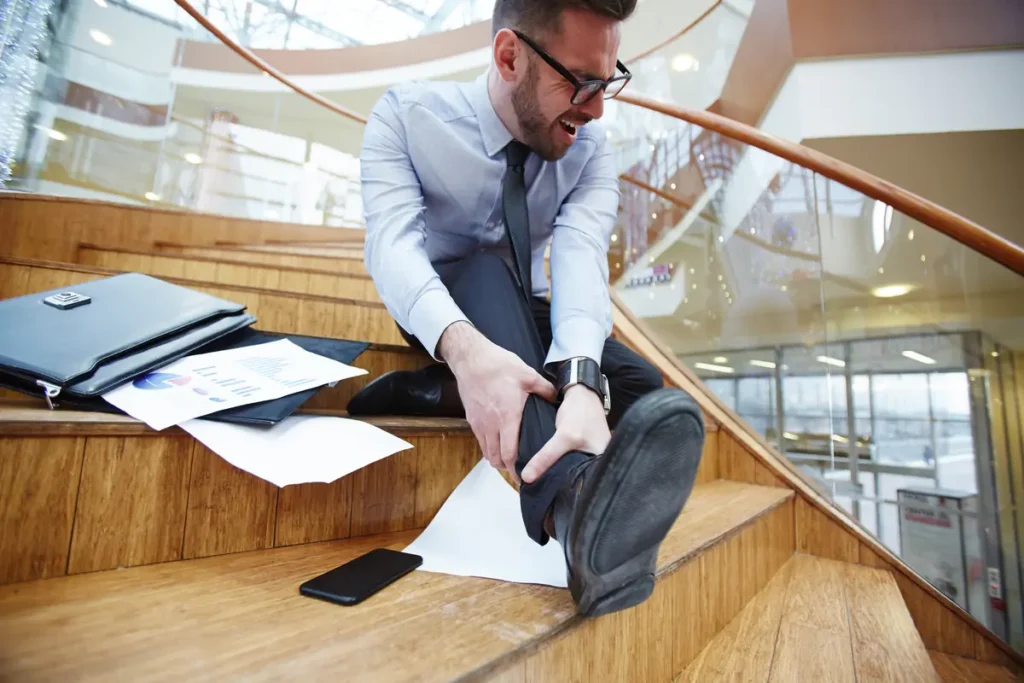
- Broken wrists and arms from catching yourself.
- Hip fractures, especially for older adults.
- Ankle and knee injuries on stairs and curbs.
- Head injuries from hitting the floor. Read about brain injuries.
- Back injuries. Read about back pain after an injury.
What to do after a fall
- Report it. Tell the manager or landlord and ask for a copy of the incident report.
- Take photos of exactly what made you fall, before it’s cleaned up.
- Get names of witnesses and employees.
- Keep your shoes and clothes. The other side may claim your shoes caused the fall.
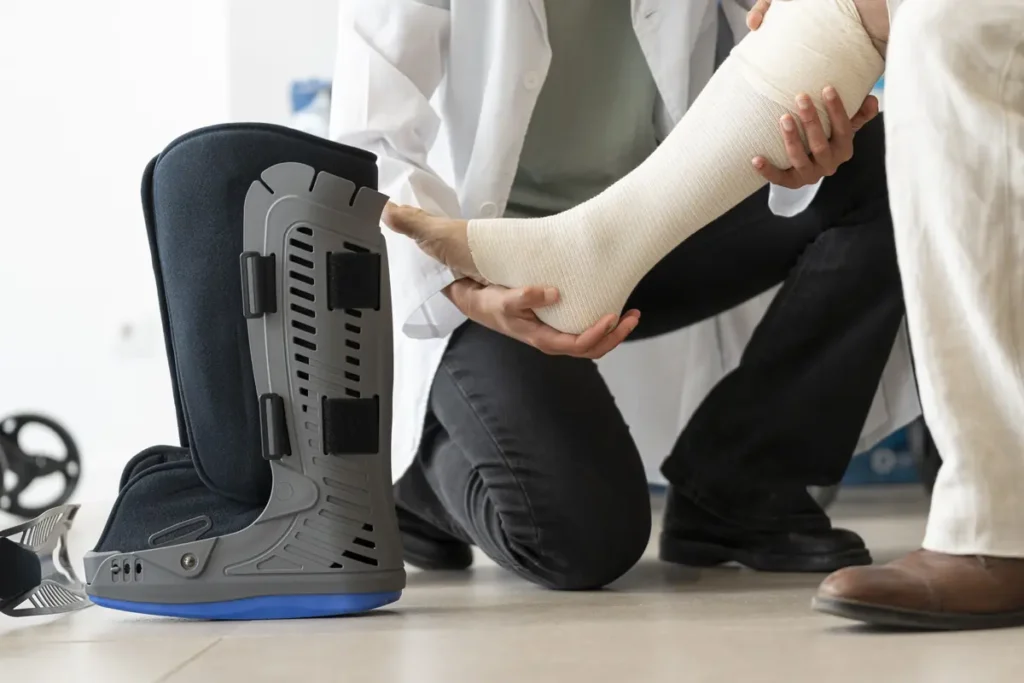
- See a doctor right away. Delays make injuries harder to prove.
- Don’t give a recorded statement to the owner’s insurer.
More help: what to do after a slip and fall and how long you have to file.

Partly at fault? You can still get paid.
The owner’s insurer will almost always say you should have been more careful. Washington’s comparative fault rule still lets you recover. Your payment just goes down by your share (RCW 4.22.005). Most claims must be filed within three years (RCW 4.16.080).
What your Seattle slip and fall case may be worth
It depends on how badly you were hurt, the proof that the owner knew about the hazard, and the insurance available. A claim usually covers medical bills, lost pay, future care, and pain and suffering.
We won a $1 million jury verdict for a client who suffered a fracture on a dangerous property. Past results don’t guarantee future results. See all results and our slip and fall settlement guide.
Types of fall cases we handle
- Wet floors in stores, restaurants, and building entrances on rainy days.
- Broken or missing handrails on stairs.
- Uneven floors and torn carpet.
- Dark stairways and parking garages with burned-out lights.
- Potholes and cracked pavement in parking lots.
- Icy walkways and steps that weren’t cleared or treated.
- Falling objects from shelves in stores and warehouses.
Self-service stores and spills
In stores where customers take items off the shelves themselves, spills are a known risk. Washington courts have said that in these stores, you may not have to prove the store knew about a specific spill, if that kind of hazard was reasonably foreseeable. The case is Pimentel v. Roundup Co. (1983).
This rule doesn’t apply to every store or every hazard. But it can make a big difference in grocery and big-box store cases.
Falls and older adults
For older adults, a fall can change everything. A broken hip can mean surgery, a long hospital stay, and months of rehab. Some people never fully return to living on their own. A claim should account for that, including the cost of future care and help at home.
What to bring to your first call
- Photos of where you fell and what caused it.
- The incident report or the name of the person you told.
- Witness names and phone numbers.
- Medical records and bills so far.
- Your shoes, kept in a bag, not worn again.
Falls in apartments and rentals
Tenants fall on stairs, in hallways, in parking lots, and on icy walkways. Landlords are generally responsible for the common areas they control. If you reported a broken stair, a loose railing, or a burned-out light and it wasn’t fixed, that history can be strong evidence.
Keep copies of any repair requests, texts, or emails to your landlord. They can show the landlord knew about the problem before you got hurt.
Why people choose Rich Martin
- Trial results in property cases. Including a $1 million jury verdict.
- He handles your case himself. Not a case manager.
- Close to Seattle. Our Bellevue office is about 11 miles from downtown.
- No Win, No Fee. If we don’t win, you owe us nothing. Not even the case costs.
Meet Rich Martin or read client reviews.
Talk to a Seattle slip and fall lawyer today
The call is free. Call (425) 635-2000 or send us a message. For other injuries, see our Seattle personal injury lawyer page.
Slip & Fall: results for our clients
Past results don't guarantee future results. Every case is different. See all results →

Your attorney: Rich Martin
28 years. More than 2,000 injury cases. More than 30 jury trials. When you call, you talk to Rich, and he handles your case himself.
About Rich Martin →Questions about Seattle slip & fall
What does No Win, No Fee mean?
You pay nothing up front. Our fee comes out of the money we win for you. No hourly bills. No retainer. If we don't win, you owe us nothing. Not even the case costs.
Can I sue a store if I slipped on a wet floor?
Possibly. You'll need to show the store knew about the spill, caused it, or should have found it. Video and cleaning logs often answer that.
Who is responsible for an icy sidewalk in Seattle?
Seattle code puts the duty to clear snow and ice on the owner or occupant of the property next to the sidewalk (SMC 15.48.010). Each case depends on the facts.
I fell at my apartment. Can I make a claim against my landlord?
Often, yes, especially in common areas like stairs, walkways, and parking lots that the landlord controls.
What if I fell on a city sidewalk?
A claim against the City of Seattle starts with a claim form. You must wait 60 days after filing before you can sue (RCW 4.96.020).
How long do I have to file?
Usually three years from the fall (RCW 4.16.080). Government claims need a claim form first, so start sooner.
What if the store says I wasn't watching where I was going?
That's a common argument. Even if you share some blame, you can still recover. Your payment goes down by your share (RCW 4.22.005).
Do I need a lawyer for a small fall?
Not always. If you weren't hurt much, you may not. If you broke a bone, needed surgery, or missed work, a free call can help you decide.
Talk to a lawyer today. The call is free. Call (425) 635-2000.
Related pages
Helpful articles

Bellevue Slip and Fall Settlements
A sudden slip on a wet grocery store floor. A fall on icy apartment steps. A trip over uneven pavement outside a Bellevue office…
What to Do After a Slip and Fall Accident
A slip and fall can happen in a second — on a wet grocery store floor, an icy Bellevue sidewalk, a poorly lit stairwell,…

How Long to File a Slip and Fall Claim in WA
How Long Do You Have to File a Slip and Fall Claim in Washington State? A sudden slip on a wet grocery store floor.…