
Riders know the feeling. A car turns left across your lane, and the driver says, “I never saw you.” Then the insurance company acts like the crash was your fault for riding at all. Rich Martin is a Washington motorcycle accident lawyer who has handled injury cases for 28 years. He knows how insurers treat riders, and he builds the case to answer them.
Below: the numbers, the Washington laws that come up in rider claims, and the steps that protect your case.
Washington riders by the numbers
Motorcyclists killed in Washington
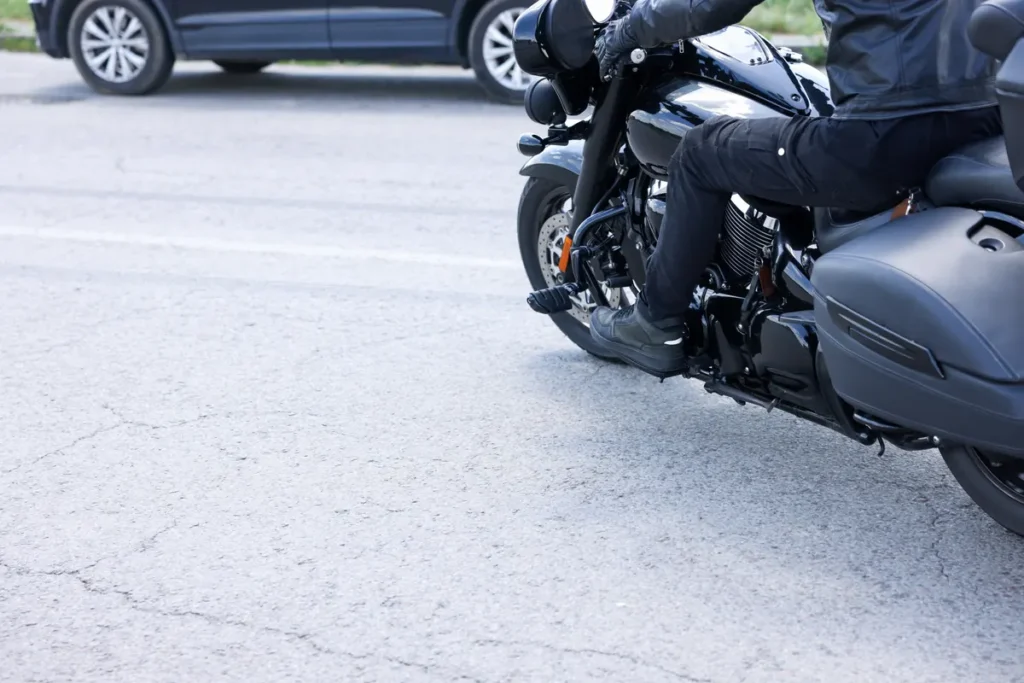
Deaths are falling, but riders still face outsized risk. From 2021 to 2025, motorcycles were in about 3% of Washington crashes, yet riders were 16% of everyone killed on the roads: 584 people (WTSC). A car protects the people inside it. A rider has a helmet and gear, and not much else.
Why riders get blamed, and how we push back
Some adjusters start from a story: the rider was speeding, weaving, or showing off. That story saves their company money. It’s often not what happened.
| What the insurer says | What the evidence can show |
|---|---|
| “The rider came out of nowhere.” | The driver had a clear view and didn’t look. Sight lines and photos tell the truth. |
| “He must have been speeding.” | Crash data, video, and damage patterns can show actual speed. |
| “Motorcycles are dangerous. She took the risk.” | Riding is legal. Drivers must watch for riders like any other vehicle. |
| “He wasn’t wearing the right gear.” | Gear doesn’t cause crashes. Fault comes from what caused the collision. |
Even when a rider shares some blame, Washington’s comparative fault rule only reduces the recovery by that share (RCW 4.22.005). Read about comparative negligence for motorcyclists.
Washington motorcycle laws that come up in claims
| Law | What it says | How it can affect a claim |
|---|---|---|
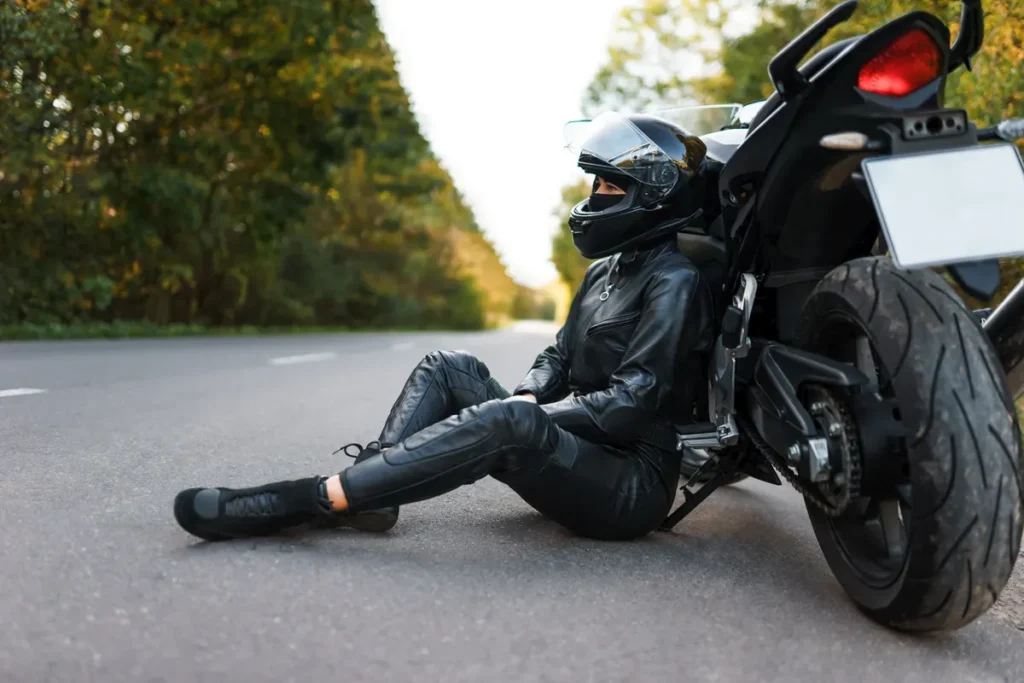
| RCW 46.37.530 | Riders and passengers must wear a DOT-compliant helmet with the strap fastened. No children under 5 on a motorcycle | Insurers may argue a missing helmet made a head injury worse |
| RCW 46.61.608 | Riding between lanes or between rows of cars is not allowed. Two motorcycles may share a lane | If lane splitting is alleged, fault becomes a central issue |
| RCW 46.20.500 | Riders need a motorcycle endorsement on their license | Insurers may raise it, but it doesn’t decide who caused the crash |
Washington hasn’t legalized lane filtering. A 2025 bill to let riders use the shoulder of some highways (HB 1367) was still in committee as of October 2026. Read 15 Washington motorcycle laws you should know.
Insurance for riders works differently
Many riders learn this after a crash: Washington requires insurers to offer PIP on car policies, but the law is written for passenger cars, so motorcycle policies often don’t include it (RCW 48.22.085; RCW 48.22.005). That can leave medical bills unpaid while the claim moves forward.
- The at-fault driver’s liability insurance pays in the end, usually at settlement.
- Your own UIM coverage can pay if the driver had too little insurance or none (RCW 48.22.030).
- Medical payments coverage on your motorcycle policy, if you bought it.
- Your health insurance can cover treatment in the meantime.
Pull out your policy and look for UIM and medical payments. Then read who pays for medical bills after a motorcycle accident.
When the driver had no insurance, or drove off
Riders are hit by uninsured drivers too, and some drivers leave the scene. Your own UIM coverage is built for this. It can pay when the driver had no insurance, too little insurance, or can’t be found (RCW 48.22.030). For a hit-and-run, the law requires that the crash be reported to police within 72 hours to use UIM. If you’re in the hospital, a family member or friend can make the report.
Check your motorcycle policy for UIM today, even if you haven’t been in a crash. Many riders find out too late that they turned it down.
How motorcycle crashes usually happen
- Left turns across the rider’s path. The most familiar crash. The driver misjudges speed or never looks.
- Lane changes into the rider, often from a driver who checked mirrors but not the blind spot.
- Rear-end crashes at lights and in traffic, where a rider has nowhere to go.
- Opened car doors on city streets.
- Road hazards: gravel, potholes, and uneven pavement. These can lead to claims against a city or the state.
- Wet roads. Rain cuts grip and visibility. See riding a motorcycle in the rain.
Common motorcycle injuries
Riders absorb the crash with their bodies. Injuries are often serious and slow to heal: road rash and skin grafts, broken legs, wrists, and collarbones, head and brain injuries even with a helmet, and spinal injuries. Many riders need months of therapy before they can work again. A fair claim counts the future too: later surgeries, lost earning power, and the riding you may have to give up.
Protect your claim in the first days
- Get checked by a doctor, even if you walked away. Tell them about every ache.
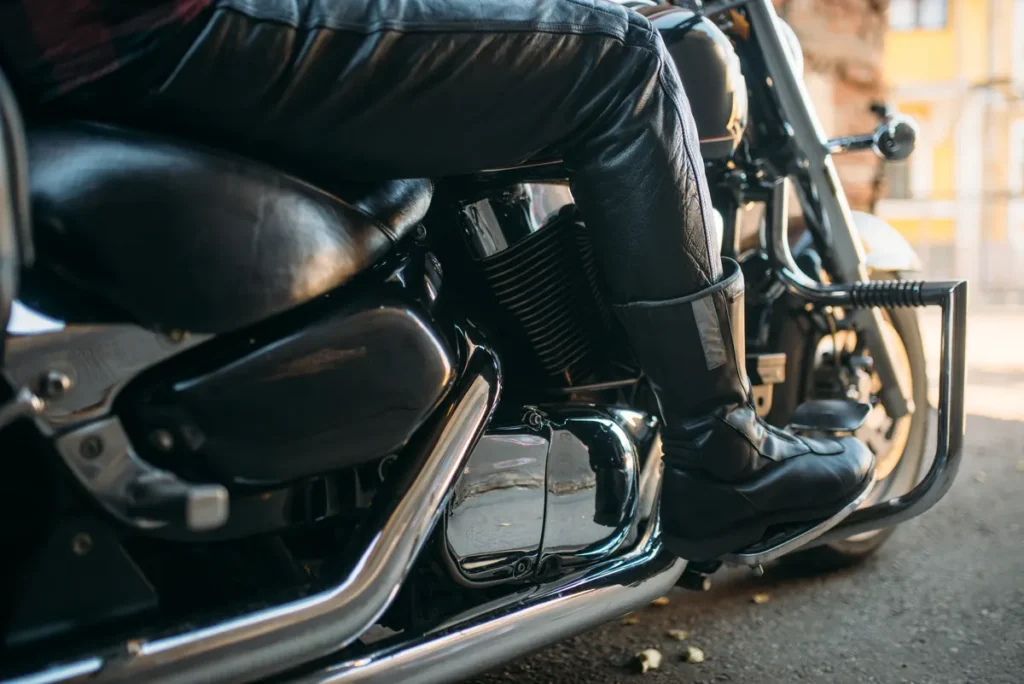
- Keep your helmet, jacket, and gloves as they are. Damage to gear helps show how the crash happened.
- Don’t repair the bike yet. Photograph it first, from every side.
- Save any camera footage, from a helmet cam, a dash cam, or businesses nearby.
- Write down what you remember: speed, lane position, signals, and what the driver said.
- Let us talk to the insurers. Don’t give a recorded statement to the driver’s company.
Read what to do after a motorcycle accident.
No endorsement? You may still have a claim
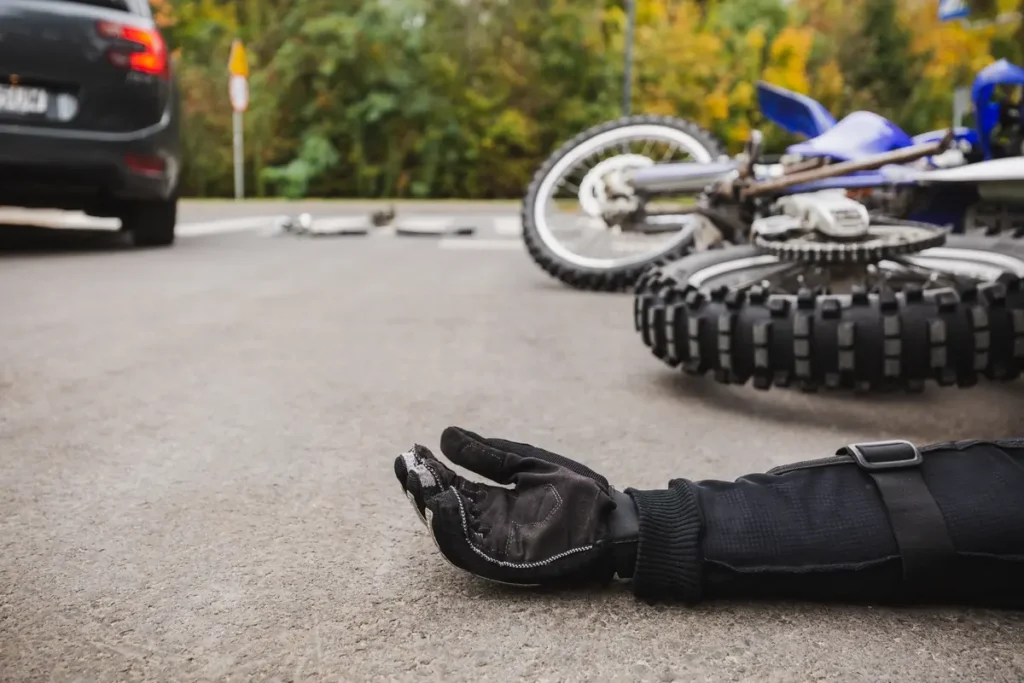
This comes up more than people think. The state’s own review found that 54% of Washington riders killed in 2024 lacked a motorcycle endorsement, and 71% had no training on record (WTSC). Riding without an endorsement is a traffic infraction (RCW 46.20.500). It can mean a ticket. It doesn’t change who turned left in front of you.
Expect the insurer to bring it up anyway. The question in an injury case is what caused the crash. We keep the focus there.
If you were the passenger
Passengers are in a different spot. If another driver caused the crash, the passenger can claim against that driver. If the rider was partly at fault, the passenger may also have a claim against the rider’s insurance. A passenger is rarely to blame for a crash, so these claims often turn on finding every policy that applies.
What a rider’s claim can include
- Medical care, from the ER through surgery, therapy, and future treatment.
- Lost wages and lost earning power if you can’t go back to the same work.
- Pain, scarring, and lost enjoyment of life, including time you can’t ride.
- Your motorcycle, plus damaged helmet, jacket, boots, and other gear.
See motorcycle accident compensation in Washington.
Deadlines
Most motorcycle injury cases must be filed within three years of the crash (RCW 4.16.080). If a road defect played a part and a city or county maintains the road, a claim form must be filed first, with a 60-day wait before suing (RCW 4.96.020). Call early. Evidence like skid marks and video doesn’t last.
What to look for in a motorcycle accident lawyer
Not every injury lawyer is comfortable with rider cases. When you call a Washington motorcycle accident lawyer, ask how they handle rider bias with adjusters and juries, whether they’ve tried injury cases in front of a jury, and who will actually work on your file. With us, Rich handles your case himself, and he has tried more than 30 jury trials.
Also ask how the fee works. Ours is simple: No Win, No Fee. You pay nothing up front, and nothing at all if we don’t win.
Find motorcycle crash help near you
Local pages cover riders in Seattle, Bellevue, Tacoma, Everett, Kent, Redmond, Renton, and Kirkland, with the roads, courts, and claim offices in each.
Talk to a Washington motorcycle accident attorney
You ride. You know the risks. You shouldn’t also have to fight the insurance company alone. The call is free, and No Win, No Fee means you owe nothing if we don’t win. Call (425) 635-2000 or send us a message.
Motorcycle Accidents: results for our clients
Past results don't guarantee future results. Every case is different. See all results →

Your attorney: Rich Martin
28 years. More than 2,000 injury cases. More than 30 jury trials. When you call, you talk to Rich, and he handles your case himself.
About Rich Martin →Find help in your city
Common questions
What does No Win, No Fee mean?
You pay nothing up front. Our fee comes out of the money we win for you. No hourly bills. No retainer. If we don't win, you owe us nothing. Not even the case costs.
Is lane splitting legal in Washington?
No. Washington law doesn't allow riding between lanes or between rows of vehicles (RCW 46.61.608). Two motorcycles may ride side by side in one lane.
Can I still get paid if I wasn't wearing a helmet?
Possibly. Washington requires helmets, and an insurer may argue it made a head injury worse. But the driver who caused the crash is still responsible for it.
Does my motorcycle insurance include PIP?
Often not. Washington's PIP law is written for passenger cars. Check your policy for medical payments and UIM coverage.
Why do I need a Washington motorcycle accident lawyer?
Riders often face bias from adjusters and juries. A lawyer gathers the evidence that shows what really happened and handles the insurers while you heal.
How long do I have to file?
Usually three years from the crash (RCW 4.16.080). Claims against a city or county need a claim form first.
Talk to a lawyer today. The call is free. Call (425) 635-2000.
Helpful articles
Washington Comparative Negligence in Motorcycle Accidents
Motorcycle accidents are among the most devastating collisions on Washington roads. Riders have little physical protection, and even a low-speed crash can produce life-altering…
What to Do After a Motorcycle Accident
What to Do After a Motorcycle Accident in Bellevue, Washington what to do after a motorcycle accident — those five words can change the…
Bellevue Car and Motorcycle Accidents
The Reality of Car and Motorcycle Accidents in Washington A collision between a car and a motorcycle is often far more devastating than a…