

Last updated: November 3, 2026
You fell on a broken step outside a restaurant three months ago. Your ankle needed surgery, and you missed six weeks of work. Now the owner’s insurer has offered a few thousand dollars and says that’s final. You’re wondering if suing is your only option, and what a lawsuit would even look like.
A slip and fall lawsuit asks a court to make the property owner pay for your injuries. Most fall cases start as insurance claims and settle without one. You file one when the offer isn’t fair or the deadline gets close. In Washington, that deadline is generally three years from the fall.
The short answer: A slip and fall lawsuit starts when you file a complaint in superior court and serve the owner. The owner has 20 days to answer. Then both sides trade evidence, and the case goes to arbitration, mediation, or trial. Most settle along the way. File within three years.
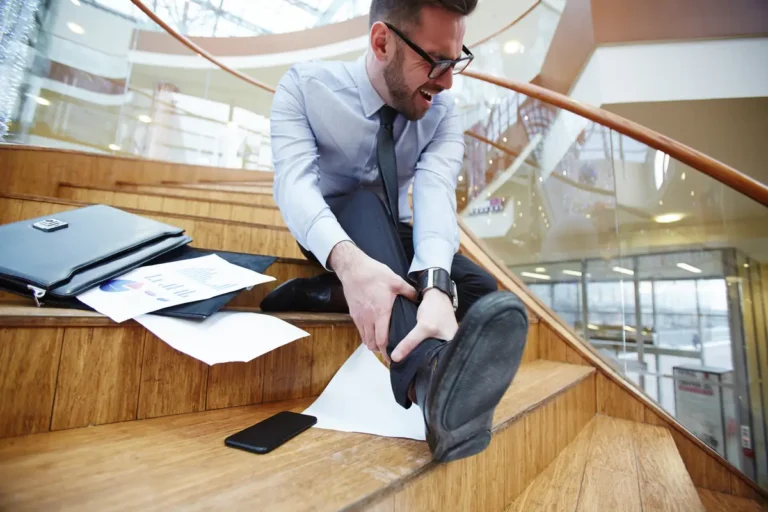
Can you sue for a slip and fall accident?
Yes, if the owner’s carelessness caused your fall. You have to show the owner owed you care, knew or should have known about the hazard, didn’t fix it or warn you, and that it caused your injury. A fall alone isn’t enough. A wet floor the owner just couldn’t have known about usually isn’t either.
Those are the four parts of negligence, set out by Washington’s Supreme Court in Tincani (1994) and quoted in this Court of Appeals opinion. Read why slip and fall cases can be hard to win.
Do you have to file a lawsuit to get paid?
No. Most fall cases start as a claim with the owner’s insurance company. You send your records and a demand, and the insurer makes an offer. Many settle right there. A lawsuit makes sense when the insurer won’t pay a fair amount, denies the claim, or the three-year deadline is getting close.
Filing also changes the pace of your case. Once a case is filed in King County, the court issues a schedule with a trial date (King County LCR 4). Deadlines push both sides to act.
How do you sue for a slip and fall in Washington?
Step by step. First, file a complaint in superior court that names the owner and explains what happened. Then you have it served on them. The owner’s lawyer files an answer. Next comes discovery, when both sides trade evidence. Smaller cases may go to arbitration. Others go to mediation, and if that fails, to trial.
- Send a claim and demand to the owner’s insurer.
- File a complaint in superior court.
- Serve the complaint and summons on the owner.
- The owner files an answer.
- Both sides trade documents and take depositions.
- Arbitration or mediation, depending on the case.
- Trial, if the case still hasn’t settled.
| Stage | What happens | Washington rule |
|---|---|---|
| Filing | Generally within 3 years of the fall | RCW 4.16.080 |
| Service | If filed near the deadline, serve within 90 days | RCW 4.16.170 |
| Answer | Due 20 days after service (60 if served out of state) | CR 12(a) |
| Schedule | King County sets a trial date when you file | King County LCR 4 |
| Arbitration | Required for money claims up to $100,000 in counties that adopt that limit | RCW 7.06.020 |
Who do you sue after a slip and fall?
Whoever was responsible for the place where you fell. That’s often the owner, but it can be a business that leases the space, a property manager, or a company hired to clean or clear snow. More than one may share the blame. Name the right parties early, because your deadline applies to each one.
| Where you fell | Who may be responsible | What to know |
|---|---|---|
| A store or restaurant | The business, the building owner, a cleaning company | Notice of the hazard is usually the key fight |
| Apartment stairs or hallway | The landlord or property manager | Shared areas must be kept reasonably safe (RCW 59.18.060) |
| A business parking lot with ice | The owner or the snow removal company | Natural ice counts as a hazard (Iwai, 1996) |
| A city sidewalk or public building | The city, county, or state | File a claim form first, then wait 60 days (RCW 4.96.020) |
What happens during discovery?
You and the owner gather proof from each other. You’ll ask the owner for incident reports, video, cleaning logs, and past complaints. They’ll ask for your medical records and may question you under oath in a deposition. Discovery often decides your case. Video or a cleaning log can show how long the hazard was there.
Many cases settle after depositions, once you and the owner both see the evidence. Read what happens after a deposition and at mediation.

Will your case go to arbitration or trial?
It depends on how much you’re asking for. In King County, money claims of $100,000 or less go to mandatory arbitration, which is faster and less formal than trial. Either side can ask for a new trial within 20 days after the award. Larger cases follow the court’s schedule toward trial, with mediation before the trial date.
Example only: a claim that would go to arbitration
Your case will most likely never reach a jury. See whether most slip and fall cases settle out of court.
What can you get from a slip and fall lawsuit?
Your medical bills, lost pay, future care, and pain and suffering. Washington has no formula and no cap for pain and suffering. If you were partly at fault, your award goes down by your share, but it doesn’t go away. Bills from health insurance or a lien may be paid back from the money.
Fault is split under RCW 4.22.005. Read what a slip and fall case is worth and the most common slip and fall injuries.
When we take a fall case, Rich handles it himself and prepares it as if it will go to trial. In one of our premises cases, a client with a fracture went to trial, and the jury awarded $1.0 million. Past results don’t guarantee future results. Every case is different.
FAQ
How long does a slip and fall lawsuit take?
It varies by case and county. King County sets a trial date when you file, and many cases settle before that date.
Will I have to testify?
Probably at a deposition, where the other side asks questions under oath. You’d testify in court only if the case reaches trial.
Can I sue the city for a fall on a sidewalk?
Yes, but you must file a claim form with the city first and wait 60 days before suing.
What if the insurer already denied my claim?
A denial doesn’t end your rights. You can still file a lawsuit before the three-year deadline.
What does No Win, No Fee mean?
You pay nothing up front. Our fee comes out of the money we win for you. No hourly bills. No retainer. If we don’t win, you owe us nothing. Not even the case costs.
Talk to Rich about your fall
A slip and fall lawsuit is a big step, but sometimes it’s the only way to get a fair result. Rich Martin has handled more than 2,000 injury cases in 28 years and taken more than 30 to a jury. He’ll tell you whether your case needs a lawsuit, and what it would take.
We help people hurt in falls in Bellevue, Seattle, Tacoma, and across Washington. Your case review is free. No Win, No Fee. We speak English and Korean.
Call (425) 635-2000 or see how we handle slip and fall cases.
Keep reading

Are Slip and Fall Cases Hard to Win?
Last updated: October 30, 2026 You slipped on a puddle by the store’s freezer case and broke your wrist. The manager wrote a short…

What to Do After a Slip and Fall Accident in Washington
Last updated: October 27, 2026 One second you’re walking past the produce aisle, and the next you’re on the floor. A worker helps you…

How Long to File a Slip and Fall Claim in WA
On this pageHow Long Do You Have to File a Slip and Fall Claim in Washington State?Common Causes of Slip and Fall Accidents in…