

Last updated: October 30, 2026
You slipped on a puddle by the store’s freezer case and broke your wrist. The manager wrote a short report and said they mop every hour. Now the store’s insurer says nobody knew the floor was wet, and you’re wondering if you even have a case.
Are slip and fall cases hard to win? They can be, because falling isn’t enough on its own. In Washington, you usually have to show the owner knew about the hazard, or should have found it, and didn’t fix it or warn you. With good evidence, many of these cases are won or settled.
The short answer: Yes, slip and fall cases are often harder than car crash cases. You have to prove the owner knew or should have known about the danger, and that proof disappears fast. Photos, witnesses, video, and an incident report make them winnable.
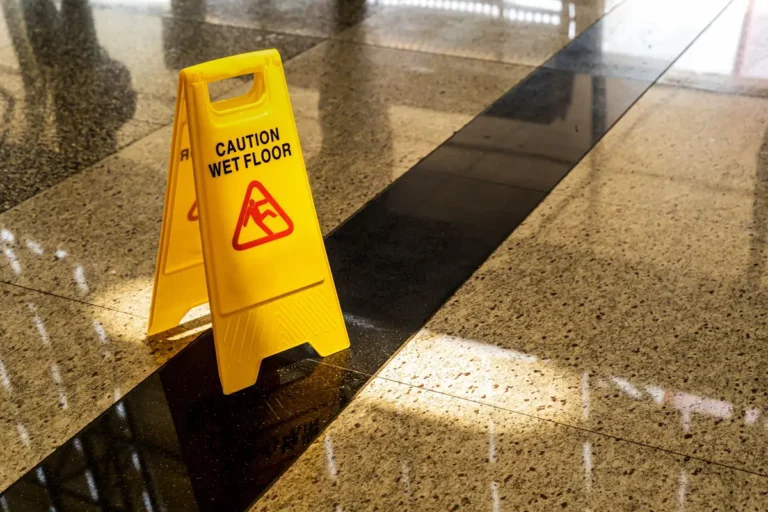
Are slip and fall cases hard to win?
Often, yes, but hard isn’t the same as hopeless. A car crash usually leaves a police report and two damaged cars. A fall often leaves only your word. The owner’s insurer knows that. So the case turns on what you can prove about the hazard, how long it was there, and why nobody fixed it.
Why are slip and fall cases hard to win?
Mostly because of proof. You have to show the owner knew about the danger or should have found it. Spills get mopped and ice melts. The store holds the camera footage and the cleaning logs. And the other side will say you weren’t watching your step. Each of those can be answered, but only with evidence.
| What the other side says | What can answer it |
|---|---|
| “We didn’t know about the spill.” | Cleaning logs, video, or a worker who saw it. Or the store’s own setup made spills likely. |
| “Anyone could have seen it.” | Proof you were distracted by displays, crowds, or carrying items |
| “You weren’t watching where you walked.” | Your shoes, the lighting, and no warning sign. Shared fault only lowers your payment. |
| “You weren’t really hurt by the fall.” | Prompt medical records that tie the injury to the fall |
| “You waited too long.” | Filing within Washington’s three-year deadline |
How do you prove liability in a slip and fall case?
You prove the four parts of negligence. The owner owed you a duty of care. The owner broke that duty. You were hurt. And the broken duty caused your injury. For a customer, the duty means finding hazards with reasonable care and fixing them or warning you. Evidence has to support each part.
Washington’s Supreme Court set out those four parts in Tincani v. Inland Empire Zoological Society (1994). For a customer, the owner is responsible for a condition it “knows or by the exercise of reasonable care would discover.” That test is quoted in this Court of Appeals opinion.
That’s how to prove liability in a slip and fall case: match your evidence to each part. You don’t have to prove it beyond any doubt. Your evidence only has to be more convincing than theirs. (Washington Courts, Judicial Branch Profile 2025–27)
| What you must prove | What it means | Evidence that helps |
|---|---|---|
| Duty | The owner had to keep the place reasonably safe for you | Proof you were a customer or guest, like a receipt |
| Breach | The owner knew or should have known, and didn’t act | Photos, video, cleaning logs, past complaints |
| Injury | You were actually hurt | Medical records, bills, time off work |
| Cause | The hazard caused the fall and the injury | Witnesses, your doctor’s notes, a prompt report |
Do you have to prove the store knew about the hazard?
Usually, yes. That’s the hardest part of most fall cases. You show the owner knew, or that the hazard was there long enough that a reasonable inspection would have found it. Some self-service stores are an exception. When the way a store runs makes spills likely, you may not have to prove notice.
That exception comes from Pimentel v. Roundup Co. (1983). Courts call it a limited rule, not an automatic win. Read more in what a slip and fall case is worth.
What if the hazard was easy to see?
You may still have a case. Washington follows a rule that an owner usually isn’t liable for a danger that’s known or obvious. But there’s an exception. If the owner should expect people to get hurt anyway, it still has to warn or fix it. Distractions like displays and crowds can trigger that duty.
The Supreme Court said distraction and forgetfulness are factors that “trigger the landowner’s responsibility to warn of, or make safe, a known or obvious danger.” (Tincani, quoted in Robinson v. U.S. Bancorp)
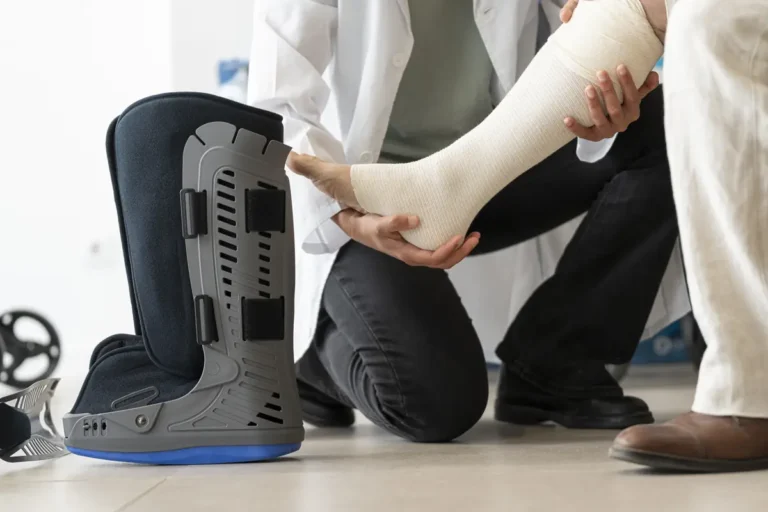
Can you win if you were partly at fault?
Yes. Washington uses pure comparative fault. If you were partly to blame, your payment goes down by your share, but it doesn’t drop to zero. Insurers use this all the time. They say you were on your phone or wearing the wrong shoes. Even if that’s partly true, the owner still pays its share.
Example only: how shared fault changes a fall claim
What makes a slip and fall case strong?
Evidence gathered in the first few days. A strong case shows the hazard, how long it was there, and that you were hurt by it. Photos taken right away matter most. So do witness names, the incident report, and a doctor’s visit soon after. Waiting lets the other side clean up and forget.
- Take photos of the hazard, the area, the lighting, and your shoes.
- Get the names and phone numbers of anyone who saw it.
- Report the fall to the manager or landlord and ask for a copy.
- See a doctor soon, and tell them you fell.
- Send a written request that the owner keep its video.
- Keep your shoes and clothes as they were.
That’s how to win a slip and fall case in practice: save the proof before it’s gone. For the full list, see what to do after a slip and fall accident. When we take a fall case, Rich handles it himself and starts by asking what proof still exists.
Are some falls harder to win than others?
Yes. Where you fell changes the rules. Falls on ice in a business parking lot are treated like other hazards. Apartment common areas fall under landlord law. Falls on city or state property need a claim form first. Free public parks and trails are much harder. Know which rules apply before you spend time on a claim.
| Where you fell | What changes | Law |
|---|---|---|
| A store or business | The owner must find and fix hazards with reasonable care | Tavai (2013) |
| Ice or snow in a business lot | Natural ice is treated like any other hazard | Iwai v. State (1996) |
| Apartment stairs or hallways | The landlord must keep shared areas reasonably safe | RCW 59.18.060 |
| City, county, or state property | File a claim form first, then wait 60 days to sue | RCW 4.96.020 |
| A free park or trail | The owner is usually not liable, with narrow exceptions | RCW 4.24.210 |
Hard cases still get won. In one of our premises cases, a client with a fracture went to trial, and the jury awarded $1.0 million. Past results don’t guarantee future results. Every case is different. See more on our results page.
FAQ
Do I need a witness to win a slip and fall case?
No, but one helps a lot. Photos, video, an incident report, and medical records can prove a case without a witness.
What if the store says it has no video?
Ask in writing right away for it to be kept. Many systems record over old footage. Cleaning logs and staff can still help.
Do most slip and fall cases go to trial?
No. Most settle. A strong file with clear evidence is what pushes the other side to offer fair money. Read whether most slip and fall cases settle out of court. If yours doesn’t, see how a slip and fall lawsuit works.
Is a slip and fall case worth it if I wasn’t badly hurt?
It depends on your bills and how the injury affects your life. A free case review can tell you if it’s worth pursuing.
What does No Win, No Fee mean?
You pay nothing up front. Our fee comes out of the money we win for you. No hourly bills. No retainer. If we don’t win, you owe us nothing. Not even the case costs.
Talk to Rich about your fall
Are slip and fall cases hard to win? Some are, and the evidence you save this week can decide yours. Rich Martin has handled more than 2,000 injury cases in 28 years and taken more than 30 to a jury. He’ll tell you plainly what your case has and what it’s missing.
We help people hurt in falls in Bellevue, Seattle, Tacoma, and across Washington. Your case review is free. No Win, No Fee. We speak English and Korean.
Call (425) 635-2000 or see how we handle slip and fall cases.
Keep reading
Slip and Fall Lawsuit: How the Process Works in Washington
Last updated: November 3, 2026 You fell on a broken step outside a restaurant three months ago. Your ankle needed surgery, and you missed…
What to Do After a Slip and Fall Accident in Washington
Last updated: October 27, 2026 One second you’re walking past the produce aisle, and the next you’re on the floor. A worker helps you…
How Long to File a Slip and Fall Claim in WA
On this pageHow Long Do You Have to File a Slip and Fall Claim in Washington State?Common Causes of Slip and Fall Accidents in…