

Last updated: November 16, 2026
You walked into a grocery store on a rainy Bellevue afternoon. Your foot shot out on a puddle by the carts, and you landed hard on your wrist. Now it’s in a cast, your hip aches, and the store’s insurer wants to know exactly what happened.
A slip and fall injury can be anything from a sprain to a broken hip or a head injury. Broken wrists, hips, and ankles, back and neck strains, shoulder tears, and concussions all follow falls. Whether you can claim money depends on more than the injury. You need to show the owner was careless about the hazard that made you fall.
The short answer: Falls often break wrists and hips and can injure your head, back, neck, or shoulder. Some symptoms show up hours or days later, so get checked. In Washington, the property owner may owe you money if it knew or should have known about the hazard. You have three years to file.
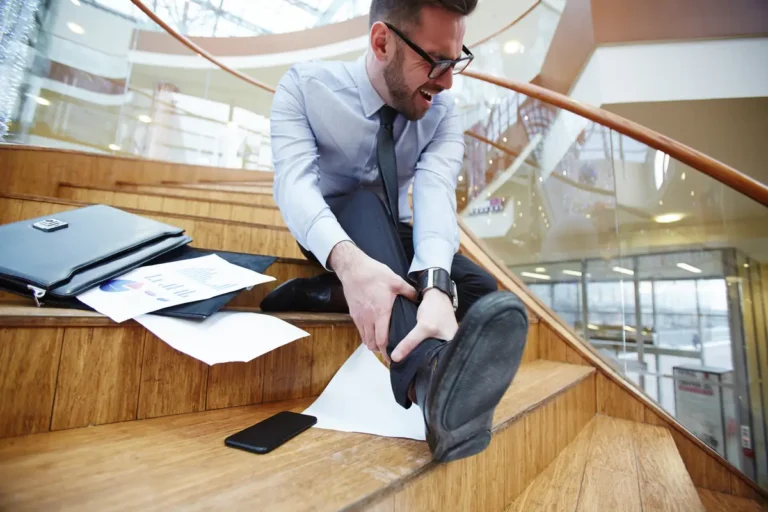
What are the most common slip and fall injuries?
Broken bones are a big part of it. A fall onto an outstretched arm is the most common cause of a broken wrist. Most hip fractures in older people come from falls. Falls can also cause head injuries, back and neck sprains, and rotator cuff tears. Older adults are more likely to break a bone when they fall.
| Injury | How falls cause it | Usual treatment |
|---|---|---|
| Broken wrist | The most common cause is a fall onto an outstretched arm | A cast if the bone is in good position; surgery if it can’t be set or held |
| Hip fracture | Most hip fractures in older people come from falls | Nearly all need surgery |
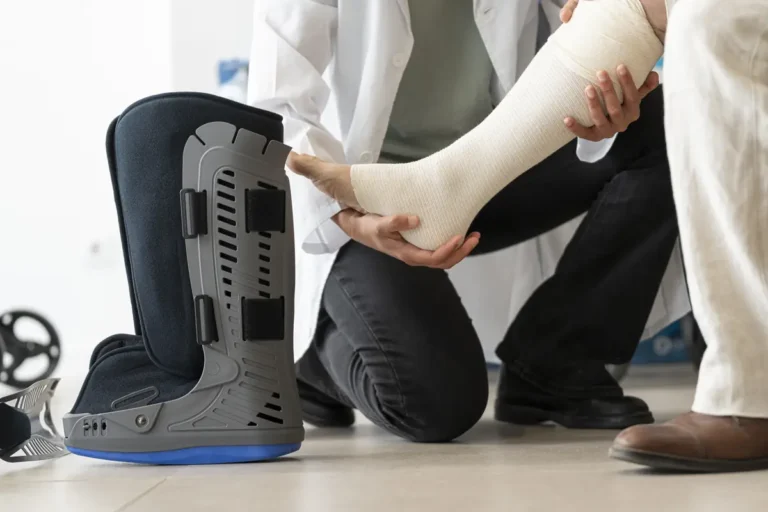
| Broken ankle | Twisting or rolling the ankle, tripping, or falling | A cast or boot if stable; screws or a plate if not |
| Rotator cuff tear | Falling on an outstretched arm | Nonsurgical care helps about 80 to 85% of patients |
| Neck sprain | A hard fall can bend the neck too far | Most symptoms go away in 4 to 6 weeks |
| Back injury | Sprains, herniated disks, or broken vertebrae | Medicine, ice, physical therapy, or surgery |
Broken wrists and arms
When you fall, your hand goes out to catch you. That reflex can break the radius, the larger forearm bone, near the wrist. In older people with weaker bones, even a fall from standing can do it.
Hip fractures
A broken hip can change an older adult’s life. It may lead to disability and a loss of independence (MedlinePlus, Falls). Nearly all hip fractures need surgery (AAOS).
Head injuries and concussions
Symptoms of a head injury can start right away or build over hours or days. Your head may look fine while the brain is bruised or bleeding inside (MedlinePlus, Head injury). Go to the ER for a headache that gets worse, repeated vomiting, slurred speech, confusion, or passing out (CDC).
Back injuries
Common back injuries include sprains and strains, herniated disks, and broken vertebrae. The lower back is where they happen most (MedlinePlus).
Neck injuries
A hard fall can whip the neck into an extreme position and sprain it. Pain may not start until hours later or the next day (AAOS).
Shoulder injuries
Landing on your arm can tear the rotator cuff. Tears from a fall usually cause intense pain right away (AAOS).
Why should you see a doctor even if you feel okay?
Because some fall injuries hide at first. A head injury can bleed slowly, and neck pain can start the next day. A doctor’s visit also creates the first record linking your injury to the fall. An insurer may point to a gap before your first visit and argue something else caused your pain.
If your injury involves your head, read about our brain injury cases.
What are common causes of slip and fall accidents?
A slip or trip means you lost your footing or traction. In a store or building, that can mean a spill no one cleaned up, rainwater tracked inside, a torn mat, or a broken stair. Outside, it can be ice, a cracked sidewalk, or poor lighting. The cause matters, because it points to who should have fixed it.

MedlinePlus lists “tripping or slipping due to loss of footing or traction” among common causes of falls (MedlinePlus, Falls). Read what to do after a slip and fall for how to photograph the hazard.
Who is responsible for a slip and fall injury in Washington?
Usually the business or owner that controls the property. It’s responsible if it knew about the hazard, or would have found it with reasonable care, and didn’t fix it or warn you. In self-service stores, you may not need to prove notice when the store’s own setup made the hazard foreseeable. Landlords must keep shared areas safe.
| Where you fell | Who may be responsible | Rule |
|---|---|---|
| Store or business | The business, if it knew or should have known | Tavai v. Walmart Stores (2013) |
| Self-service store | The store, sometimes without proof of notice | Pimentel exception, as applied in Tavai |
| Apartment stairs or hallway | The landlord, for shared areas | RCW 59.18.060(3) |
| City sidewalk or building | The city or county, after a claim form | RCW 4.96.020 |
| At work | Your employer’s workers’ comp, plus any outside party at fault | RCW 51.04.010, 51.24.030 |
These are called premises liability claims. Work falls go through Washington’s workers’ comp system, and we don’t handle those claims. If someone other than your employer caused the fall, you may also have a claim against them. For how these cases are proven, read are slip and fall cases hard to win?
What if you were partly at fault for the fall?
You can still recover money in Washington. The state uses pure comparative fault, so your payment goes down by your share of the blame. Even if you were mostly at fault, you can recover the rest. An open and obvious hazard doesn’t always end a claim either, if the owner should have expected people to be hurt anyway.
Example only: a shopper who was 25% at fault
What money can you recover for a slip and fall injury?
You can claim your medical bills, future care, lost pay, and lost ability to earn. You can also claim pain and suffering and the loss of things you used to enjoy. Washington has no cap on pain and suffering. A court can also order future economic damages to be paid over time when they’re large.
The no-cap rule comes from Sofie v. Fibreboard (1989). Periodic payment of future economic damages of $100,000 or more is in RCW 4.56.260. For what drives the number, read what is my slip and fall case worth?
What should you do right after a fall?
Get medical care first. Then report the fall to the manager or owner and ask for a copy of the incident report. Photograph the hazard before someone cleans it up, plus your shoes and your injuries. Get witness names. Ask the business to keep its camera footage. Don’t give the insurer a recorded statement before you get advice.
- Get checked. Same day if you can, even if you feel okay.
- Report it. To the manager, and get the incident report number.
- Photograph. The spill, ice, or step, plus lighting and signs.
- Get names. Witnesses and employees who saw it.
- Save footage. Ask in writing that cameras be kept.
- Keep records. Bills, missed work, and how you feel each week.
How long do you have to file a slip and fall claim?
Three years from the fall for most injury claims in Washington. If you fell on city or county property, you must file a claim form with that government first and wait 60 days before suing. A child’s time usually doesn’t start until they turn 18. Talks with the insurer generally don’t stop the clock.
The rules are RCW 4.16.080(2), RCW 4.96.020, and RCW 4.16.190. If talks stall, read how a slip and fall lawsuit works.
When we take a slip and fall case, Rich handles it himself. He moves quickly to save the store’s camera footage and incident report, and he prepares the case for trial from the start. Insurers pay more when they know a lawyer will go to court.
FAQ
Can I claim if I didn’t go to the doctor right away?
You can, but the gap gives the insurer room to argue. See a doctor as soon as you can and explain when the fall happened.
What if the store says I wasn’t watching where I walked?
That’s an argument about your share of fault. In Washington, it can lower your payment but doesn’t erase it.
Does it matter if there was a wet floor sign?
It can. A warning may help the store, but whether it was enough depends on where it was and what the store knew.
Can I sue the city for a fall on a broken sidewalk?
Possibly. You must file a claim form with the city first and wait 60 days before you sue (RCW 4.96.020).
What does No Win, No Fee mean?
You pay nothing up front. Our fee comes out of the money we win for you. No hourly bills. No retainer. If we don’t win, you owe us nothing. Not even the case costs.
Talk to Rich about your slip and fall injury
A slip and fall injury can turn into months of treatment while the store’s insurer says you should have looked down. You deserve someone who gets the footage before it’s gone. Rich Martin has handled more than 2,000 injury cases in 28 years and taken more than 30 to a jury. He’ll tell you plainly what your case needs.
We help people hurt in falls in Bellevue, Seattle, Tacoma, and across Washington. Your case review is free. No Win, No Fee. We speak English and Korean.
Call (425) 635-2000 or see how we handle slip and fall cases.
Keep reading

Slip and Fall Lawsuit: How the Process Works in Washington
Last updated: November 3, 2026 You fell on a broken step outside a restaurant three months ago. Your ankle needed surgery, and you missed…

Are Slip and Fall Cases Hard to Win?
Last updated: October 30, 2026 You slipped on a puddle by the store’s freezer case and broke your wrist. The manager wrote a short…

What to Do After a Slip and Fall Accident in Washington
Last updated: October 27, 2026 One second you’re walking past the produce aisle, and the next you’re on the floor. A worker helps you…