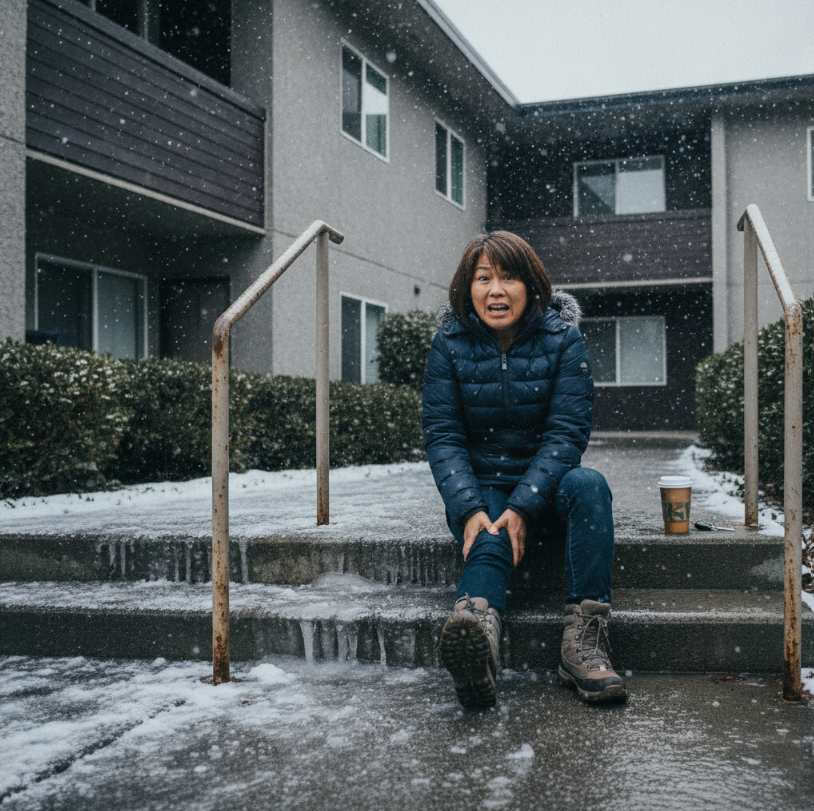
A sudden slip on a wet grocery store floor. A fall on icy apartment steps. A trip over uneven pavement outside a Bellevue office building.
In seconds, your life can change.
Medical bills pile up. You miss work. Pain lingers longer than expected. And then comes the big question:
How much is a slip and fall accident settlement amount in Washington?
The honest answer? It depends. But recent data and Washington case examples give us meaningful ranges—and understanding what drives settlement value can help you protect your rights and avoid being underpaid.
This comprehensive guide breaks down:
Average settlement ranges in Washington
What increases (or decreases) compensation
How comparative fault affects your payout
Insurance company tactics
The legal timeline and statute of limitations
Practical steps to maximize your claim
If you were injured in Bellevue or anywhere in King County, this guide is for you. We also discuss nearby Seattle and touch on Redmond examples so readers across the region can relate.
Catastrophic cases: Can reach six or seven figures
If you are asking how much is a slip and fall settlement in Bellevue Washington for fractured ankle surgery, documented examples and local settlements commonly fall into the five- and six-figure range depending on surgical complexity and recovery.
For example:
A Washington case involving a fractured ankle requiring surgery reportedly settled for $250,000 after a fall on icy apartment steps.
Statewide verdict compilations include premises liability results exceeding $1 million, and even multi-million-dollar outcomes in severe cases involving negligent property design or maintenance.
⚠️ Important: There is no universal “average” that applies to every case. If you wonder what is the average slip and fall settlement amount in Washington state for non-surgical injuries, know that many non-surgical claims—such as soft-tissue strains—settle in the low five-figure range, but each file is unique.
Takeaway: Use these ranges as a starting point—your case will turn on the specifics of your injury and evidence.
Common Causes of Slip and Fall Accidents in Bellevue & King County
Slip and fall claims fall under premises liability law. Property owners must maintain reasonably safe conditions.
Common local causes include:
1. Wet or Slippery Floors
Spilled liquids in grocery stores
Recently mopped floors without warning signs
Leaking refrigerators in retail stores
2. Ice and Snow
Bellevue winters frequently bring freezing rain and icy conditions. Property owners must take reasonable steps to address dangerous ice accumulation. Local guidance on road and sidewalk conditions can be found at WSDOT.
3. Uneven Sidewalks or Parking Lots
Cracked pavement
Potholes
Broken stairs
Poor lighting
4. Apartment Complex Hazards
Loose handrails
Torn carpeting
Broken steps
Inadequate maintenance
5. Workplace Slips
Warehouse floors, restaurant kitchens, and office buildings are frequent accident sites.
Under Washington premises liability law, a property owner may be liable if they:
Takeaway: Identifying how the hazard arose and whether the owner knew about it often determines whether a claim will succeed.
Key Legal Issues That Affect Settlement Amounts
1. Injury Severity
This is the single biggest driver of compensation.
Injury Type
Typical Settlement Range
Minor sprain/strain
$5,000–$15,000
Moderate soft-tissue injury
$15,000–$30,000
Non-surgical but severe injury
$30,000–$45,000+
Fractures requiring surgery
$75,000–$250,000+
Permanent disability or TBI
$250,000–$1M+
Surgery, hardware implants, long-term physical therapy, or permanent impairment significantly increase case value.
Takeaway: The more serious and long-lasting the harm, the higher the likely settlement.
2. Medical Expenses
Insurance companies rely heavily on documented medical bills. Your settlement typically reflects:
ER visits
Diagnostic imaging (MRI, CT scans)
Orthopedic treatment
Surgery
Physical therapy
Pain management
Future medical needs
Gaps in treatment can reduce value.
Takeaway: Keep complete, timely medical records—insurance adjusters use them to set the baseline for damages.
3. Lost Wages & Loss of Earning Capacity
If your injuries caused you to miss work—or forced you into a lower-paying job—you may recover:
Past lost wages
Future income loss
Reduced earning capacity
For professionals in Bellevue’s tech, healthcare, and corporate sectors, even short-term disability can result in substantial economic damages. Residents in nearby Redmond and Seattle often face similar issues when a temporary inability to work affects stock compensation, bonuses, or consulting income.
Takeaway: Document missed work and any impact on your future earning potential.
4. Pain and Suffering
Washington allows compensation for non-economic damages, including:
Physical pain
Emotional distress
Anxiety
Loss of enjoyment of life
There is no strict formula. These damages often exceed medical bills in serious cases.
Takeaway: Non-economic losses matter—experienced counsel can help present them effectively.
Washington’s Comparative Fault Rule: How It Reduces Settlements
Washington follows pure comparative negligence.
This means:
You can recover compensation even if you were partially at fault.
Your settlement is reduced by your percentage of fault.
If you are wondering how does Washington comparative fault reduce slip and fall settlement payout percentage, consider this simple math:
Example:
If your total damages equal $100,000 and you are found 20% at fault: you receive $80,000.
Insurance companies frequently argue:
The hazard was “open and obvious”
You were distracted
You wore improper footwear
You ignored warning signs
Reducing your percentage of fault is critical to maximizing your settlement.
Takeaway: Establishing low or no fault is a central part of preserving full value in your claim.
The Three-Year Statute of Limitations
Under RCW 4.16.080, most Washington personal injury claims—including slip and fall cases—must be filed within:
✅ Three Years From the Date of Injury
Miss this deadline, and your claim is typically barred.
Exceptions may apply for:
Claims involving minors
Certain discovery-rule scenarios
Claims against government entities (which may require pre-suit notice)
Claims that proceed toward litigation in King County may eventually involve the King County Superior Court, so early steps are important to preserve options.
Do not wait until the deadline approaches.
👉 Injured in Bellevue? Contact R Martin Law Group today for a free consultation.
Takeaway: Timely action preserves your legal options—start the process early.
Real-World Example: Bellevue Apartment Ice Fall
Imagine this scenario:
A Bellevue tenant slips on untreated icy stairs outside her apartment building. Maintenance had received prior complaints but failed to salt the walkway.
She suffers:
An ankle fracture
Surgical repair with hardware
4 months off work
Ongoing limp
Damages might include:
$45,000 medical bills
$30,000 lost wages
$150,000 pain and suffering
Future treatment costs
Potential settlement value: $200,000–$350,000, depending on liability strength and insurance coverage.
If you search for steps to maximize slip and fall claim settlement after icy apartment stairs in Bellevue, the key steps include prompt medical care, preserving maintenance records, documenting prior complaints, and collecting witness statements and surveillance footage.
Takeaway: Clear documentation of prior complaints and maintenance failures can dramatically improve settlement prospects.
Insurance Companies and Settlement Challenges
Insurance adjusters are trained to minimize payouts.
Common tactics include:
Quick lowball settlement offers
Claiming pre-existing conditions caused your pain
Arguing you were distracted
Delaying communication
Requesting recorded statements to use against you
Early settlement offers often undervalue long-term consequences—especially when surgery may still be needed.
Without legal representation, many victims unknowingly accept far less than their case is worth.
In many King County files, the best evidence to increase slip and fall settlement value in King County Washington includes surveillance footage, maintenance logs, incident reports, witness statements, and timely medical records.
Takeaway: Having counsel can level the playing field with experienced adjusters.
Risks, Delays, and Litigation Factors
Not all cases settle quickly.
Factors that may delay resolution:
Disputed liability
Lack of video evidence
Conflicting witness accounts
Complex medical issues
Government property claims
High-value claims requiring litigation
Most slip and fall cases settle within 6–18 months, but cases involving surgery or litigation may take longer.
Filing a lawsuit does not mean you are going to trial—it often increases negotiation leverage. Cases filed in King County Superior Court may follow local rules and timelines.
Takeaway: Follow each stage carefully—good documentation at every step strengthens your position.
Prevention Tips for Property Owners & Visitors
While not all accidents are preventable, risk can be reduced by:
Reporting hazards immediately
Taking photos of dangerous conditions
Wearing appropriate footwear in winter
Seeking prompt medical attention
Avoiding recorded statements without legal advice
For property owners, following local maintenance guidance from WSDOT and using best-practice winter protocols reduces liability. For health and fall-prevention resources, see the CDC.
Takeaway: Small, timely actions can protect both safety and potential claims.
Frequently Asked Questions (FAQ)
1. What is the average slip and fall settlement in Washington State?
Most non-surgical cases settle between $10,000 and $45,000. Serious injury cases involving surgery or permanent damage may exceed $100,000 and can reach seven figures in catastrophic scenarios.
Takeaway: Use averages as a guide—not a guarantee for your case.
2. How does Washington comparative fault affect my case?
Your compensation is reduced by your percentage of fault. If you are 30% responsible, your award is reduced by 30%.
If you specifically want to know how does Washington comparative fault reduce slip and fall settlement payout percentage, remember that your final payout equals your total recoverable damages multiplied by (1 – your fault percentage).
Takeaway: Even partial fault doesn’t bar recovery, but it lowers the payout.
3. What if I slipped on government property in Bellevue?
Claims against government entities have special procedural requirements and may require formal notice before filing a lawsuit. Deadlines can be shorter than the standard three years.
Takeaway: Government claims need extra care—start early.
4. How long does a slip and fall settlement take?
Most cases resolve within 6–18 months. Complex cases or lawsuits may take longer.
Takeaway: Patience and preparation improve outcomes.
5. Should I accept the insurance company’s first offer?
Initial offers are often significantly lower than full case value—especially before medical treatment is complete. Always understand your total damages before settling.
Takeaway: Don’t rush to accept the first offer—know your full losses first.
6. What if I had a pre-existing condition?
You can still recover compensation if the fall aggravated a prior injury. Washington law allows recovery for worsening of pre-existing conditions.
Takeaway: Pre-existing conditions don’t automatically bar recovery—document how the fall made things worse.
What Is Your Slip and Fall Case Worth?
Slip and fall accident settlement amounts in Washington vary widely:
Minor injuries may resolve for a few thousand dollars.
Moderate injuries often settle in the five-figure range.
Surgical or permanent injuries can result in six- or seven-figure outcomes.
The difference often comes down to:
Injury documentation
Proof of negligence
Comparative fault arguments
Insurance policy limits
Legal representation
If you or a loved one has been injured in Bellevue or anywhere in King County, you do not have to navigate this alone.
For questions like what is the average slip and fall settlement amount in Washington state for non-surgical injuries or how much is a slip and fall settlement in Bellevue Washington for fractured ankle surgery, schedule a consultation so an attorney can evaluate your evidence and damages.
R Martin Law Group is committed to helping injured victims recover the compensation they deserve—with compassion, experience, and a deep understanding of Washington personal injury law.