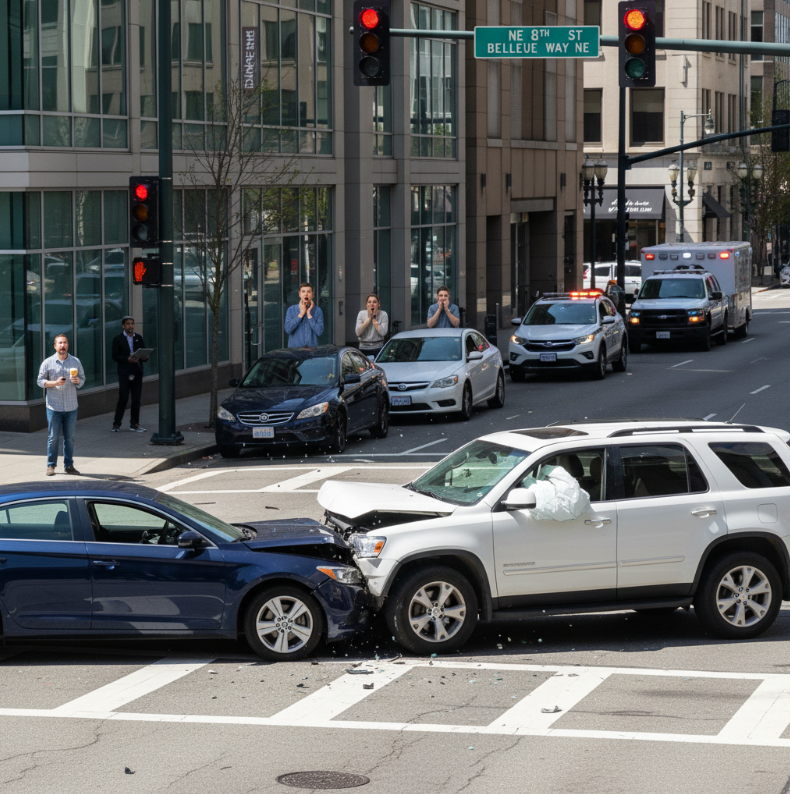
When it comes to a t-bone car accident, also known as a side-impact crash, the dangers and legal challenges are unique and significant. These collisions occur when the front of one vehicle strikes the side of another, forming a “T” shape at the impact point. In Washington State and throughout Greater Seattle, including Bellevue, Seattle, and Renton, t-bone car accidents are common and often result in serious injuries, especially at busy intersections.
This comprehensive guide covers the typical causes of t-bone car accidents, explains victims’ rights, and provides practical advice for those injured in Bellevue and King County. Leveraging the latest traffic data and legal expertise, our goal is to empower accident victims with the knowledge to protect their interests.
T-bone car accidents are particularly dangerous because the sides of vehicles offer less protection compared to their front or rear. According to national research and data from the National Highway Traffic Safety Administration (NHTSA), side-impact crashes account for about 13% of all U.S. car accidents and approximately 18% of fatal crashes in the Seattle area. Injuries can range from broken bones, traumatic brain injuries, and spinal cord damage to fatalities.
The Washington State Department of Transportation (WSDOT) reports a gradual decline in overall traffic fatalities, but side-impact collisions remain a major cause of injury and death. In 2024, Washington experienced around 731 traffic fatalities—a 10% decrease from previous years—yet intersections, where most t-bone car accidents occur, continue to be high-risk zones throughout King County, including Bellevue, Kirkland, and Redmond.
👉 Injured in Bellevue? Contact R Martin Law Group today for a free consultation.
Common Causes of T-Bone Car Accidents in Washington State
Most t-bone car accidents happen at intersections, parking lots, or when a driver unlawfully enters another lane. Key causes include:
1. Failure to Yield Right of Way
Nearly 20,000 crashes occur annually in Washington due to drivers failing to yield, making it the leading cause of side-impact collisions. This often happens when a driver runs a red light or stop sign and hits another vehicle legally crossing the intersection.
2. Distracted Driving
Distracted driving remains a significant threat. In 2024, distracted driving caused 138 fatalities statewide and is a major factor behind many t-bone car accidents. Common distractions include texting, phone calls, eating, or conversing with passengers.
3. Speeding
Speeding reduces the driver’s reaction time, increasing the severity of accidents, particularly at intersections. In 2024, speeding accounted for 247 traffic deaths in Washington and often worsens t-bone car accident outcomes.
4. Impaired Driving
Despite a downward trend, impaired driving still caused 348 deaths last year. Drivers under the influence may misjudge traffic signals, contributing to dangerous side-impact crashes.
5. Running Traffic Signals
Ignoring red lights and stop signs is a classic cause of t-bone car accidents, especially in areas with poor visibility or outdated signal timing.
6. Aggressive Driving and Road Rage
Tailgating, rushing through yellow lights, or attempting to “beat” cross traffic can quickly lead to side-impact collisions.
High-traffic cities like Seattle, Tacoma, and Everett face complex intersections and significant numbers of t-bone car accidents annually.
Key Legal Issues & Victims’ Rights in T-Bone Car Accident Cases
Understanding your legal rights after a t-bone car accident is essential. These cases often involve complex liability and insurance matters, requiring clear proof of fault.
Determining Fault
In Washington, the driver who fails to yield or runs traffic signals typically bears primary fault. However, investigations may reveal other factors such as speeding, distraction, vehicle defects, or hazardous road conditions.
How to Prove Fault in a T-Bone Car Accident in Washington State
Proving fault involves gathering police reports, traffic camera footage, witness statements, and expert analyses. An experienced personal injury attorney can help collect and present this evidence effectively to strengthen your claim.
Comparative Fault Rules
Washington employs a comparative fault system, which means your compensation may decrease if you’re found partially responsible. For example, if you are 20% at fault, your damages award reduces accordingly.
What Compensation Can I Claim After a T-Bone Car Accident in Bellevue?
Type of Compensation
Description
Medical expenses
Hospital bills, surgeries, rehabilitation costs
Lost wages
Income lost due to time off work caused by injuries
Pain and suffering
Physical and emotional harm from the crash and aftermath
Property damage
Repair or replacement of your vehicle
Disability or disfigurement
Compensation for permanent injuries or impairments
Importance of Legal Representation
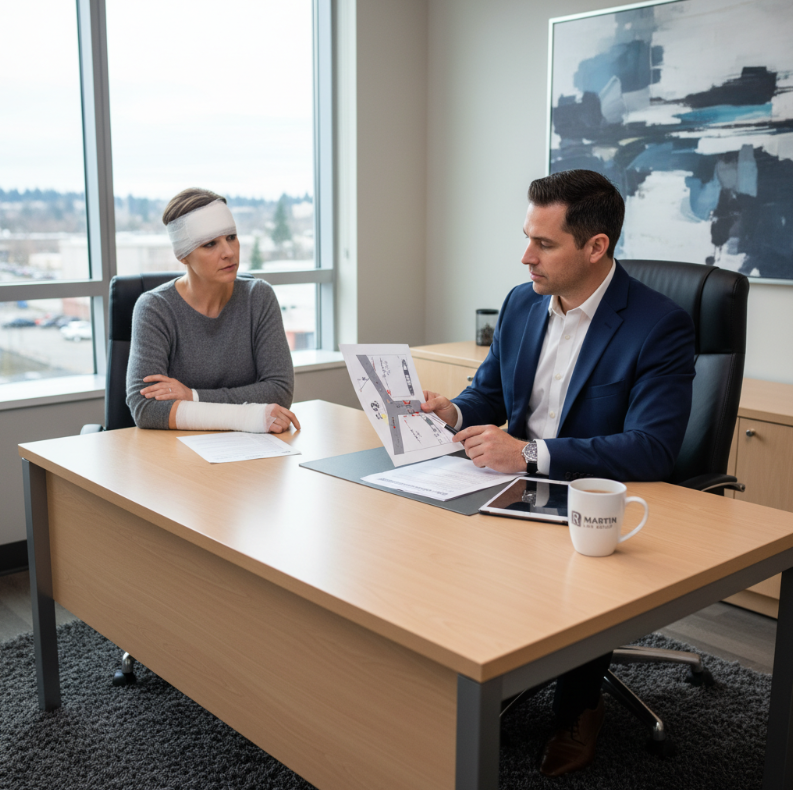
Due to the severity of injuries and complex insurance claims in t-bone car accidents, working with a knowledgeable personal injury attorney is vital. Law firms like R Martin Law Group can:
Conduct in-depth accident investigations
Collect and preserve critical evidence (police reports, witness statements, videos)
Negotiate effectively with insurance adjusters
Pursue litigation when necessary
Real-World Examples in Bellevue and King County
In 2025, Renton reported over 1,400 vehicle crashes, many involving side-impact collisions linked to distracted driving and failure to yield. Seattle logged more than 14,000 intersection crashes between 2021 and 2024, with nearly 20% of fatal accidents being t-bone car accidents.
Case Study: Intersection T-Bone Collision
In 2024, a Bellevue resident was stopped at a red light when another driver ran the light at high speed and struck her vehicle’s side. She sustained multiple fractures and a traumatic brain injury. Her attorney successfully established the other driver’s recklessness and secured a generous settlement covering medical bills, lost wages, and pain and suffering.
Throughout King County, including Mercer Island and Issaquah, residents face similar risks and legal challenges related to side-impact collisions.
Risks, Delays, and Legal Options After a T-Bone Crash
Steps to Take Immediately Following a T-Bone Car Accident in Seattle
Many victims underestimate their injuries and delay medical treatment, which can harm both recovery and legal claims. Immediate actions include seeking medical care, reporting the accident, and documenting evidence.
Statute of Limitations
Under Washington law, you typically have three years from the date of the crash to file a personal injury lawsuit. Missing this deadline usually forfeits your right to compensation. For detailed legal timelines, visit King County Superior Court.
When to File a Lawsuit
If insurance negotiations stall or disputes over fault arise, filing a lawsuit may be necessary. An experienced attorney will guide you through the process and timeline.
Preventing T-Bone Car Accidents: Safety Tips for Drivers
Always obey traffic signals and speed limits
Approach intersections cautiously and yield when required
Minimize distractions by keeping phones out of reach
Never drive under the influence of drugs or alcohol
Use headlights during low visibility
Maintain safe distances between vehicles
Stay alert in heavy traffic and bad weather conditions
✅ T-Bone Accident Legal Claims Checklist
Step
Description
Timeframe
1. Seek Medical Treatment
Prioritize your health, even if injuries seem minor
Immediately
2. Report the Accident to Police
Obtain an official accident report
Within 24 hours
3. Document Evidence
Take photos, gather witness contacts
Immediately after crash
4. Notify Your Insurance Company
Report your claim to your insurer
Within 24-72 hours
5. Consult a Personal Injury Attorney
Free consultation to evaluate your claim
Within weeks of crash
6. Avoid Giving Recorded Statements
Don’t talk to insurers without legal advice
Until attorney consult
7. Follow Up on Medical Treatment
Keep detailed records and bills
Throughout recovery
8. Negotiate or File Lawsuit
Attorney negotiates or initiates legal action
Within 3-year limit
🧾 Frequently Asked Questions (FAQs)
1. What is a T-bone accident, and why is it so dangerous?
A t-bone car accident happens when one vehicle’s front crashes into the side of another, forming a “T” shape. These crashes are dangerous because vehicle sides offer less protection, increasing the risk of severe injuries or death, especially at intersections.
2. Who is usually at fault in T-bone collisions?
Most t-bone car accidents occur due to failure to yield, running red lights, or distracted driving. Washington’s comparative fault law allows for shared responsibility, but usually the driver violating traffic rules is liable.
3. How do I prove fault in a T-bone car accident case?
Proving fault requires police reports, dashcam or traffic camera footage, witness accounts, and expert analysis. Legal assistance is crucial for effectively gathering and presenting this evidence.
4. What types of compensation can I claim after a T-bone car accident?
Compensation may include medical bills, lost wages, pain and suffering, property damage, and permanent disabilities resulting from the crash.
5. How long do I have to file a lawsuit after a T-bone car accident in Washington?
The statute of limitations is generally three years from the accident date to file a personal injury claim, as outlined by Washington State RCW.
Conclusion: Protect Your Rights After a T-Bone Accident in Bellevue
T-bone car accidents often lead to severe injuries and complex legal matters. If you or a loved one has been hurt in a side-impact collision in Bellevue or neighboring areas such as Kent and Federal Way, acting quickly and wisely can significantly impact your recovery and compensation.
R Martin Law Group combines local expertise, compassionate client care, and a proven track record to help victims secure deserved compensation. Whether you need advice on your rights, assistance with insurance claims, or litigation support, our team is ready to guide you.
👉 Injured in Bellevue? Contact R Martin Law Group today for a free consultation.