

A head on car accident is one of the most devastating types of crashes on Washington roads. When two vehicles collide front-to-front, the combined force of impact can be catastrophic—often causing life-altering injuries or tragic loss of life. For families in Bellevue and residents across nearby Seattle, a head-on crash can turn a normal commute into a medical, emotional, and financial crisis in an instant.
Recent data from the Washington Traffic Safety Commission (WTSC) shows that traffic fatalities remain alarmingly high statewide. Washington recorded 810 traffic deaths in 2023, the highest total since 1990. Although preliminary numbers for 2024 show a decrease to 731 fatalities, that figure is still dramatically higher than pre-2019 levels. Many of the behaviors driving these deaths—speeding, impaired driving, and distraction—are also leading contributors to severe head-on collisions.
If you or someone you love has been injured in a head-on accident in Bellevue, understanding your legal rights and options is critical. Below, we break down the causes, laws, insurance challenges, and steps to protect yourself after a crash. If you need immediate guidance about what to do next, including what to do after a head-on car accident in Bellevue Washington, contact R Martin Law Group for a free consultation.
👉 Looking for a Personal Injury Lawyer Near Bellevue, WA? Contact R Martin Law Group today for a free consultation.
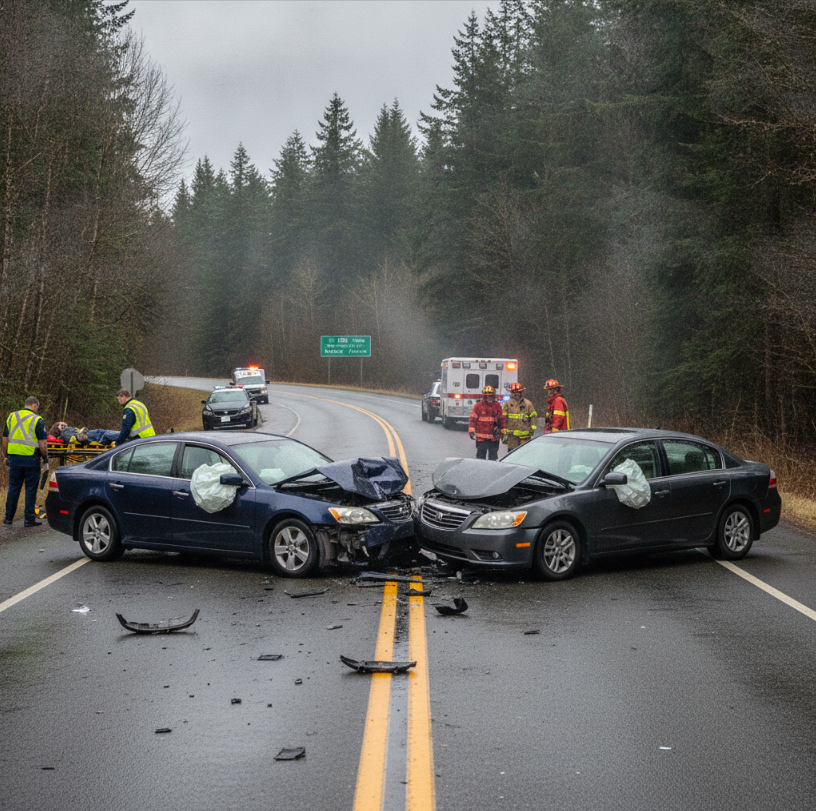
Background: Why Head-On Collisions Are So Dangerous
Head-on crashes make up a smaller share of total accidents but account for a disproportionate number of serious injuries and fatalities.
Unlike rear-end or sideswipe collisions, head-on accidents involve:
- High combined speeds
- Direct frontal impact
- Significant intrusion into the passenger cabin
- Minimal time to react
Statewide crash data from WSDOT show more than 100,000 crashes occur annually in Washington. Only a small fraction result in fatalities, but severe crashes concentrate in specific high-risk behaviors and collision types—especially high-speed lane departures and wrong-way driving.
In head-on collisions, both vehicles absorb the force simultaneously. For example:
- If each vehicle is traveling at 45 mph, the force of impact can feel closer to hitting a stationary object at 90 mph.
- Even with airbags and seat belts, occupants often suffer traumatic injuries from extreme deceleration forces.
Head-on crashes also frequently cause significant intrusion into the passenger compartment, increasing the risk of severe injury. If you were involved in a head-on crash, prompt medical care and careful documentation are essential steps toward recovery and any legal claim.
Common Locations for Head-On Crashes in King County
Head-on collisions frequently occur on:
- Undivided two-lane highways
- Rural roads with limited visibility
- Curves or hills
- Construction zones
- Freeways involving wrong-way drivers
In the Bellevue area, high-risk corridors may include sections of I-90, SR-520, and arterial roads that connect residential neighborhoods to commercial centers. Drivers in nearby Redmond and Issaquah also face similar risks on connecting routes. Staying aware of these locations can help you avoid higher-risk stretches of road.
Common Causes of Head-On Car Accidents
The same risk factors driving Washington’s recent spike in fatalities are heavily linked to head-on crashes.
1. Speeding
WTSC data shows that approximately one-third of traffic fatalities involve speeding. Speed reduces reaction time and increases stopping distance. On undivided roads, even a brief loss of control can push a vehicle across the centerline.
2. Impaired Driving (Alcohol or Drugs)
In 2023, 400 traffic fatalities involved an impaired driver in Washington. Impairment increases the risk of:
- Drifting across lanes
- Wrong-way freeway entry
- Misjudging passing distances
- Falling asleep at the wheel
Wrong-way DUI crashes often result in direct head-on impacts at highway speeds.
3. Distracted Driving
Washington law prohibits handheld phone use while driving. Nevertheless, distracted driving continues to contribute to fatal crashes. In 2023, over 130 traffic deaths involved a distracted driver.
Taking your eyes off the road for just a few seconds can lead to crossing the centerline into oncoming traffic.
4. Unsafe Passing
Improper passing is a classic cause of head-on accidents. Washington law prohibits:
- Passing in marked no-passing zones
- Passing on hills or curves with limited visibility
- Passing when oncoming traffic is too close
5. Fatigue and Drowsy Driving
Though less publicized than DUI, fatigue impairs reaction time and lane control in ways similar to alcohol. Drowsy drivers who drift into opposing lanes often cause catastrophic crashes.
If you’ve been injured by any of these behaviors, documenting the cause and seeking experienced legal advice can make a real difference in protecting your rights.
If your question is technical—such as why are head-on collisions more deadly on undivided two-lane highways in King County—understanding roadway design, sight distance, and speed differentials helps explain the elevated risk.
👉 Need help understanding your legal rights? Visit our Bellevue injury attorney page.
Key Legal Issues & Victim Rights in Washington
After a head-on collision, determining fault is central to recovering compensation.
Washington Is a Pure Comparative Fault State
Washington follows a pure comparative negligence system (see the state statutes at RCW). That means:
- Even if you are partially at fault, you can still recover damages.
- Your compensation is reduced by your percentage of fault.
For example, if you are awarded $500,000 but found 20% responsible, your recovery would be reduced to $400,000.
Violations of Traffic Laws as Evidence of Negligence
Common statutory violations in head-on cases include:
- Crossing a solid centerline
- Speeding
- DUI
- Distracted driving
- Reckless driving
When a driver violates these laws and causes injury, that violation can be powerful evidence of negligence in a civil case.
Criminal Charges vs. Civil Claims
If the at-fault driver was impaired or driving recklessly, they may face criminal charges such as:
- Vehicular assault
- Vehicular homicide
- DUI
Criminal proceedings do not provide compensation to victims. A separate civil personal injury lawsuit is required to recover damages.
Types of Compensation Available
Head-on crash victims may be entitled to:
- Medical expenses (past and future)
- Lost wages
- Loss of earning capacity
- Pain and suffering
- Emotional distress
- Property damage
- Wrongful death damages (in fatal cases)
Understanding how fault and damages work in Washington gives you a clearer path to pursuing full compensation. Seek guidance early to protect evidence and preserve your rights. If your case will be litigated in court, you may ultimately file in a local courthouse such as the King County Superior Court.
Real-World Example: A King County Head-On Case Scenario
Imagine a Bellevue resident driving home on a two-lane highway in eastern King County. An oncoming driver attempts to pass a slow-moving vehicle on a curve marked with a solid double-yellow line. The driver misjudges distance and collides head-on.
The injured victim suffers:
- Multiple fractures
- A traumatic brain injury
- Months of rehabilitation
- Inability to return to work
In cases like this, an attorney must:
- Obtain crash reconstruction evidence
- Secure medical expert testimony
- Investigate phone records (if distraction is suspected)
- Review toxicology reports
- Calculate long-term economic damages
If you are asking how can I prove the other driver was at fault in a Bellevue head-on crash, these are the types of evidence—reconstruction, witness statements, police reports, and medical records—that help establish liability.
Without experienced legal representation, victims often accept settlements far below what their case is worth. If this scenario sounds familiar, getting counsel who can assemble the right experts and evidence is a critical next step.
👉 Ready to speak with an attorney? Schedule a consultation with R Martin Law Group today.
The Insurance Company’s Role & Settlement Challenges
After a head-on accident, insurance adjusters move quickly. Their goal is to minimize payouts.
Common tactics include:
- Requesting recorded statements
- Disputing injury severity
- Claiming shared fault
- Pressuring early settlement before full diagnosis
- Downplaying long-term complications
Why Early Settlement Can Be Risky
Head-on crashes often result in:
- Internal injuries
- Spinal cord trauma
- Brain injuries with delayed symptoms
Accepting a settlement before you understand long-term medical needs can leave you responsible for future expenses.
Insurance companies calculate claims using formulas that rarely account for:
- Emotional trauma
- Permanent disability
- Loss of enjoyment of life
If you are wondering about steps to maximize settlement after serious head-on collision with traumatic brain injury, important strategies include obtaining thorough medical documentation, preserving all treatment records, working with life-care planners and vocational experts, and avoiding premature recorded statements. An experienced attorney can coordinate those steps and negotiate for future damages.
That’s where experienced legal advocacy becomes critical. An attorney can help prevent premature settlements and ensure future needs are considered.
Risks, Delays, and Legal Options
Statute of Limitations in Washington
In most Washington personal injury cases, you have three years from the date of the accident to file a lawsuit. If you’re searching how long do I have to file a head-on accident lawsuit in Washington, the typical answer is three years—but certain defendants or government entities may trigger different rules or notice requirements.
Delays That Can Hurt Your Case
- Waiting too long to seek medical treatment
- Failing to document injuries
- Posting on social media
- Giving inconsistent statements
When Government Entities May Be Liable
Some head-on crashes involve:
- Poor road design
- Missing signage
- Inadequate barriers
- Dangerous construction zones
If a public entity contributed to the accident, special claim notice requirements and shorter deadlines may apply. If you think a government agency or roadway condition played a role, consult an attorney promptly to preserve claims and meet notice requirements.
👉 Injured in Bellevue? Contact R Martin Law Group today for a free consultation.
Prevention Tips for Drivers in Bellevue 🚗
While you cannot control other drivers, you can reduce your risk:
- Avoid passing on undivided roads unless visibility is clear.
- Never drive impaired or fatigued.
- Obey posted speed limits.
- Keep both hands on the wheel and avoid phone use.
- Be cautious on rural highways and curves.
- Watch for wrong-way drivers at night.
For safety resources on crash prevention and vehicle safety recommendations, refer to NHTSA and public health guidance from the CDC.
Drivers in Kent and Renton face many of the same roadway risks as Bellevue residents—defensive driving and vigilance are your best protections.
Head-On Accident Claim Process Checklist
| Step | What to Do | Why It Matters |
|---|---|---|
| 1 | Call 911 & Seek Medical Care | Creates official record and protects your health |
| 2 | Obtain Police Report | Documents fault and contributing factors |
| 3 | Document Scene & Injuries | Preserves visual evidence |
| 4 | Notify Insurance (Carefully) | Meets policy requirements |
| 5 | Consult Personal Injury Attorney | Protects against low settlement offers |
| 6 | Investigate & Calculate Damages | Ensures full compensation demand |
| 7 | Negotiate or File Lawsuit | Secures fair recovery |
Follow the checklist to preserve evidence and protect your claim. Early, organized action improves your chances of a full recovery.
Frequently Asked Questions About Head-On Car Accidents
1. Who is usually at fault in a head-on collision?
Fault often lies with the driver who crossed the centerline, was speeding, impaired, or passing illegally. However, Washington’s comparative fault system means both drivers can share responsibility depending on the evidence.
2. How long does a head-on accident settlement take?
Settlement timelines vary. Straightforward cases may resolve within months, while severe injury cases involving litigation can take one to two years or longer.
3. What if the other driver was drunk?
If the at-fault driver was impaired, you may pursue civil compensation regardless of criminal charges. DUI-related crashes often strengthen liability claims and may support claims for enhanced damages.
4. Can I recover compensation if my loved one died in a head-on crash?
Yes. Washington’s wrongful death laws allow certain surviving family members to pursue damages for loss of financial support, companionship, and funeral expenses.
5. What if I was partially at fault?
You may still recover compensation. Your damages will be reduced by your assigned percentage of fault under Washington law.
6. Are head-on collisions more likely to cause serious injury?
Yes. Due to combined impact forces, head-on crashes have a higher likelihood of causing traumatic brain injuries, spinal cord damage, internal bleeding, and fatalities compared to many other crash types.
If your question isn’t listed here, reach out to an attorney who can answer specifics about your situation and guide next steps.
You Don’t Have to Face This Alone
A head-on car accident can change your life in seconds. From mounting medical bills to lost income and emotional trauma, the aftermath is overwhelming. With traffic fatalities in Washington remaining historically high, understanding your rights has never been more important.
If you or someone you love has been injured in a head-on collision in Bellevue or anywhere in King County, experienced legal guidance can make a meaningful difference. R Martin Law Group has helped injury victims pursue full and fair compensation while treating clients with compassion and respect.
👉 Ready to speak with an attorney? Schedule a consultation with R Martin Law Group today.
Your recovery matters. Your rights matter. You deserve an advocate who will stand by your side every step of the way.
Keep reading

Does Medical Insurance Cover Car Accidents
On this pageDoes Medical Insurance Cover Car Accidents in Washington State?Background: Who Pays Medical Bills After a Car Accident?What Is PIP Coverage in Washington?Does…

Do Men or Women Crash More?
On this pageDo Men or Women Get in More Car Accidents? What the Latest Data Means for Washington DriversDo men or women get in…

Typical Car Accident Settlements in Bellevue
If you were injured in a car crash in Bellevue or anywhere in King County, one of your first questions is probably: “What is…