
A fall can happen in a second and change months of your life. A broken wrist means no work. A hip fracture can mean surgery and weeks of rehab. If the fall happened because a store, landlord, or business ignored a hazard, they may owe you for it. Rich Martin is a Washington slip and fall lawyer who has handled more than 2,000 injury cases over 28 years.
Here’s how these cases work under Washington slip and fall law, what you need to show, and what to do right now. A Washington slip and fall lawyer can tell you quickly whether your fall is likely a claim.

Where falls turn into injury claims
Not every fall is someone else’s fault. A claim usually starts with a hazard that the owner or manager should have fixed, or at least warned you about. Claims often grow out of places like these:
- Grocery and retail stores: spilled liquid, produce on the floor, cluttered aisles, wet entryways on rainy days.
- Apartments and rentals: broken stairs, loose railings, dark hallways, and walkways the landlord didn’t repair.
- Parking lots and garages: potholes, uneven curbs, poor lighting, and ice that was never treated.
- Sidewalks: lifted panels and tree roots. Who is responsible depends on the city and the spot.
- Restaurants, hotels, and gyms: slick floors, torn carpet, and wet pool decks.
- Work sites: if another company’s hazard caused the fall, you may have a claim beyond workers’ comp.
Read what to do after a slip and fall and what you need to know about slip and fall accidents.
What you have to prove
The owner isn’t automatically responsible because you fell on their property. Washington law asks a few questions:
- Was there a real hazard? Something that made the place unreasonably unsafe, not just a normal floor.
- Did they know, or should they have known? Either they caused it, saw it, or it was there long enough that a careful owner would have found it.
- Did they fail to fix it or warn you? A cone, a sign, or a rope can matter.
- Did the hazard cause your injury? Medical records connect the fall to the harm.
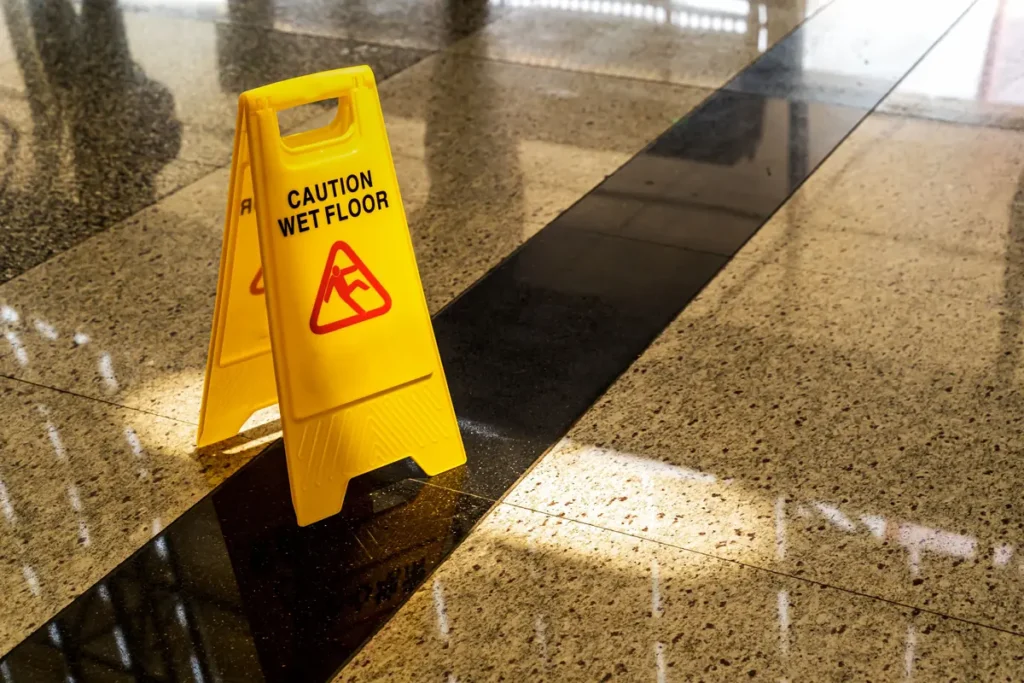
The second question is often the hardest. Stores say they didn’t know about the spill. But Washington has an exception for self-service stores. When the way a store runs makes a hazard likely, like loose produce or shoppers handling liquids, you may not have to prove how long the hazard was there (Pimentel v. Roundup Co., 1983).
Why your reason for being there matters
Washington sorts visitors into three groups, and the owner’s duty changes with each (Tincani v. Inland Empire Zoological Society, 1994).
| Why you were there | Legal term | What the owner owed you |
|---|---|---|
| Shopping, dining, a business visit, or a place open to the public | Invitee | The highest duty: inspect for hazards, fix them, or warn you |
| A social guest at someone’s home | Licensee | Warn about hidden dangers the owner knew about |
| On the property without permission | Trespasser | Mostly, not to hurt you on purpose or recklessly |
Ice, rentals, and parks: three special cases
Snow and ice. Some states let property owners off the hook for ice that forms naturally. Washington doesn’t. The state Supreme Court held that an owner’s duty to customers covers natural snow and ice in a parking lot, the same as any other hazard (Iwai v. State, 1996). The owner still has to have known, or should have known, and failed to act reasonably.
Apartments and rentals. Washington landlords must keep shared areas reasonably safe from defects that increase the risk of accidents (RCW 59.18.060). Broken stairs, loose railings, and dark hallways in common areas are the landlord’s job to fix.
Parks, trails, and open land. A landowner who lets the public use land for recreation without charging a fee is generally not liable for accidental injuries there (RCW 4.24.210). There’s an exception for a known, dangerous, man-made hidden condition with no clear warning sign. These cases are hard, and they turn on details, so call before assuming either way.
Washington slip and fall law: shared fault
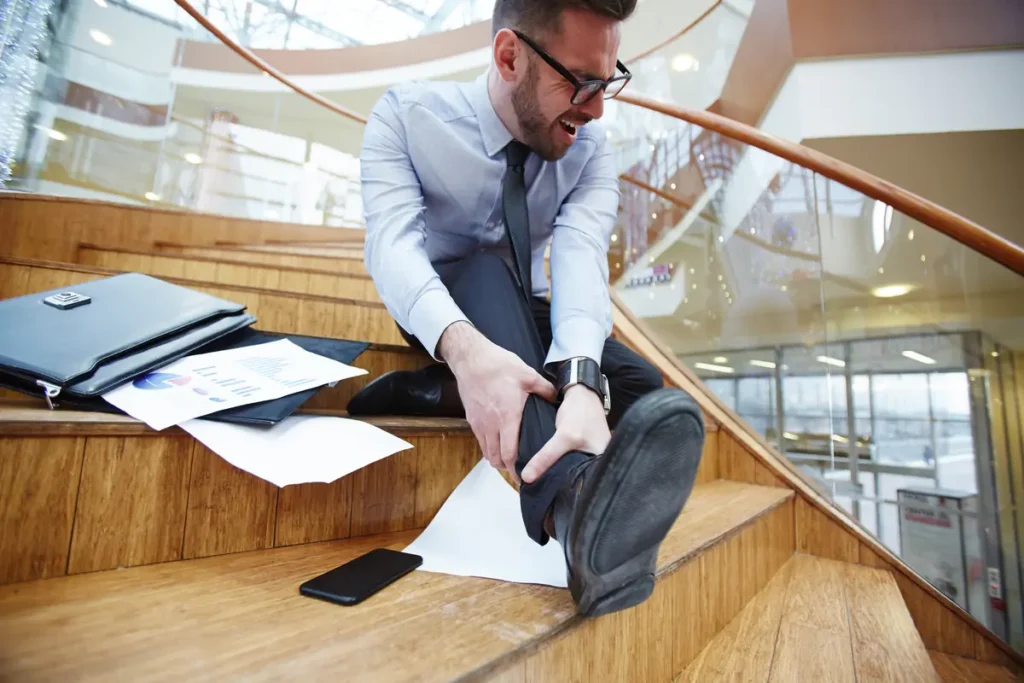
Expect the other side to say you weren’t watching your step. Washington uses pure comparative fault (RCW 4.22.005). If a jury decides you were 20% at fault, your award goes down by 20%. It doesn’t go away.
How shared fault works
That’s why evidence matters so much. Photos of the hazard, your shoes, the lighting, and the lack of a warning sign all push the fault back where it belongs.
Deadlines for fall cases
| Where you fell | What you must do | Law |
|---|---|---|
| Private property: a store, apartment, or business | File a lawsuit within 3 years | RCW 4.16.080 |
| City or county property, like a public building or sidewalk | File a claim form first, then wait 60 days | RCW 4.96.020 |
| State property | File with the state’s Office of Risk Management, then wait 60 days | RCW 4.92.110 |
Read more about how long you have to file a slip and fall claim in Washington.
Do these things in the first few days
- Report it before you leave. Ask for an incident report and a copy, or at least the manager’s name.
- Photograph the spot from several angles. Include what caused the fall and any missing warning sign.
- Keep your shoes and clothes as they were. Don’t wash or throw them away.
- Get names and numbers of anyone who saw it.
- Ask them to keep the video. Many businesses record over footage within days or weeks.
- See a doctor, and tell them exactly how you fell.
Common fall injuries
Falls are especially dangerous for older adults. In Washington, falls are the leading cause of injury-related death and hospitalization for people 65 and older (state Department of Health), and fall injuries account for 57% of all injury deaths in that age group (DOH).
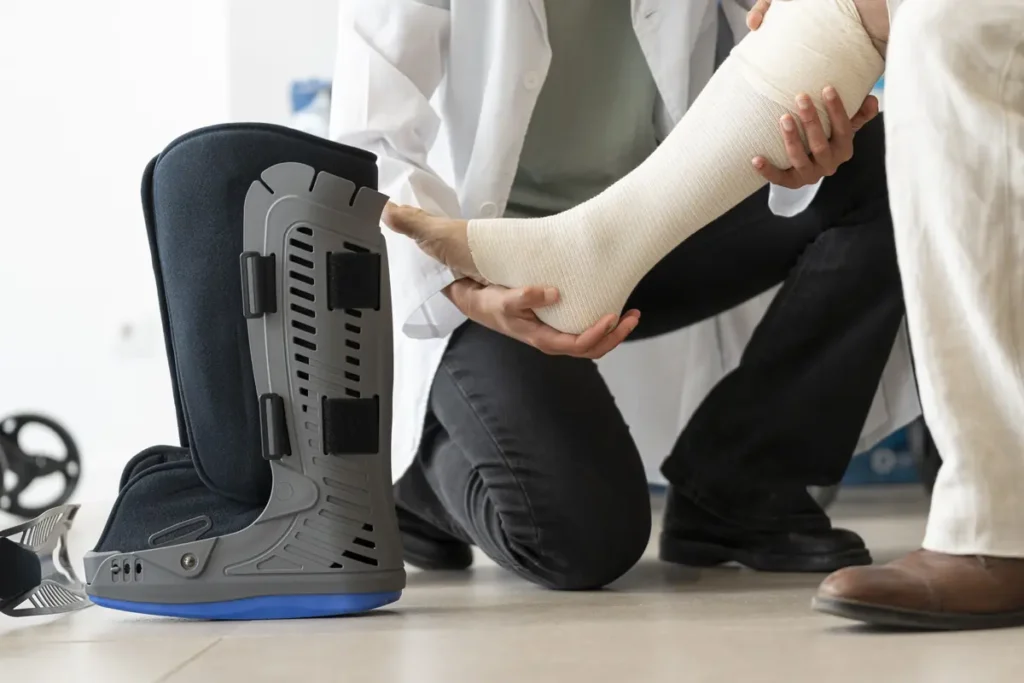
Falls hurt people in predictable ways. The body hits hard, often on one side, often with a hand out to break the fall.
- Broken wrists, arms, and ankles.
- Hip fractures, which are especially serious for older adults.
- Head injuries and concussions from hitting the floor or a step.
- Back and neck injuries, including disc damage.
- Knee and shoulder tears that may need surgery.
In one case, a dangerous property condition caused our client’s fracture. A jury awarded $1 million. Past results don’t guarantee future results, and every case is different. Read about what a slip and fall case may be worth and settlements without surgery.
Local help across Washington
Sidewalk rules, claim offices, and courts change from city to city. We have local pages for falls in Seattle, Bellevue, Tacoma, and Kent. For other cities, pick yours from the list below, and we’ll explain what applies where you fell.
Talk to a Washington premises liability lawyer
Not sure you have a case? That’s what the free call is for. No Win, No Fee: if we don’t win, you owe us nothing. Call (425) 635-2000 or send us a message.
Slip & Fall: results for our clients
Past results don't guarantee future results. Every case is different. See all results →

Your attorney: Rich Martin
28 years. More than 2,000 injury cases. More than 30 jury trials. When you call, you talk to Rich, and he handles your case himself.
About Rich Martin →Find help in your city
Common questions
What does No Win, No Fee mean?
You pay nothing up front. Our fee comes out of the money we win for you. No hourly bills. No retainer. If we don't win, you owe us nothing. Not even the case costs.
Can I sue if I slipped and fell in a store in Washington?
Maybe. You'd need to show the store created the hazard, knew about it, or should have found it in time. In some self-service stores, you don't have to prove how long the spill was there.
The store says I should have been watching. Does that end my case?
No. Washington uses comparative fault. If you were partly at fault, your recovery is reduced by that share, not erased.
How long do I have to file a slip and fall claim?
Usually three years (RCW 4.16.080). If a city, county, or the state owns the property, you must file a claim form first, so start sooner.
I fell at my apartment. Is the landlord responsible?
It depends on where you fell and what the landlord knew. Washington landlords must keep shared areas reasonably safe from defects (RCW 59.18.060), so falls on common stairs, walkways, and parking areas are often their responsibility.
Do I need a Washington slip and fall lawyer for a small fall?
Not always. If you weren't hurt, you may not need one. If you broke a bone, needed surgery, or missed work, a free call can help you decide.
Talk to a lawyer today. The call is free. Call (425) 635-2000.
Helpful articles

Bellevue Slip and Fall Settlements
A sudden slip on a wet grocery store floor. A fall on icy apartment steps. A trip over uneven pavement outside a Bellevue office…
What to Do After a Slip and Fall Accident
A slip and fall can happen in a second — on a wet grocery store floor, an icy Bellevue sidewalk, a poorly lit stairwell,…
How Long to File a Slip and Fall Claim in WA
How Long Do You Have to File a Slip and Fall Claim in Washington State? A sudden slip on a wet grocery store floor.…