
Last updated: November 20, 2026
You’re home from a fender bender on NE 4th Street in Bellevue. Nothing’s broken, nobody called an ambulance, but your neck feels tight and your wrist is swelling. It’s 7 p.m., your doctor’s office is closed, and you’re not sure whether this is an ER night or an urgent care night.
Urgent care after a car accident is the right call for injuries that hurt but aren’t life-threatening, like sprains, strains, minor cuts, and a stiff neck. Go to the ER, or call 911, for head injuries with confusion, chest pain, trouble breathing, or loss of feeling. In Washington, your PIP coverage can pay the bill no matter who caused the crash.
The short answer: Use urgent care for non-emergency crash injuries, the same day or the next. Call 911 or go to the ER for confusion, passing out, chest pain, trouble breathing, numbness, or a possible broken bone. PIP pays licensed providers, including urgent care and ambulances, for care within three years of the crash.
Should you go to urgent care after a car accident?
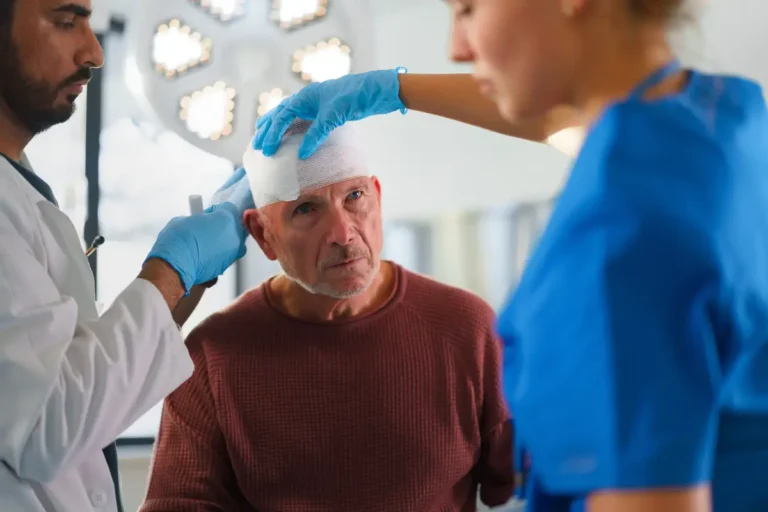
Yes, if you’re hurt but it isn’t an emergency. Urgent care can check you the same day, when your own doctor can’t see you. The visit also starts a medical record that ties your symptoms to the crash. If anything you feel could be an emergency, skip urgent care and go to the ER instead.
MedlinePlus lists an urgent care clinic as one choice for an unexpected injury, along with a nurse line, your own provider, and the emergency department (MedlinePlus, When to use the emergency room). For symptoms that start days later, read hidden injuries after a car accident.
Urgent care vs. emergency room: which should you choose?
Choose the ER for anything that could kill or permanently disable you. That includes a head injury with confusion or fainting, chest pain, trouble breathing, a possible broken bone, heavy bleeding, or a sudden bad headache. Choose urgent care for sprains, strains, bruises, and soreness. ER care can cost two to three times more.
| Symptom after a crash | Where to go |
|---|---|
| Head injury with passing out, fainting, or confusion | Call 911 |
| Neck or spine injury with loss of feeling or can’t move | Call 911 |
| Severe chest pain or pressure, severe shortness of breath | Call 911 |
| Possible broken bone, heavy bleeding, or a deep wound | Emergency room |
| Sudden or unusual bad headache, dizziness that won’t go away | Emergency room |
| Severe pain anywhere | Emergency room |
| Sprains, strains, bruises, a stiff neck, minor cuts | Urgent care or your own doctor |
When should you call 911 after a crash?
Call 911 at the scene if anyone is hurt, and anytime later for an emergency. MedlinePlus says to call for a head injury with passing out or confusion, a neck or spine injury with loss of feeling, severe chest pain, severe shortness of breath, or sudden weakness on one side. Don’t drive yourself.
Washington law also requires drivers at a crash to give reasonable aid to anyone hurt (RCW 46.52.020). If you can’t move an arm or hand after a crash, call 911 (MedlinePlus, Neck pain).
What are your treatment options, and who should you see after an accident?
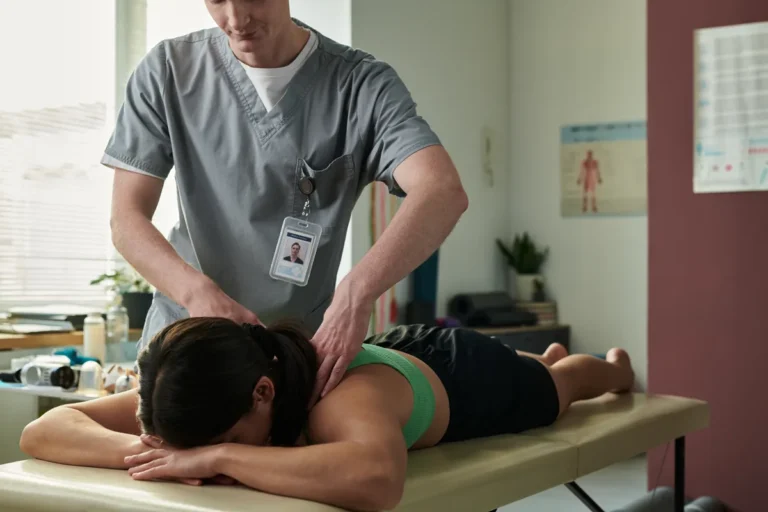
Start with your own doctor for follow-up care. Your doctor can manage your care and send you to specialists. Depending on the injury, that may mean an orthopedist, a neurologist, a physical therapist, a chiropractor, or a mental health provider. Every provider should be licensed in Washington. Tell each one the injury came from a car crash.
| Provider | What they do after a crash | Note |
|---|---|---|
| Urgent care or ER | First exam, X-rays, stitches, emergency care | Starts the medical record |
| Your primary care doctor | Follow-up, referrals, managing your recovery | Knows your health before the crash |
| Orthopedist or neurologist | Broken bones, joints, nerve and head injuries | Usually by referral |
| Physical therapist | Exercises to restore strength and motion | Keep every appointment |
| Chiropractor | Spinal adjustment, exercise, heat, cold, massage | Can’t prescribe drugs or do surgery |
| Mental health provider | Anxiety, depression, PTSD after the crash | Only they can diagnose PTSD |
Washington health plans must let every category of licensed provider deliver covered services within their scope (RCW 48.43.045). For chiropractic care, read car accidents and chiropractic care.
Who pays for urgent care after a car accident?
Your PIP coverage can pay first, no matter who caused the crash. In Washington, PIP pays reasonable and necessary care from licensed providers, including ambulance and hospital care, for three years after the crash. Basic PIP covers up to $10,000 in medical bills. After that, health insurance and the at-fault driver’s insurer can pay.
Example only: how much basic PIP is left
An insurer can cut off PIP only if care isn’t reasonable, necessary, or related to the crash, and it must explain why in writing (WAC 284-30-395). See how PIP works in Washington.
What should you do after your urgent care visit?
Follow the discharge instructions and book any follow-up they recommend. Get copies of your visit notes and bills. Open a PIP claim with your insurer and give them the clinic’s bill. Write down how you feel each day. If symptoms get worse or new ones appear, go back or see your own doctor.
- Follow up. See your doctor within the time urgent care advised.
- Get records. Visit notes, X-ray reports, and bills.
- Open PIP. Send the bills to your own insurer.
- Track symptoms. A short daily note on pain and limits.
- Finish treatment. Gaps can weaken your claim.
- Hold off. No recorded statement to the other insurer yet.
For the rest of your claim, read what to do after a car accident in Washington.
When we take an injury case, Rich handles it himself. He makes sure the medical records tell the full story, from the first urgent care visit on. Insurers pay more when they know a lawyer will go to court.
FAQ
Is it too late to go to urgent care a few days after the crash?
No. Go as soon as you notice symptoms and tell them about the crash. The sooner the visit, the easier it is to link the injury to the crash.
Do I need to go if I feel fine?
It’s wise to get checked. Some injuries, like neck sprains and concussions, can show symptoms hours or days later.
Will urgent care bill the other driver’s insurance?
Urgent care bills go to your PIP or health insurance. The at-fault driver’s insurer pays later through your injury claim.
Does PIP cover a chiropractor or physical therapist?
It can, if the care is reasonable, necessary, and related to the crash, and the provider is licensed in Washington.
What does No Win, No Fee mean?
You pay nothing up front. Our fee comes out of the money we win for you. No hourly bills. No retainer. If we don’t win, you owe us nothing. Not even the case costs.
Talk to Rich about your injuries
Urgent care after a car accident can be the first page of your medical record. You deserve someone who makes sure the rest of the story gets told. Rich Martin has handled more than 2,000 injury cases in 28 years and taken more than 30 to a jury. He’ll tell you plainly what your case needs.
We help people hurt in crashes in Bellevue, Seattle, Tacoma, and across Washington. Your case review is free. No Win, No Fee. We speak English and Korean.
Call (425) 635-2000 or see how we handle car accident cases.
Keep reading

Does Insurance Cover Hydroplaning? Who Pays After a Wet-Road Crash
Last updated: November 17, 2026 You were driving home on I-90 in a heavy Seattle rain when the steering suddenly went light. Your car…
What Is a Bodily Injury Settlement? A Washington Guide
Last updated: November 13, 2026 The adjuster from the other driver’s insurance company calls back. They say your car claim is done, and now…
Do You Have to Wear a Seatbelt in the Back Seat in Washington?
Last updated: November 12, 2026 You slide into the back of a rideshare outside a Bellevue restaurant. The belt buckle is buried in the…