
Last updated: November 10, 2026
It’s been eight months since a tractor-trailer drifted into your lane on I-5. You’ve had two surgeries, and you’re not back at work. The trucking company’s insurer has a team on your claim, and its last letter said your losses were “under review.” You’re starting to wonder if a lawsuit is the only way forward.
A truck accident lawsuit asks a court to make the driver, the trucking company, or others pay for the harm they caused. Many truck claims still settle, but a lawsuit is often what moves a large insurer. In Washington, you generally have three years from the crash to file.
The short answer: A truck accident lawsuit is filed when the trucking company’s insurer won’t pay fairly. It often names the driver, the company, and others. Federal records, large policies, and corporate defense lawyers make it different from a car case. Most settle before trial. File within three years.
What is a truck accident lawsuit?
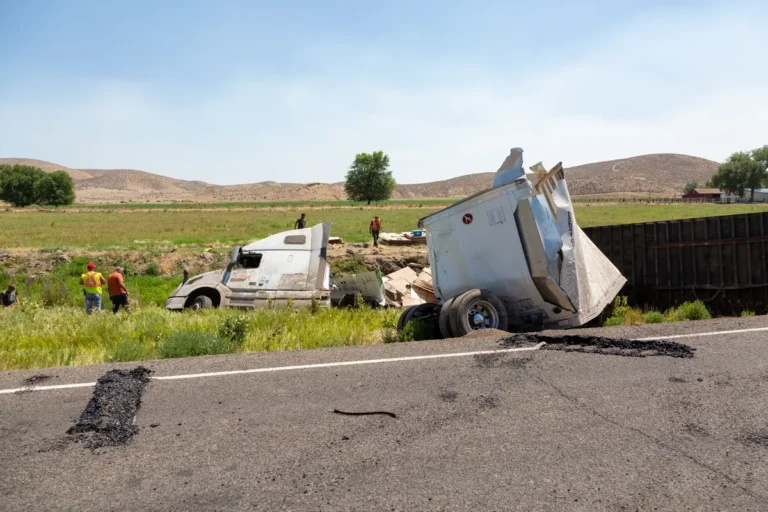
It’s a civil case you file to ask for money after a crash with a commercial truck. You file a complaint in court, name everyone you believe is responsible, and ask for your losses. Then come evidence sharing, depositions, and often mediation. If it doesn’t settle, a jury decides who was at fault and how much is owed.
You need to show negligence: a duty of care, a breach, an injury, and cause (Lowman v. Wilbur, 2013). Your evidence only has to be more convincing than theirs.
Do you need to file a lawsuit after a truck accident?
Not always. Many truck claims settle with the insurer. But trucking insurers often defend hard, because policies are large and serious injuries are common. A lawsuit gives you the court’s power to get records and question witnesses under oath. It also sets a trial date, which tends to make an insurer take the claim seriously.
Talks with an insurer generally don’t stop the three-year clock (RCW 4.16.080). If the truck belonged to a city, county, or the state, a claim form comes first (RCW 4.96.020).
Who do you sue after a truck accident?
Everyone whose carelessness played a part in your crash. That’s often the driver and the trucking company, and sometimes the company that loaded the cargo, the owner of the trailer, or a repair shop. Name every responsible party early. Each may have its own insurance, and a party you leave out may be hard to add later.
| Who | Why they may be named |
|---|---|
| The driver | Speeding, fatigue, distraction, or impairment |
| The trucking company | Responsible for a driver doing their job, and for hiring, training, and maintenance |
| The cargo loader | Cargo that shifted or wasn’t secured |
| The trailer or truck owner | A lease or ownership arrangement that adds coverage |
| A repair shop or manufacturer | Brakes, tires, or parts that failed |
How is suing a trucking company different from a car case?
You face bigger stakes, more records, and a tougher defense. An interstate trucking company usually carries far more insurance than a car owner. Federal rules require it to keep logs, driver files, and drug tests. Its lawyers often start work right after the crash. And the case may be moved to federal court.
| Car case | Truck case | |
|---|---|---|
| Minimum insurance | $25,000 per person in Washington | $750,000 for interstate for-hire general freight |
| Records | Police report, photos, medical records | Also hours-of-service logs, driver files, drug tests, accident register |
| Defendants | Usually one driver | Often several companies |
| Experts | Sometimes | Often crash reconstruction and trucking safety experts |
| Court | Usually state superior court | State court, or federal court if moved |
Can a trucking company move your case to federal court?
Sometimes. If the trucking company is from another state and you claim more than $75,000, it can often move a Washington state case to federal court. It generally has 30 days after being served to do it. If any properly served defendant is from Washington, that usually blocks the move.
The rules are 28 U.S.C. 1332(a), 28 U.S.C. 1441(b)(2), and 28 U.S.C. 1446(b). Federal court has its own rules and schedule, so who you name and where you file matter from the start.
What evidence matters in a truck case?
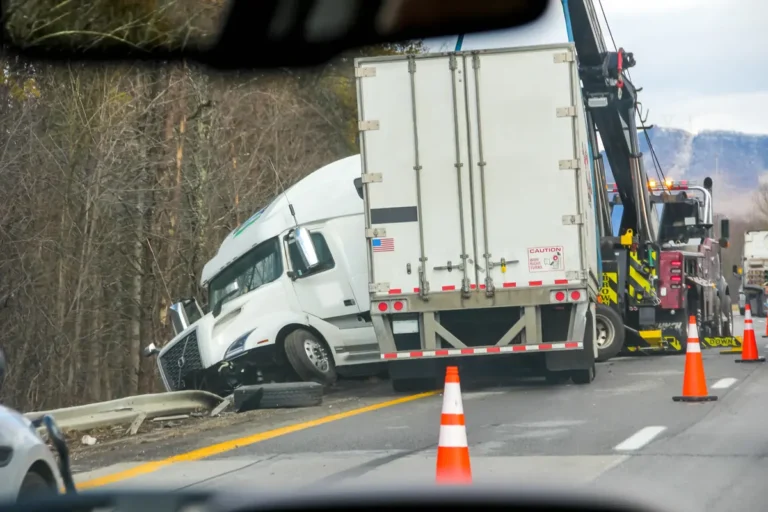
The company’s own records, plus your usual crash proof. Logs can show a driver drove too long. The driver’s file can show a bad record or a missing medical card. Post-crash drug and alcohol tests may be required. Some records can be thrown out after six months, so a preservation letter should go out early.
- Hours-of-service logs and supporting papers, kept at least 6 months.
- The driver qualification file: driving record, medical card, road test.
- Post-crash alcohol and drug test results, when required.
- The company’s accident register, kept 3 years.
- Cargo loading and securement records.
- Dash camera, truck camera, and dispatch messages.
Read what to do after a semi truck accident for which records can disappear and when. Cargo rules are in 49 CFR 392.9.
What are damages in truck accident cases?
Damages are the money a court can award for your losses. They include medical bills, future care, lost pay, and lost earning ability. They also include pain and suffering and the loss of enjoyment of life. Washington has no cap on pain and suffering. If you were partly at fault, your award goes down by your share.
Example only: shared fault on a large truck claim
If a crash took someone’s life, the family’s claim works differently. See our Washington wrongful death page.
What does settlement mean in a truck accident case?
A truck accident settlement is your agreement to end the case for a set amount. You sign a release, the insurer pays, and your case is over. You can’t ask for more later, even if your injuries get worse. Health plans, Medicare, and hospital liens are usually paid from the settlement before you receive the rest.
If a child is part of the settlement, a court must approve it (SPR 98.16W). Read how settlements are paid out and what happens at mediation.
How long does a truck case take to resolve?
Often longer than a car case, because there are more parties, records, and experts. No rule sets a length. The most recent federal study found a median of about 20 months from filing to verdict in vehicle crash trials, but most cases settle before that. King County sets a trial date when you file.
That figure is from the Bureau of Justice Statistics (2005, Table 8), not truck-specific. See King County LCR 4.
What is a contingency fee in truck accident cases?
It means the lawyer is paid a share of what’s recovered, not by the hour. Washington requires the agreement to be in writing and signed. It must explain how the fee is figured and how case costs are handled. Truck cases can have large costs, like experts, so ask how costs work before you sign.
The rule is RPC 1.5(c). With us, if we don’t win, you owe nothing, not even the case costs. When we take a truck case, Rich handles it himself and prepares it for trial from the start. In one case, a tractor-trailer crash caused a disc injury, and a jury returned a $2.0 million verdict. Past results don’t guarantee future results. Every case is different.
FAQ
Can I sue the trucking company and not just the driver?
Often, yes. A company is usually responsible for a driver doing their job, and it may also be at fault for its own hiring or maintenance.
What if the truck driver was an independent contractor?
The company may still be responsible, depending on the lease and how the work was controlled. Read who is liable in a truck accident.
Do most truck accident lawsuits go to trial?
No. Most settle, often after depositions or at mediation. Preparing for trial is what makes a fair settlement more likely.
What if I was hit by a semi as a pedestrian or on a bike?
You can bring the same kind of lawsuit. Your own auto policy’s PIP may also help with early medical bills.
What does No Win, No Fee mean?
You pay nothing up front. Our fee comes out of the money we win for you. No hourly bills. No retainer. If we don’t win, you owe us nothing. Not even the case costs.
Talk to Rich about your truck crash
Suing a trucking company means facing a company that prepares for these cases every day. You deserve someone who does the same for you. Rich Martin has handled more than 2,000 injury cases in 28 years and taken more than 30 to a jury. He’ll tell you what your case needs.
We help people hurt by trucks in Bellevue, Seattle, Tacoma, and across Washington. Your case review is free. No Win, No Fee. We speak English and Korean.
Call (425) 635-2000 or see how we handle truck accident cases.
Keep reading
What to Do After a Semi Truck Accident
Last updated: October 30, 2026 A semi drifted into your lane on I-405, and now your car is crushed against the barrier. You’re shaking,…
Who Is Liable in a Truck Accident? Washington Rules Explained
Last updated: October 28, 2026 A semi drifted into your lane on I-405 and clipped your car. The driver was apologetic at the scene.…

Truck Jackknife Accidents in Bellevue and Washington State
A fully loaded semi-truck can tip the scales at up to 80,000 pounds. When things go wrong at highway speeds, the results can be…