A traumatic brain injury (TBI) can change a life in seconds. One moment you’re commuting on I‑405, working on a construction site in Bellevue, or walking through a crosswalk downtown. The next, you’re facing confusion, memory loss, headaches, or even unconsciousness. For families, the uncertainty can be overwhelming — which is why understanding the 10 stages of brain injury recovery can make the path forward feel less unknown.
One of the most common questions we hear at R Martin Law Group is: “What does recovery look like after a brain injury?” That question often includes searches like “how long do the 10 stages of brain injury recovery take” and “what are the 10 stages of traumatic brain injury recovery.” We aim to explain the 10-stage recovery process after traumatic brain injury (TBI) with local relevance to Bellevue and King County so you know what to expect and when to seek legal help.
According to the Centers for Disease Control and Prevention (CDC), traumatic brain injuries contribute to many hospitalizations nationwide. In Washington State, institutions such as the University of Washington Medicine and Seattle Children’s Hospital regularly treat moderate to severe TBIs, emphasizing that recovery can take months—or years.
If you or a loved one has suffered a brain injury in Bellevue or nearby Seattle, understanding these stages can provide clarity, realistic expectations, and hope. You don’t have to face this alone.
👉 Looking for a Personal Injury Lawyer Near Seattle, WA? Contact R Martin Law Group today for a free consultation.

Background: What Causes Brain Injuries in Washington?
Brain injuries happen when a sudden trauma disrupts normal brain function. In Bellevue and across King County, common causes include:
- Car accidents, especially high-speed rear-end and T-bone collisions
- Motorcycle and bicycle crashes
- Pedestrian accidents
- Slip and fall injuries
- Construction site accidents
- Sports-related injuries
- Assaults or violent incidents
The CDC identifies falls and motor vehicle crashes as leading causes of TBI nationwide. In Washington State, icy roads, heavy commuter traffic, and construction zones increase the risk of severe head trauma. Agencies like WSDOT and national safety resources such as NHTSA offer guidance on roadway and vehicle safety.
Brain injuries are typically classified as:
- Mild TBI (Concussion)
- Moderate TBI
- Severe TBI
Severity has a major impact on the recovery timeline and long-term outcomes. Knowing common causes and classifications helps family members prepare for the rehabilitation and legal steps ahead.
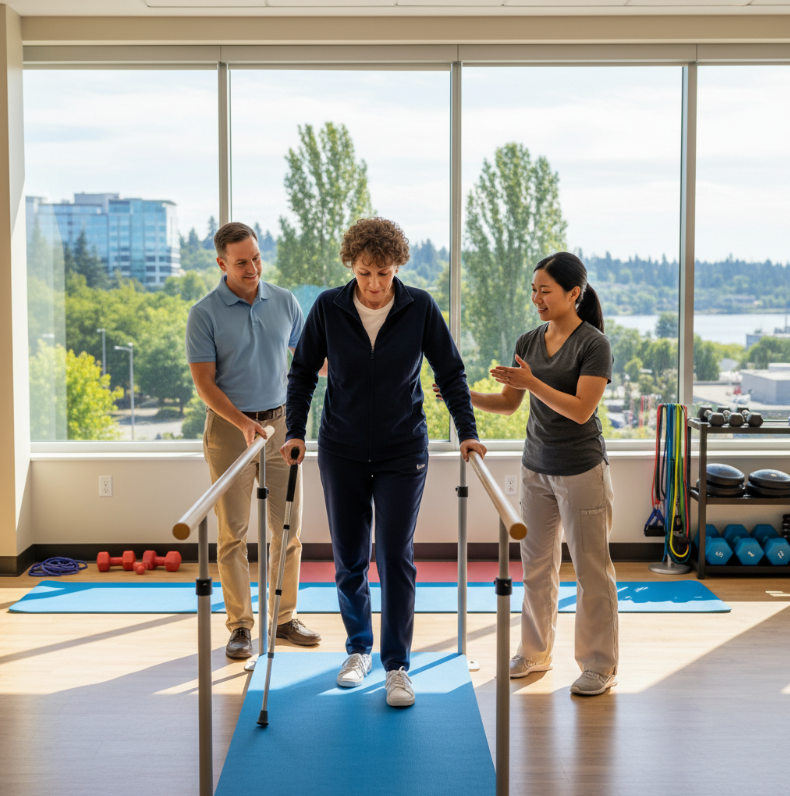
The 10 stages of brain injury recovery
While every case is unique, many rehabilitation professionals break the recovery process into the following 10 stages. This step by step brain injury recovery timeline and legal next steps Washington families ask about can help set expectations about medical care, rehab, and when to consult an attorney.
Stage 1: Coma (No Response)
At this stage, the individual is unconscious and unresponsive. They do not open their eyes, speak, or follow commands.
- Brain activity is minimal.
- Patients may require life support.
- Families often face the greatest uncertainty here.
Duration can range from hours to weeks. Medical teams monitor neurological responses closely. Hold on to hope—medical monitoring and supportive care are the first steps toward recovery.
Stage 2: Vegetative State
The person may open their eyes but lacks awareness of surroundings.
- Sleep-wake cycles may return.
- Reflexive movements may occur.
- No purposeful responses.
This stage can be slow; continued support and careful observation matter.
Stage 3: Minimally Conscious State
At this point:
- The person may respond inconsistently.
- They might follow simple commands.
- There may be emotional reactions.
This stage can be confusing for families because progress may be uneven. Celebrate small responses—they can signal meaningful neurological improvement.
👉 Need help understanding your legal rights? Visit our Bellevue injury attorney page.
Stage 4: Confusion and Agitation
Often aligned with Level IV of the Rancho scale, this stage is marked by:
- Disorientation
- Agitation
- Memory gaps
- Emotional volatility
Patients may attempt to remove medical equipment or behave impulsively. This is often a sign of neurological improvement—but it requires supervision. Proper safety and structured care make a real difference here.
Stage 5: Post-Traumatic Amnesia (PTA)
In this stage:
- Memory remains severely impaired.
- The person may not remember daily events.
- Learning new information is difficult.
Doctors frequently test memory retention daily to measure progress. The longer PTA lasts, the more serious the injury tends to be. Many families ask, “post‑traumatic amnesia duration and how it affects prognosis”—regular cognitive testing guides rehab planning and helps set realistic expectations.
Stage 6: Emerging Awareness
Here, patients:
- Follow commands more consistently
- Recognize family members
- Begin participating in therapy
However, judgment and problem-solving skills are still limited. Active therapy and family involvement support steady gains during this stage.
Stage 7: Improved Cognitive Function
Cognitive skills continue improving:
- Better attention span
- Increased independence with supervision
- Beginning to perform routine tasks
This stage often includes outpatient rehabilitation services in Bellevue or Redmond. Gradual independence is encouraging—rehab teams tailor programs to each person’s needs.
Stage 8: Community Reintegration
Patients may:
- Return home
- Resume light work or school activities
- Participate in structured social settings
Challenges often include fatigue, headaches, depression, or difficulty concentrating. Community reintegration is a major milestone; with the right supports, many regain meaningful routines. Families in Bellevue and surrounding cities like Kent often rely on local support networks during this transition.
Stage 9: Ongoing Rehabilitation and Adjustment
Recovery does not stop after hospital discharge.
Many individuals experience:
- Emotional challenges
- Personality changes
- Chronic pain
- PTSD or anxiety
Long-term therapy and family support are key to adapting to these changes.
Stage 10: Long-Term Adaptation and Independence
Some individuals regain near-full independence. Others live with permanent disabilities.
This stage focuses on:
- Vocational retraining
- Adaptive tools
- Long-term therapy
- Lifestyle adjustments
Even years after the injury, continued improvement is possible. Planning for long-term care and supports helps protect quality of life and independence.
👉 Ready to speak with an attorney? Schedule a consultation with R Martin Law Group today.
Key Legal Issues and Victim Rights in Washington
If a brain injury was caused by someone else’s negligence, Washington law allows victims to seek compensation.
Washington Is a Pure Comparative Fault State
Under RCW 4.22.005, compensation may be reduced by your percentage of fault—but you can still recover damages even if partially responsible.
Statute of Limitations
In most personal injury cases, Washington provides three years from the date of injury to file a lawsuit (RCW 4.16.080).
Missing this deadline may permanently bar recovery.
Compensation May Include:
- Medical expenses (current and future)
- Rehabilitation therapy
- Lost wages
- Reduced earning capacity
- Pain and suffering
- Loss of enjoyment of life
Brain injury cases often require medical experts, neurologists, and life-care planners to estimate future costs accurately. Knowing your rights and the types of damages available helps you make informed decisions that protect your family’s future.
👉 Injured in Bellevue? Contact R Martin Law Group today for a free consultation.
Insurance Company Challenges in Brain Injury Cases
Insurance companies frequently dispute:
- Whether the injury is truly severe
- Whether symptoms are “subjective”
- The long-term cost of care
- Future lost earning capacity
Insurers may request:
- Independent medical examinations (IMEs)
- Recorded statements
- Extensive medical documentation
Having legal representation early can prevent costly mistakes and ensure your recovery needs are fully considered.
Risks, Delays, and Legal Options
Brain injury cases can be complex because:
- Symptoms may evolve over time
- Future care needs may be uncertain
- Settlement offers may undervalue long-term disability
Victims typically have two primary legal paths:
- Insurance settlement negotiations
- Filing a personal injury lawsuit in King County Superior Court
An experienced Bellevue attorney can evaluate which strategy best protects your future. Taking timely action preserves options and helps secure the resources needed for care.
Brain Injury Claim Process Checklist
Below is a simplified overview of what the legal process often involves:
| Step | Description | Why It Matters |
|---|---|---|
| 1. Immediate Medical Care | Emergency treatment and neurological evaluation | Creates critical medical documentation |
| 2. Diagnostic Imaging | CT scans, MRIs, cognitive testing | Supports proof of injury severity |
| 3. Legal Consultation | Review of liability and damages | Protects your rights early |
| 4. Investigation | Accident reports, witness statements | Establishes negligence |
| 5. Expert Evaluation | Neurologists & life-care planners | Projects long-term costs |
| 6. Settlement Negotiation | Demand package & insurer review | Attempts fair resolution |
| 7. Litigation (if needed) | Filing lawsuit in court | Secures full compensation |
Prevention Tips for Washington Residents
While not all TBIs are avoidable, you can reduce risk by:
- Wearing seat belts at all times
- Using helmets when biking or motorcycling
- Preventing falls at home (especially for seniors)
- Avoiding distracted driving
- Supervising youth sports carefully
Washington’s rainy weather and darker winter months increase slip-and-fall and vehicle collision risks. Agencies such as WSDOT provide road-safety guidance; following those recommendations can reduce crash risk for people in Bellevue and nearby Kent. Extra caution can save lives—small prevention steps matter.
Frequently Asked Questions (FAQ)
1. How long does brain injury recovery take?
Recovery varies widely. Mild TBIs may improve within weeks. Severe TBIs can require years of therapy. Some impairments may be permanent. Families frequently search for “how long do the 10 stages of brain injury recovery take” to set realistic expectations.
2. Does everyone go through all 10 stages?
No. Some individuals skip stages or plateau. Recovery is highly individualized.
3. How does injury severity affect recovery?
Generally, longer unconsciousness and extended post-traumatic amnesia indicate more severe injury and longer recovery time.
4. Can you recover fully from a severe TBI?
Some individuals regain independence, but many experience lasting cognitive or emotional challenges. Ongoing therapy can significantly improve quality of life.
5. What compensation is available for a brain injury in Washington?
Victims may pursue economic and non-economic damages, including medical costs, lost income, and pain and suffering. In catastrophic cases, future lifetime care costs may be substantial. People often ask, “how can I get compensation for long term brain injury care in Washington”—an experienced attorney can connect you with medical and financial experts to build a claim that reflects long-term needs.
6. Should I accept the insurance company’s first offer?
It’s rarely advisable. Early offers often fail to account for long-term neurological care and lost earning capacity.
👉 Need help understanding your legal rights? Visit our Bellevue injury attorney page.
You Don’t Have to Navigate Brain Injury Recovery Alone
The 10 stages of brain injury recovery represent more than medical milestones—they reflect a journey of resilience, uncertainty, and gradual progress. For families in Bellevue and throughout King County, the emotional and financial burden can feel overwhelming.
Understanding the stages helps you prepare. Knowing your legal rights helps protect your future. If someone else’s negligence caused your brain injury, you deserve full and fair compensation—not just for today’s medical bills, but for the long-term impact on your life.
At R Martin Law Group, we have extensive experience representing serious injury victims across Washington State. We work closely with medical experts, life-care planners, and financial professionals to ensure every client’s future needs are fully considered.
👉 Ready to speak with an attorney? Schedule a consultation with R Martin Law Group today.
Your recovery matters. Your future matters. We are here to help you protect both.