
Last updated: November 5, 2026
A driver pulled out in front of you, and you laid the bike down at 40 mph. Your leg has two plates in it now. The driver’s insurer says you must have been speeding, and its offer barely covers the ambulance. You’re wondering if you’ll have to take this to court.
A motorcycle accident lawsuit asks a court to make the person who caused your crash pay for your losses. Most claims start with an insurance company and settle. You file a lawsuit when the offer isn’t fair, fault is denied, or the deadline gets close. In Washington, you generally have three years.
The short answer: You can sue after a motorcycle accident if someone else’s carelessness caused it. Most riders reach a settlement first, and a lawsuit is the next step when the insurer won’t pay fairly. You generally have three years in Washington. Being partly at fault lowers your payment, but it doesn’t end your case.
Can you sue after a motorcycle accident?
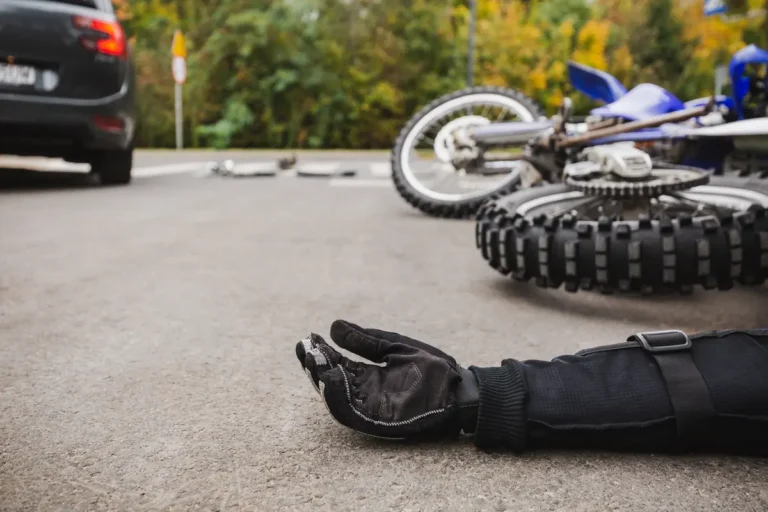
Yes, if someone else’s carelessness caused your crash. You have the same right to sue as any driver. You’d need to show the other person owed you care, failed to use it, and that this caused your injuries. It doesn’t matter that riding carries risk. Riding is legal, and drivers must watch for you.
Washington’s negligence rule has those parts: a duty, a breach, a resulting injury, and proximate cause (Lowman v. Wilbur, 2013).
Do you have to file a motorcycle accident lawsuit?
Usually not at first. Most riders open a claim with the at-fault driver’s insurer, finish treatment, and send a demand. A lawsuit comes next if the insurer denies fault, blames you unfairly, or makes a low offer. It also makes sense when the three-year deadline is near, because talks with an insurer generally don’t stop that clock.
See how filing an injury claim works. The steps are the same for a rider, except your own insurance may not include PIP.
Who can you sue after a motorcycle accident?
Whoever’s carelessness caused the crash. That’s usually the other driver. It can also be the driver’s employer, a company that maintained a road badly, or the maker of a defective part. Each one may have different insurance and a different deadline. In a serious crash, finding every responsible party can decide how much you can actually collect.
| Who | When | What to know |
|---|---|---|
| The other driver | They caused the crash | Their liability insurance pays, up to its limit |
| The driver’s employer | The driver was doing their job | Business policies are often larger |
| A city, county, or the state | A road defect or missing warning caused the crash | Claim form first, then wait 60 days (RCW 4.96.020) |
| A manufacturer | A defective part or tire failed | Generally 3 years from when you discovered the harm and its cause (RCW 7.72.060) |
| A repair shop | Bad repair work caused the failure | Keep the bike and the repair records |
What do you have to prove in a motorcycle accident case?
That the other side was careless and that it caused your injuries. In a civil case, your evidence only has to be more convincing than theirs. In a motorcycle accident case, the fight is often over speed and visibility. So your proof should show where you were, how fast you were going, and what the driver could have seen.
| What you need to show | Evidence that helps |
|---|---|
| The driver could have seen you | Photos of sight lines, video, a scene visit |
| You weren’t speeding | Helmet camera, business video, crash reconstruction |
| The driver wasn’t paying attention | Phone records, witnesses, the police report |
| The crash caused your injuries | ER records, imaging, your surgeon’s notes |
| What you lost | Bills, pay records, future care plans, a pain journal |
How does a motorcycle lawsuit work in Washington?
It starts with a complaint filed in superior court. The other side is served and has 20 days to answer, or 60 if served out of state. Then you trade evidence and give depositions. In King County, claims of $100,000 or less go to arbitration. Larger cases follow the court’s schedule toward mediation and trial.
- Finish treatment or learn your long-term outlook.
- Send a demand to the insurer.
- File a complaint in superior court.
- Serve the other side, within 90 days if filed near the deadline.
- Trade documents and give depositions.
- Go to arbitration or mediation.
- Go to trial if the case still hasn’t settled.
Those steps come from CR 12(a), RCW 4.16.170, and King County Superior Court. Read what happens at mediation.
How does rider bias affect a lawsuit?
It can hurt you if nobody deals with it. Some adjusters and jurors assume riders speed and take risks. In a lawsuit, you can answer that with evidence instead of arguing with an adjuster. During jury selection, lawyers can ask potential jurors what they think about riders. Your gear, training, and riding record can help too.
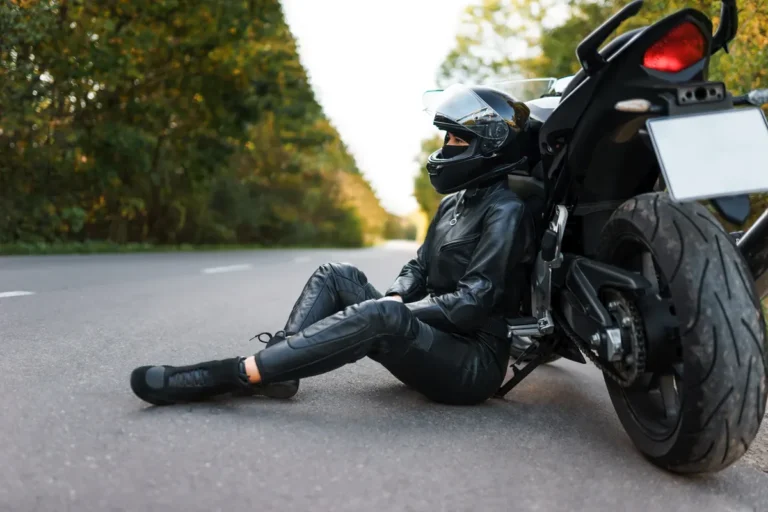
The data can help answer that bias. In 45% of deadly two-vehicle motorcycle crashes in 2024, the other driver was turning left in front of the bike. See how often motorcycle crashes are fatal.
Does a missing helmet or endorsement hurt your case?
It may affect the fight, but it doesn’t end your case. An insurer may argue a missing helmet made a head injury worse. It may bring up a missing endorsement too. But the main question is what caused the crash. Lane splitting is different, because it’s illegal in Washington and can put your own fault at the center.
Your payment goes down by your share of fault, and it doesn’t drop to zero (RCW 4.22.005). The rules are RCW 46.37.530 (helmets) and RCW 46.61.608 (lanes). See 15 Washington motorcycle laws.
How long does a motorcycle accident lawsuit take?
There’s no set length. It depends on your recovery, the evidence, and the court’s schedule. Most cases settle before trial. For cases that do reach a verdict, the most recent federal study found a median of about 20 months from filing for vehicle crash trials. That study is from 2005, and it isn’t specific to motorcycles.
The number comes from the Bureau of Justice Statistics (Table 8). King County sets a trial date when you file (LCR 4).
What damages can you recover in a motorcycle accident lawsuit?
Your medical bills, future care, lost pay, and pain and suffering, plus your bike and gear. Riders are often hurt badly, so the losses can pass a driver’s policy quickly. Washington’s minimum is only $25,000 per person. A court can order more, but collecting it is hard. That’s why your own UIM can matter most.
Example only: what insurance may be available
See who pays medical bills after a motorcycle accident. When we take a motorcycle case, Rich handles it himself and prepares it for trial from the start.
FAQ
Can I sue if I was partly at fault?
Yes. Washington lowers your payment by your share of fault. Even a rider mostly at fault can recover the rest.
Can a passenger on a motorcycle sue?
Yes. A passenger can claim against the other driver, and may also claim against the rider’s insurance if the rider was partly at fault.
What if the driver had no insurance?
Your UIM coverage may pay. Insurers must offer it to riders, and it can be rejected only in writing.
Will I have to go to court?
Probably not. Most cases settle. You may give a deposition, and you’d testify in court only if the case reaches trial.
What does No Win, No Fee mean?
You pay nothing up front. Our fee comes out of the money we win for you. No hourly bills. No retainer. If we don’t win, you owe us nothing. Not even the case costs.
Talk to Rich about your motorcycle crash
A motorcycle accident lawsuit is a big step, and riders start out with insurers already doubting them. Rich Martin has handled more than 2,000 injury cases in 28 years and taken more than 30 to a jury. He’ll tell you plainly whether your case needs a lawsuit.
We help riders in Bellevue, Seattle, Tacoma, and across Washington. Your case review is free. No Win, No Fee. We speak English and Korean.
Call (425) 635-2000 or see how we handle motorcycle accident cases.
Keep reading

What to Do After a Motorcycle Accident
On this pageWhat to Do After a Motorcycle Accident in Bellevue, WashingtonCommon Causes of Motorcycle Accidents in Bellevue & King CountyStep-by-Step: what to do…
How to Choose a Motorcycle Attorney in WA
Motorcycle accidents remain among the most severe crashes on Washington roads. Riders in Bellevue, Seattle, and throughout King County, including nearby Renton and Redmond,…

What Percentage of Motorcycle Accidents Are Fatal? Washington and U.S. Data
Last updated: November 18, 2026 A driver turned left in front of you on Bellevue Way, and you went down hard. Your leg is…