
Last updated: November 14, 2026
You were crossing NE 8th Street in Bellevue with the walk signal. A car turning left didn’t stop. Now your leg is in a boot, the bills are piling up, and the driver’s insurer wants a recorded statement. You’re wondering if you can sue.
Yes, you usually can. A pedestrian hit by car lawsuit asks a court to make a careless driver pay for your medical bills, lost pay, and pain. The case starts as an insurance claim. In Washington, you generally have three years from the crash to file, and your own fault only lowers what you get.
The short answer: If a driver’s carelessness hurt you while you were walking, you can make a claim and, if needed, file a lawsuit. Drivers must take care to avoid pedestrians, even outside a crosswalk. PIP can pay your first medical bills. You have three years to sue in Washington.
Can a pedestrian hit by a car sue the driver?
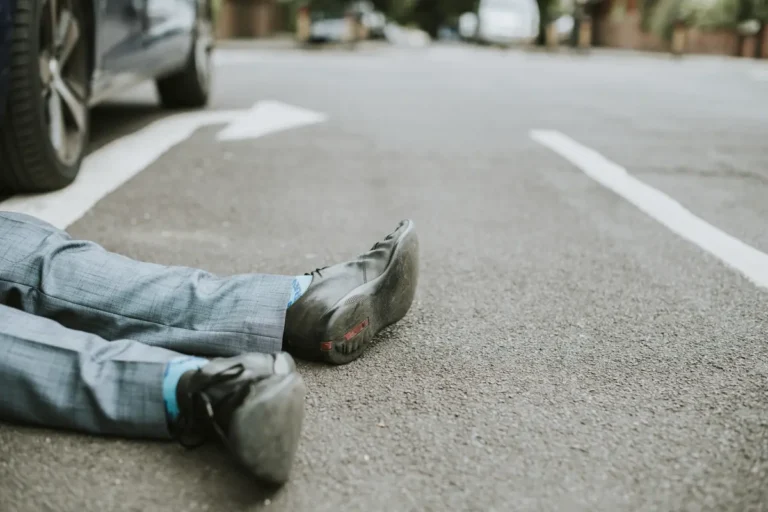
Yes. You can sue a driver whose carelessness caused your injuries. You need to show the driver owed you care, broke that duty, and caused your harm. Your proof only has to be more convincing than the driver’s. Few cases reach a jury, but filing gives you court deadlines and the power to demand records.
Those are the four parts of negligence in Washington (Lowman v. Wilbur, 2013). Breaking a traffic law is evidence of carelessness, not automatic proof (RCW 5.40.050). If a driver ran a red light or skipped a crosswalk stop, that helps your case.
Who has the right of way, the driver or the pedestrian?
In a crosswalk, you do. A driver must stop and stay stopped while you’re in their half of the road or one lane away from it. Every intersection has a crosswalk, painted or not. Outside a crosswalk, you must yield to cars. But every driver must still use due care to avoid hitting you.
| Rule | What it says | Law |
|---|---|---|
| Who counts | A person on foot or using a wheelchair is a pedestrian | RCW 46.04.400 |
| Crosswalk stop | Drivers stop and stay stopped for a pedestrian in their half of the road or within one lane of it | RCW 46.61.235(1) |
| No passing | Don’t pass a car stopped at a crosswalk for a pedestrian | RCW 46.61.235(4) |
| Unmarked crosswalk | An intersection has a crosswalk where the sidewalk lines would meet, or 10 feet out with no sidewalk | RCW 46.04.160 |
| Outside a crosswalk | Pedestrians yield to cars. Between two signals, cross only in a marked crosswalk | RCW 46.61.240(1), (4) |
| Due care | Every driver must use due care to avoid hitting any pedestrian | RCW 46.61.245 |
| Sidewalks | Drivers yield to pedestrians on a sidewalk, like in a driveway | RCW 46.61.261 |
| No sidewalk | Walk on the shoulder, facing traffic | RCW 46.61.250(2) |
What if you weren’t in a crosswalk?
You can still have a case. Washington’s due care rule applies “notwithstanding” the other pedestrian rules, so a driver who could have avoided you may still be at fault. Your share of the blame lowers your payment but doesn’t erase it. For example, if you were 30% at fault, you’d get 70% of your losses.
Example only: a pedestrian who shares some fault
The law also bars stepping off a curb so close to a car that the driver can’t stop (RCW 46.61.235(2)). The insurer will look for facts like that. Read is jaywalking legal in WA? for the crossing rules in more detail.
Who pays your medical bills after a pedestrian car accident?
PIP can pay first. Personal Injury Protection is part of a car policy that pays medical bills no matter who caused the crash. In Washington, a pedestrian struck by an insured car counts as an insured under that car’s PIP. Your own policy’s PIP may cover you too. Later, the driver’s liability insurance pays the rest of your claim.
| Coverage | Whose policy | What it does for you |
|---|---|---|
| PIP | The car that hit you, or your own car policy | Pays medical bills regardless of fault. The basic level is $10,000 for medical care, used within 3 years |
| Bodily injury liability | The driver who hit you | Pays your claim when the driver is at fault. The legal minimum is $25,000 per person |
| Underinsured motorist (UIM) | Your own car policy, unless you rejected it in writing | Protects you against drivers with too little insurance and hit-and-run drivers |
Check your declarations page to see which coverages you bought. Our guide to PIP in Washington explains the limits.
What if the driver who hit you drove away?
Call 911 and get a police report right away. A driver who hits someone must stop, share their information, and help. Leaving an injury crash is a felony. If the driver is never found, your own underinsured motorist coverage can pay for a hit-and-run. PIP can still cover your early medical bills either way.
The duty to stop and help is in RCW 46.52.020. UIM’s hit-and-run coverage is in RCW 48.22.030(2). Nationally, about 1 in 4 pedestrians killed in 2024 were hit by a driver who fled (NHTSA, DOT HS 813 818). See steps to take after a hit-and-run.
Pedestrian accident statistics in Washington
In 2024, 152 pedestrians died in Washington traffic crashes. That was 20.8% of all traffic deaths in the state, above the national share of 18%. In Seattle, 20 of the 43 people killed in traffic were on foot. In King County, 52 people walking or rolling died in 2024, by preliminary state counts.
Share of traffic deaths who were pedestrians, 2024
| Measure (2024) | Number |
|---|---|
| Pedestrians killed, U.S. | 7,080 |
| Pedestrians injured, U.S. (estimate) | 71,635 |
| U.S. pedestrian deaths in the dark | 76% |
| U.S. pedestrian deaths not at an intersection | 73% |
| U.S. pedestrians killed by hit-and-run drivers | 24% |
| King County walkers and rollers killed, 2022 / 2023 / 2024* | 50 / 60 / 52 |
For what tends to go wrong before these crashes, read the main causes of pedestrian accidents.
What should you do if you’ve been hit by a car?
Get medical care first, even if you feel okay. Then build your proof while it still exists. Get the police report number, the driver’s insurance, and witness phone numbers. Photograph the crosswalk, signals, and your injuries. Ask nearby businesses to save camera footage. Don’t give the driver’s insurer a recorded statement before you get advice.
- Call 911 and get checked by a doctor.
- Write down the driver’s name, plate, and insurance.
- Get witness names and phone numbers.
- Photograph the scene, the signal, and your injuries.
- Ask nearby shops to save camera footage.
- Keep every bill, receipt, and note from work.
Our step-by-step guide after a pedestrian accident covers each step in more detail.
How does a pedestrian hit by car lawsuit work?
It usually starts as an insurance claim. You treat, gather records, and send a demand to the driver’s insurer. If the offer is too low, you file a complaint in superior court. The driver has 20 days to answer. Both sides then trade evidence and take depositions. A mediator can help both sides settle. Few reach a jury.
- Claim. Open PIP and a claim with the driver’s insurer.
- Treat. Follow your doctor’s plan and keep records.
- Demand. Send bills, wage loss, and proof of fault.
- File. Start the lawsuit if the offer is too low.
- Discovery. Trade records and take depositions.
- Resolve. Settle at mediation, arbitration, or trial.
The answer deadline is in CR 12(a). Smaller cases may go to mandatory arbitration (RCW 7.06.020). In King County Superior Court, a trial date is set when the case is filed (LCR 4). In the latest national study, only 3.5% of state tort cases ended in a trial (Bureau of Justice Statistics, 2005).
How long do you have to file a pedestrian lawsuit?
Three years from the crash for most injury claims in Washington. Talks with an insurer generally don’t stop that clock. A child’s clock usually doesn’t start until they turn 18. If a city, county, or state vehicle hit you, you must file a claim form first and wait 60 days before you sue. Don’t wait until the last months.
The rules are RCW 4.16.080(2), RCW 4.16.190, RCW 4.96.020, and RCW 4.92.110. If someone died, the family’s case works differently. See our Washington wrongful death page.
When we take a pedestrian case, Rich handles it himself. He looks for camera footage and witnesses early, works out how the crash happened, and prepares the case for trial from the start. Insurers tend to pay more fairly when they know a lawyer will go to court.
FAQ
Can I sue if I was jaywalking?
You may. You had to yield, but the driver still had to use due care. A jury splits the fault, and your payment goes down by your share.
Does my car insurance cover me if I was walking?
It may. Your PIP and UIM can cover you as a pedestrian, depending on what you bought. The PIP on the car that hit you can also cover you.
What if the driver has no insurance?
Your own underinsured motorist coverage can step in. If you don’t have it, you can still sue the driver, but collecting from them may be hard.
Can I sue the city over a dangerous crosswalk?
It depends on the facts. Any claim against a city starts with a claim form filed with the city, then a 60-day wait before you can sue (RCW 4.96.020).
What does No Win, No Fee mean?
You pay nothing up front. Our fee comes out of the money we win for you. No hourly bills. No retainer. If we don’t win, you owe us nothing. Not even the case costs.
Talk to Rich about your pedestrian crash
A pedestrian hit by car lawsuit can turn on one question: could the driver have stopped? You deserve someone who digs into that answer. Rich Martin has handled more than 2,000 injury cases in 28 years and taken more than 30 to a jury. He’ll tell you plainly what your case needs.
We help people hit while walking in Bellevue, Seattle, Tacoma, and across Washington. Your case review is free. No Win, No Fee. We speak English and Korean.
Call (425) 635-2000 or see how we handle pedestrian accident cases.
Keep reading
What to Do After a Pedestrian Accident
What to do after a pedestrian accident matters from the first moments — and knowing the right steps can protect your health, your legal…
Pedestrian Accident Injuries in Bellevue
Every day in Bellevue and across King County, people walk to work, school, parks, bus stops, and local businesses. Walking should be one of…
Is Jaywalking Legal in WA?
Last updated: November 17, 2026 You’re standing on NE 8th Street in Bellevue. The crosswalk is a block away, the road looks clear, and…