
Last updated: October 30, 2026
A semi drifted into your lane on I-405, and now your car is crushed against the barrier. You’re shaking, your neck hurts, and the truck driver is already on the phone with his company. You don’t know who to talk to first or what to say.
What to do after a semi truck accident? Get safe and call 911. Then photograph the truck’s company name and USDOT number, get the driver’s information, and see a doctor the same day. After that, the trucking company’s records start to matter, and some of them can be thrown out within months.
The short answer: Call 911, get medical care, and photograph the truck, its USDOT number, and the scene. Get the driver’s name, company, and insurer, and find witnesses. Don’t give the trucking company’s insurer a recorded statement. Then ask, in writing, that the company keep its logs and video.
What should you do right after a semi truck accident?
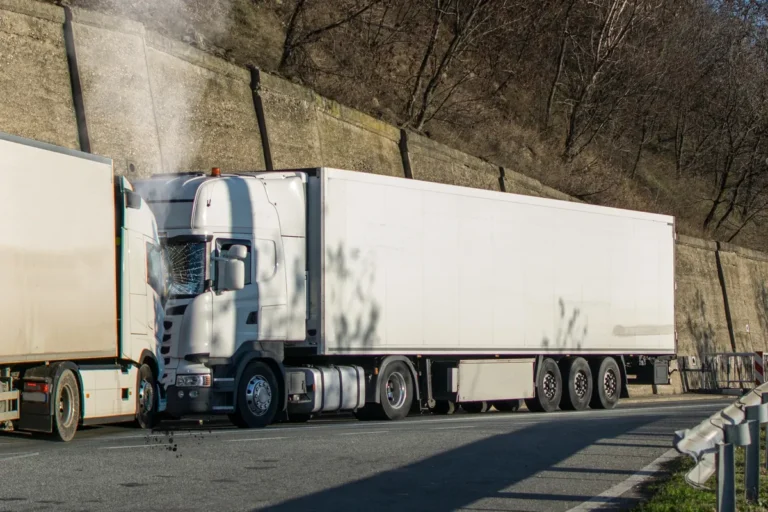
Protect yourself first, then the evidence. Call 911 so police and medics come. Move away from traffic if you can. Then take photos before anything is moved. A truck crash leaves more evidence than a car crash, but the trucking company usually gets to most of it before you do. Your photos are your own record.
- Call 911 and ask for police and an ambulance if anyone is hurt.
- Get away from traffic, but stay at the scene.
- Photograph the truck, the trailer, every vehicle, the road, and skid marks.
- Get the driver’s name, license, company, and insurance.
- Ask witnesses for their names and phone numbers.
- Go to a doctor or ER the same day, even if you feel okay.
Document the scene only if you can do it safely. With severe injuries, let the ambulance take you, and ask a family member to take photos later. Washington requires every driver in an injury crash to stop, share their information, and give reasonable help. (RCW 46.52.020)
What should you get from the truck driver?
More than you’d get after a car crash. A semi can involve a driver, a carrier, a trailer owner, and an insurer that are all different. Write down the company name and USDOT number on the cab door. Get the trailer’s plate too. Those numbers are how a lawyer finds the company’s safety record and insurance later.
| What to write down | Where to find it | Why it matters |
|---|---|---|
| Company name and USDOT number | Both sides of the cab | Identifies the carrier and its insurance |
| Driver’s name and license | Ask the driver | Ties the driver to the company |
| Insurance company and policy | Ask the driver or the officer | Where your claim goes |
| Truck and trailer plates | Front, back, and trailer | The trailer may belong to someone else |
| Police report number | Ask the officer | Lets you get the report later |
Why should you see a doctor even if you feel fine?
Because truck crashes can cause injuries you don’t feel at first. Adrenaline can hide your neck, back, and head injuries for a day or more. A same-day visit also creates a record that ties your injury to the crash. If you wait, the other side will say something else must have hurt you. Tell the doctor about every pain.
Your own PIP coverage can pay those first bills, whoever caused the crash. See what PIP pays in Washington and how medical bills get paid after a crash.
Does the truck driver get tested after a crash?
Often, yes. Federal rules make the trucking company test its driver for alcohol and drugs after certain crashes. That includes any crash where someone died. It also includes crashes where the driver got a ticket and someone was taken for treatment or a vehicle was towed. The results can help you prove fault.
| What happened | Testing required? |
|---|---|
| Someone died | Yes, alcohol and drugs |
| Driver got a ticket, and someone was treated away from the scene | Yes, alcohol and drugs |
| Driver got a ticket, and a vehicle had to be towed | Yes, alcohol and drugs |
| No death and no ticket | Not required by this rule |
What records can disappear after a truck crash?
Some of the ones you need most. The trucking company keeps the driver’s logbook, its accident list, and the driver’s file. Federal rules only require some of these to be kept for months. A letter sent early asks the company to keep everything, including video. Without it, your strongest proof of fatigue or speeding can be lawfully thrown out.
| Record | What it can show | Federal minimum to keep it |
|---|---|---|
| Hours-of-service logs and supporting papers | Whether the driver was over hours or tired | 6 months (49 CFR 395.8(k)) |
| The company’s accident register | Past crashes by the company’s drivers | 3 years (49 CFR 390.15) |
| Driver qualification file | Driving record, medical card, road test | While employed, plus 3 years (49 CFR 391.51) |
| Dash camera and company video | The crash itself | No set federal period. Ask right away. |
Asking early is a big part of what to do after a semi truck accident. To see how those records help you prove who’s at fault, read who is liable in a truck accident.

Should you talk to the trucking company’s insurer?
Not about the details, and not on a recording. Trucking insurers often call within days. They may sound helpful, but their job is to pay you as little as possible. Give your name and contact information if you want. Don’t guess about speed or fault, don’t say you’re fine, and don’t sign anything until you understand it.
Knowing what to do after a truck accident also means telling your own insurer, since your policy likely requires it. See what to do when the crash wasn’t your fault.
Is a truck’s insurance bigger than a car’s?
Usually, yes, and by a lot. Washington’s minimum for a car is $25,000 per person for injuries. A for-hire truck hauling general freight between states must carry at least $750,000. That matters when you’re badly hurt, because a car’s minimum policy can run out fast. A truck’s policy often leaves room for all your losses.
Minimum injury insurance: a car vs. an interstate semi
How long do you have to act?
You generally have three years from the crash to file a lawsuit in Washington. But waiting is risky with a semi. Logs can be discarded after six months, witnesses move, and the truck may be repaired. If a city, county, or state truck hit you, a claim form comes first. Partly at fault? Your payment shrinks, but it doesn’t vanish.
The deadline is in RCW 4.16.080. Claims against a government must start with a claim form (RCW 4.96.020). Fault is shared under RCW 4.22.005.
When we take a truck case, Rich handles it himself and sends the request to keep evidence early. In one case, a pedestrian was hit by a semi-truck, and the case ended in a $9.0 million mediated settlement. Past results don’t guarantee future results. Every case is different.
FAQ
Do I need a police report after a semi truck accident?
Yes, ask for one. If no officer reports it, Washington requires your own written report within four days when someone is hurt.
What if the truck driver says it was my fault?
Don’t argue at the scene. Fault is decided from evidence, and Washington lets you recover even if you were partly at fault.
How long do semi truck accident cases take to settle?
Most settle after your treatment ends, when your full losses are known. Cases that go to a lawsuit take longer. See how a truck accident lawsuit works.
What if I was hit by a semi truck as a pedestrian or on a bike?
The same steps apply. Your own auto policy’s PIP may still cover you, even though you weren’t in a car.
What does No Win, No Fee mean?
You pay nothing up front. Our fee comes out of the money we win for you. No hourly bills. No retainer. If we don’t win, you owe us nothing. Not even the case costs.
Talk to Rich about your truck crash
Knowing what to do after a semi truck accident helps, but the trucking company has a head start. Rich Martin has handled more than 2,000 injury cases in 28 years and taken more than 30 to a jury. He’ll look at what proof still exists and what to ask for first.
We help people hurt by trucks in Bellevue, Seattle, Tacoma, and across Washington. Your case review is free. No Win, No Fee. We speak English and Korean.
Call (425) 635-2000 or see how we handle truck accident cases.
Keep reading
Truck Accident Lawsuit: What to Expect in Washington
Last updated: November 10, 2026 It’s been eight months since a tractor-trailer drifted into your lane on I-5. You’ve had two surgeries, and you’re…
Who Is Liable in a Truck Accident? Washington Rules Explained
Last updated: October 28, 2026 A semi drifted into your lane on I-405 and clipped your car. The driver was apologetic at the scene.…

Truck Jackknife Accidents in Bellevue and Washington State
A fully loaded semi-truck can tip the scales at up to 80,000 pounds. When things go wrong at highway speeds, the results can be…