

Last updated: November 5, 2026
You fell on a wet floor six weeks ago. The X-rays showed no break, but your shoulder still hurts and you’re in physical therapy twice a week. The store’s insurer says that since you didn’t need surgery, your claim isn’t worth much. You’re wondering if that’s true.
Slip and fall settlements without surgery are common. You don’t need an operation to have a claim. In Washington, you can recover your bills, lost pay, and pain and suffering if the owner was responsible. Slip and fall settlements with surgery are usually higher, mostly because the costs and the recovery are bigger.
The short answer: Yes, you can settle a slip and fall case without surgery. Surgery usually raises a claim’s value because bills, lost pay, and future care are higher, but it isn’t required. Washington has no official average for either. Your settlement depends on your proven losses and the owner’s fault.

Can you get a slip and fall settlement without surgery?
Yes. Surgery isn’t a legal requirement for a claim. What matters is that the owner was responsible and that you were really hurt. Sprains, torn ligaments, disc injuries, and fractures treated in a cast can all support a settlement. Your physical therapy, imaging, medicine, and missed work all count, and so does your pain.
Insurers often call these “soft tissue” injuries and offer less. That’s a negotiating position, not a rule. Washington also has no cap on pain and suffering. Read what a slip and fall case is worth.
How does surgery change a slip and fall settlement?
Mostly by raising the losses you can prove. Surgery adds hospital and surgeon bills, a longer recovery, more missed work, and often future care. A scar or lasting limit adds to pain and suffering. It also makes the injury harder for the other side to dispute. But surgery doesn’t fix a weak case on fault.
| Without surgery | With surgery | |
|---|---|---|
| Medical bills | ER, imaging, therapy, medicine | All of that, plus surgeon, hospital, and anesthesia |
| Time off work | Often shorter | Often longer, with limits after you return |
| Future care | Sometimes more therapy | Often therapy, hardware removal, or later surgery |
| Pain and suffering | Shown through records, a journal, and people who know you | Same, plus the surgery, recovery, and scars |
| What the insurer argues | “It was minor” or “you healed fast” | “It was an old injury” or “you didn’t need surgery” |
| What you must still prove | The owner knew or should have known | The same |
How much are slip and fall settlements without surgery?
There’s no reliable number. No Washington court or agency publishes an average, with or without surgery. The ranges you see online are law firms’ own estimates, often from other states, and they rarely show their data. Your settlement depends on your bills, lost pay, pain, the owner’s fault, your share of blame, and the insurance limit.
So be careful with any page that promises a typical amount. The settlement calculator lets you work from your own numbers instead. Ask what each part of an offer covers.
Which fall injuries usually need surgery?
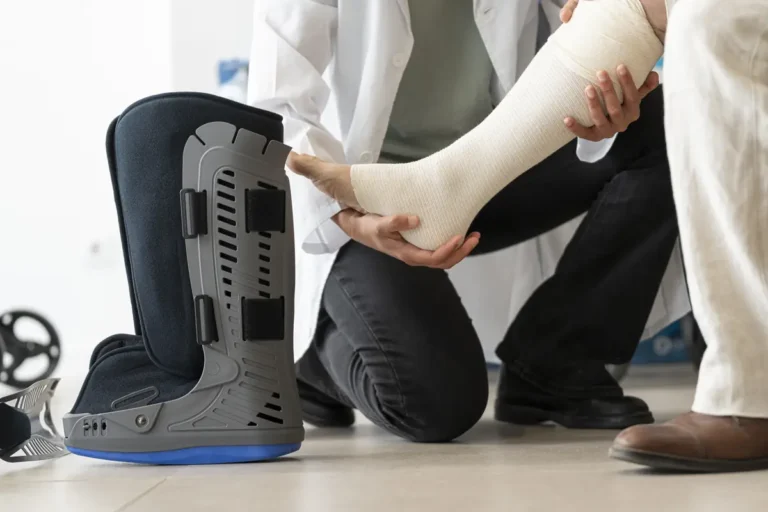
It depends on the injury and on how the bone or tissue lines up. Nearly all hip fractures need surgery. Ankle and wrist fractures may heal in a cast or boot if the bone stayed in place. Most rotator cuff tears improve without surgery. Sprains and strains are usually treated with rest and therapy. Only your doctor can say.
| Injury | Often treated without surgery when | Often needs surgery when |
|---|---|---|
| Hip fracture | Rarely: a small group of fractures that stay in place | Most cases |
| Ankle fracture | The bone is stable and in place. Cast or boot | The bone is out of place or unstable. Screws or a plate |
| Wrist fracture | The bone is in a good position. Cast | The bone can’t be set or won’t stay in place |
| Rotator cuff tear | About 80 to 85 percent of patients improve with nonsurgical care | Pain or weakness continues |
| Sprain or strain | Usually. Rest, ice, compression, and therapy | Severe tears |
Should you have surgery to get a bigger settlement?
No. Surgery is a medical choice between you and your doctor, never a legal strategy. It carries real risks, and no lawyer should push you toward it. If your doctor recommends surgery, follow that advice or get a second opinion. If your doctor says you don’t need it, your claim can still be strong with good records.
What if your doctor recommends surgery later?
Don’t settle until you know. Some injuries seem to heal, then stop improving, and a doctor suggests surgery months later. Once you sign a release, you can’t ask for more, even if that happens. Get your doctor’s view on future care before you agree to a number. Future care your doctor expects can be part of your claim.
Example only: what an early settlement can miss
How do you prove an injury that didn’t need surgery?
With steady records. See a doctor soon after the fall, tell them how it happened, and follow the plan. Gaps in care are the first thing an insurer points to. MRI results, therapy notes, and a work letter show the injury was real. A short journal shows how it changed your days, which helps with pain and suffering.
- See a doctor within a day or two of the fall.
- Go to every therapy visit, and tell your provider if you can’t.
- Ask for imaging if your pain isn’t improving.
- Get a letter from work showing missed time and limits.
- Keep a short journal of pain, sleep, and daily tasks.
See what to do after a slip and fall accident. When we take a fall case, Rich handles it himself, whether or not it involved surgery.
Who pays your bills while you treat?
Usually your health insurance. Auto PIP doesn’t apply to a fall. If you fell at someone’s home, their homeowners medical payments coverage may help. Medicare pays if you’re covered, and it expects to be repaid from a settlement. Hospitals and doctors can claim a lien on your settlement, but all liens together are capped at 25 percent.
The lien rule is in RCW 60.44.010. The medical payments rule comes from the Insurance Commissioner’s homeowner guide. Read how settlements are paid out.
FAQ
Can I get pain and suffering without surgery?
Yes. Pain and suffering doesn’t depend on surgery. Washington has no cap, and your records and daily life show what you went through.
Is a fracture treated in a cast worth less?
Often less than a fracture that needs surgery, because the costs are lower. But it can still support a real claim.
How long do slip and fall settlements take without surgery?
Often less time, because treatment ends sooner. It still depends on the insurer. Read how long slip and fall settlements take.
Do I have to sue if the offer is too low?
Not right away. You can send more records and negotiate. If that fails, see how a slip and fall lawsuit works.
What does No Win, No Fee mean?
You pay nothing up front. Our fee comes out of the money we win for you. No hourly bills. No retainer. If we don’t win, you owe us nothing. Not even the case costs.
Talk to Rich about your fall
Slip and fall settlements without surgery depend on proof, not on an operation. If an insurer told you your injury doesn’t count, get a second opinion. Rich Martin has handled more than 2,000 injury cases in 28 years and taken more than 30 to a jury. He’ll tell you what your claim needs.
We help people hurt in falls in Bellevue, Seattle, Tacoma, and across Washington. Your case review is free. No Win, No Fee. We speak English and Korean.
Call (425) 635-2000 or see how we handle slip and fall cases.
Keep reading

Slip and Fall Lawsuit: How the Process Works in Washington
Last updated: November 3, 2026 You fell on a broken step outside a restaurant three months ago. Your ankle needed surgery, and you missed…

Are Slip and Fall Cases Hard to Win?
Last updated: October 30, 2026 You slipped on a puddle by the store’s freezer case and broke your wrist. The manager wrote a short…

Does Medical Insurance Cover Car Accidents
On this pageDoes Medical Insurance Cover Car Accidents in Washington State?Background: Who Pays Medical Bills After a Car Accident?What Is PIP Coverage in Washington?Does…